A full-face helmet is the one piece of riding gear where the cheap end of the market still has to prove itself. You can get a lid for the price of a tank of fuel and a sandwich, and most of them pass the same federal test every street helmet in the country has to pass.
What you actually buy with more money is quieter air, a lighter shell, and a fit that stops fighting you on hour two. At 60-ish dollars, the question is never whether the sticker is attractive. It is which of those three things the maker cut.
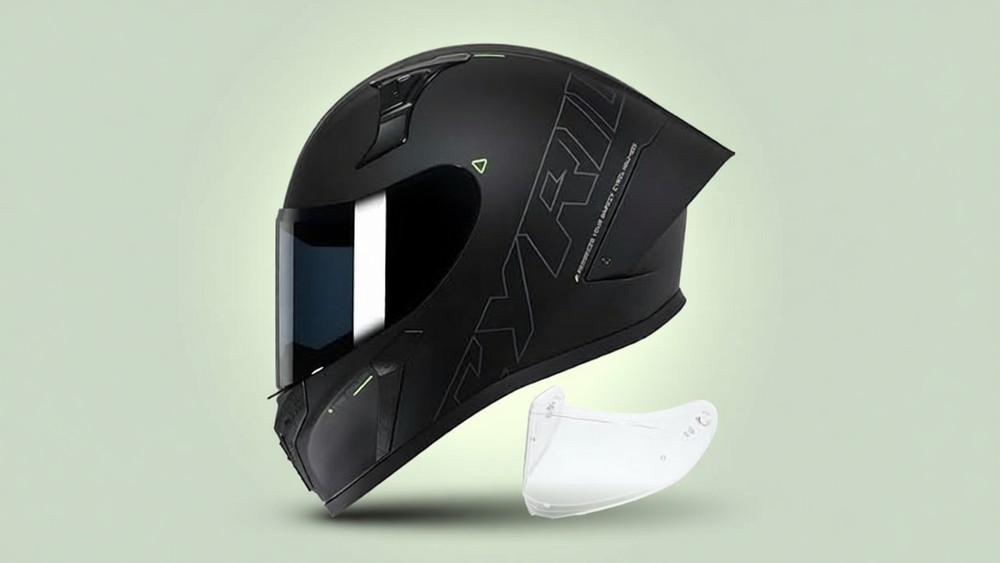
The CYRIL FF357 walks into that question with an answer most budget lids do not offer: two visors in the box, a clear one mounted and a tinted one for sun, and a swap system that needs no tools. Fog-fighting ventilation and a quiet aero profile are the other headline claims, and they are exactly where buyer reports get interesting.
Below: what the DOT certification on the sticker does and does not cover, what order-confirmed buyers say about fog and wind, and the fit question that decides whether the helmet goes back in the box before you ever ride.
The CYRIL FF357 is a full-face street helmet with an ABS shell over an EPS liner, a moisture-wicking washable interior, five sizes from S to XXL, and a drawstring storage bag. It held 4.3 stars from 263 ratings when we checked, at the checked price of 62.89.
The dual-visor kit is the honest headline: a clear shield comes mounted for night and rain, a tinted one rides in the box for glare, and the quick-release tabs swap them without tools. That is a config you usually pay more to get.
On price it sits close to the middle of the 257 helmets in our comparison table, which is a fair place for a helmet with this spec sheet. The catch is that the two things the listing brags about loudest, fog prevention and reduced wind noise, are the two things the buyer record pushes back on.
What DOT FMVSS 218 covers, and the chin bar it skips
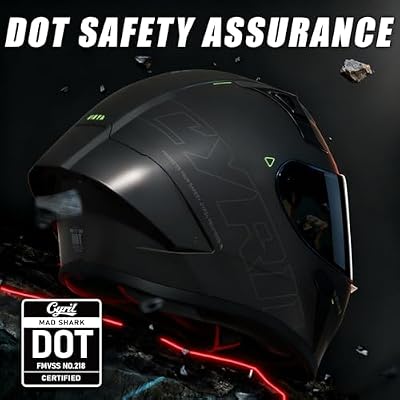
The certification claim here is real but narrow. FMVSS 218 is the United States federal motorcycle helmet standard, written and policed by NHTSA, and a helmet has to meet it to be sold for street use in the US.
The way it gets met matters: the US system has the manufacturer certify its own compliance, with the agency enforcing after the fact, while Europe's ECE 22.06 is a type-approval scheme where an independent lab tests the helmet before it ships and each lid carries an approval label. Neither system promises that a specific cheap helmet performs well. One of them just checks more often.
Here is the gap that matters for this shape of helmet. Studies put major impact in the chin-bar area at about 35 percent of motorcycle crashes, which is the whole reason full-face coverage exists. The DOT standard doesn't test the chin bar.
Snell and the ECE scheme do, for full-face types. So the CYRIL FF357 carries a certification that never measures the part of the helmet that catches a third of impacts. That isn't a flaw unique to this helmet, it's a property of the standard, and it's why the sticker should be your floor rather than your finish line.
It also explains why the listing's "weekend track racing" pitch should be read as marketing.
Track organizations require an ACU Gold sticker or FIM homologation, and DOT certification alone doesn't get a helmet onto a track. Buy the FF357 for commuting and street riding. Track time starts a different certification conversation.
Fog and wind: the two reports that land on the bullet claims
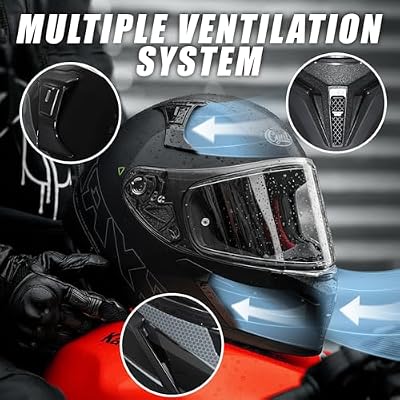
The listing claims five ventilation ports that "efficiently prevent visor fogging" and an aerodynamic profile that "actively reduces wind noise and drag." Two recent, order-confirmed reports describe the opposite experience.
One owner has described fogging with every breath at 100 mph on the highway in about 70 degree weather, so complete that they returned the helmet and bought a different one.
Another owner has reported a slight wind whistle at 80 mph when facing the wind, on a helmet they otherwise like enough to keep. Two of the ten texts in the record raise airflow or noise problems, and both land on claims the listing makes in bold brackets.
The counterweight is real, though. One buyer has found the FF357 quiet enough to describe the noise canceling as amazing, which we read as one person's comfort rather than a feature, since no helmet cancels noise and the same record holds two complaints about it. Most of the ratings sit at four or five stars, so the unhappy airflow reports are a minority voice, not a consensus.
What they establish is a risk, not a verdict: if you ride fast in cool weather and fogging has burned you before, this is the spec line to be skeptical about.
There is a smaller contradiction sitting next to all this. The bullet says five ports, two adjustable intakes up top, two side exhausts, and a chin vent. The spec table says the helmet has three. Nobody in the record settles it, and no owner reports counting.
Sizing runs the risk, not the fog
The fit record splits three ways. One buyer with a lot of hair ordered a Large, found it way too small, and described feeling like they would choke with the helmet fully on.
The one unverified text in the record, a Spanish-language note, calls the fit narrower than normal. Three other buyers say the size ran as expected or the fit was amazing.
The shape field says oval, and oval shells with narrow reports point the same direction. This is the failure mode that actually generates returns on a budget full face, more than fog or noise ever will, because a helmet that squeezes your jaw at rest gets unbearable an hour in.
The listing's own advice is the right advice: measure your head circumference before ordering rather than guessing from your hat size. If you sit between sizes, or you have thick hair, the narrow reports argue for going up.
The visor system, the chin cushion, and what arrives in the box
The dual-visor setup is the reason to pick this helmet over the single-shield budget lids around it, and it's the one claim nothing in the record argues with.
Quick-release tabs, no tools, a tinted shield for sun and a clear one for everything else. If you have ever ridden home into a sunset with a dark shield and nowhere to put it, you know what the second visor is worth.
The build tell is small and specific. One owner has reported the bottom chin cushion keeps falling off, and found holes where the manufacturer seems to have meant to fit clips but never did. That's a single report, and it's about a comfort pad rather than protection, but it's the kind of omission that tells you where the cost went.
Fulfillment deserves one line of caution. The newest text in the record ordered matte black and received black and purple, and the page's own spec table carries the ASIN of a different variant. Check the color and size printed on the box when it arrives, not just the page you ordered from.
What nobody has reported yet: durability, the storage bag, the washable liner in practice, the weight, or a crash. The record is young. Those are the things to check on arrival and the reasons to treat early reviews anywhere in this price band as a first look, not the last one.
What it costs against the field
At the checked price of 62.89, the FF357 sits close to the middle of the 257 helmets we track, and our comparison table shows the live position.
Two buyers have made the value case in words: one calls it a great deal for the price, better or the same quality as a much more expensive helmet, and another says they would buy it for a beginner rider on a budget. One of the fit-happy buyers adds that the materials feel durable.
That is the honest shape of the deal. You get the dual visor, the washable interior, the DOT floor, and a shell light enough at a claimed 3.3 pounds that nobody in the record has complained about neck strain.
You accept fog risk at highway speed, a possible whistle at 80, and a chin pad held in by hope. If the middle of the field is where your budget sits, the VEVOR dual visor full face is the closest sibling in our reviews, and it makes sense to read both before you order.
Frequently asked questions
Is the CYRIL FF357 really DOT certified?
Yes. The spec table lists FMVSS 218 under Specification Met, and the bullet claims the helmet meets or exceeds it. Understand what that sticker does and doesn't cover: impact testing to a federal floor, with the manufacturer certifying its own compliance, and no chin-bar test for full-face helmets.
Does it come with both visors?
Yes. A clear visor ships pre-installed for night and wet riding, and a tinted visor comes in the box for glare. The quick-release system swaps them without tools, per the listing.
No owner in the record contradicts this, and nobody has reported the swap mechanism failing.
Can you ride a track day with it?
No. Track organizations require an ACU Gold sticker or FIM homologation, and a DOT-only certification doesn't qualify. The listing's track racing pitch is marketing. Street and commuting use is what this helmet is built and certified for.
How does the sizing run?
Mixed, with a narrow lean. One owner has found a Large too small with a choking feeling, an unverified text calls it narrower than normal, and three buyers say it fit as expected or better. Measure your head circumference against the size chart and size up if you're between sizes or have thick hair.
What don't we know yet?
Durability is untested in the record, which spans only the last five weeks at writing. Nobody has reported on the storage bag, the washable liner in practice, or long-term comfort, and the fog and whistle reports have no follow-up yet. Treat those as open questions you answer with your own box.
For riders happy with those trade-offs, check the CYRIL FF357 on Amazon, and browse the full helmet table for the rest of the budget full-face field.