Modular helmets let you talk, drink, and take the lid off without unfastening anything, which is why police motorcycle officers have made the style increasingly their own. The Crown Racing FL900 sells that idea at a budget price, carrying 4.2 stars from 52 ratings. One honest note first: this listing is not in our 257-helmet comparison table, so it has no rank here. Everything below comes from the page itself and 29 written owner texts, not from our data.
What the flip-up design buys you day to day
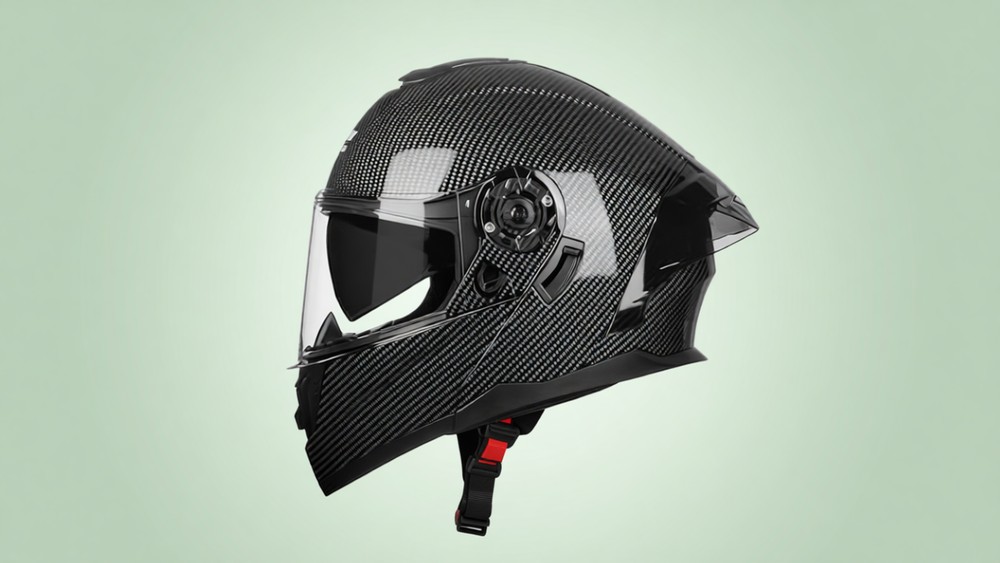
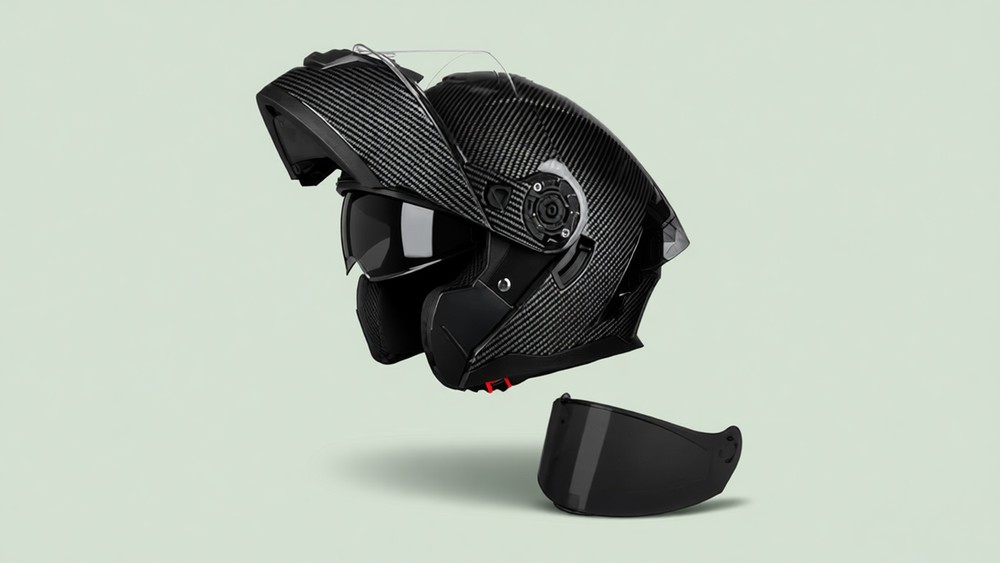
Wikipedia's motorcycle helmet reference describes a modular, or flip-up, helmet as a hybrid between full face and open face: closed, it carries a chin bar that absorbs face impacts like a full face does, and the bar pivots up on a lever so the rider can eat, drink, or talk without unfastening the chinstrap. That's exactly what the FL900's bullet list promises, with a flip-up chin bar aimed at fuel stops and short breaks.
The owner record backs the concept with two specifics worth more than the bullets. One rider, claustrophobic and expecting to hate a full-face helmet, reports feeling more secure in this one than in their usual half helmet. Another confirms the detail that matters most to glasses wearers, which Wikipedia names as a core reason people choose modulars in the first place: the drop-down inner shade covers their corrective lenses with no problem. If you've ever tried to wedge sunglasses under a fixed shield, that sentence is the whole pitch.
The buckle, the drop shade and the fog
The best-liked hardware on this helmet is the part you touch every single ride. One owner calls the ratchet buckle system way better than the older design, saying you're not choking yourself to get it fastened. The same text reports zero fogging on the shield so far, and no other text in the record contradicts it.
Ventilation is where the record pushes back. The rider who feels secure in it wishes for more airflow with the shield down and finds themselves cracking it open or riding shield-up with safety glasses instead. A second owner offers the same verdict in four words: good materials, modest ventilation. A third confirms changing the visor is a little difficult. None of these is a dealbreaker on its own, but together they sketch a helmet you'll ride with a finger on the shield latch in warm weather, and they're the kind of small friction that never shows up in a spec table.
The crash account, and what it does not prove
The record contains one crash account, and I think it deserves a careful report rather than a headline. A rider on an electric scooter says they fell into a deep ditch and face-planted hard at about 15 mph, that the helmet barely scratched and the shield did not break, and that they walked away with no concussion even though they hadn't buckled the chin strap. The rider credits the helmet, says the emergency room staff were surprised, and closes with a garbled line that trails off mid-thought.
What this account supports: the shell and shield took a real hit and held together, and the retention worked well enough that an unbuckled helmet stayed on through a ditch fall. What it does not support: any claim that this helmet protects better than anything else, because it's one self-reported event at scooter speed with no photos, no follow-up, and no way to check the details. A 2008 systematic review cited by Wikipedia puts helmet use as cutting head-injury risk by around 69 percent and death risk by around 42 percent, and that case for wearing any certified helmet dwarfs what one text about one helmet can prove. Wear it buckled. That's the whole lesson.
Wind noise, the variant table and the warranty row
Two owners mention wind noise, one calling it a lot and admitting they can't figure out how to stop it, the other noting it and shrugging because the helmet went on an electric e-bike. Both stayed happy, and the second one's price detail is worth a pause: they report paying about a quarter of today's price during a Prime sale event, so if this helmet hits your wishlist, watching for a sale is a documented strategy, not a guess.
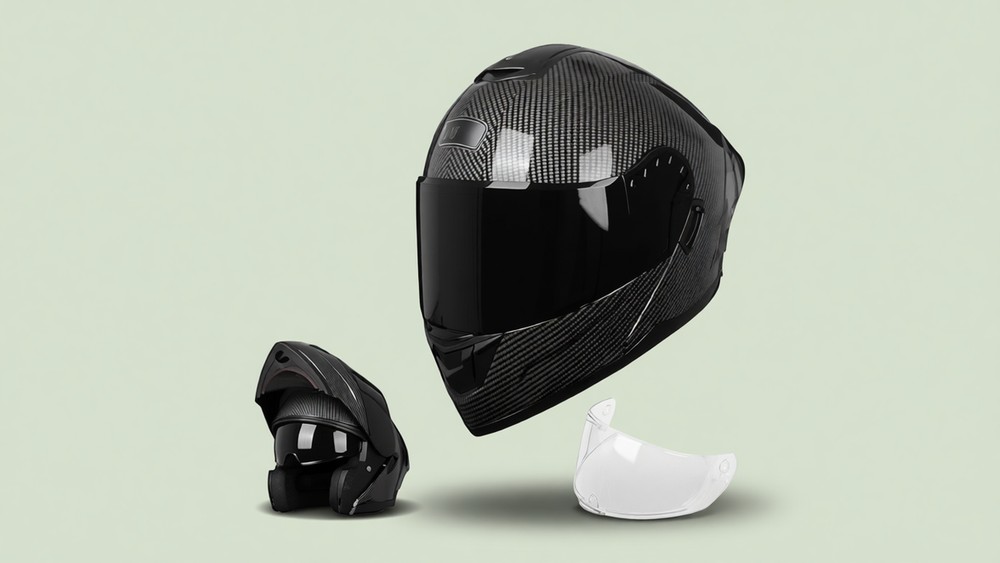
The listing itself argues with its own title. The title promises a dual visor system with an extra clear shield, and the comparison module at the bottom of the page shows five colorways where only some of them print a visor count of two. Two of the five list a single visor, so if the spare shield is why you're here, it's a per-colorway question, not a guaranteed one. The module also settles a spec argument before it starts: the details table lists 3.3 pounds and the module lists 1.5 kilograms, which is the same weight stated twice, and the page stays consistent about it.
Two more page details belong in any honest review. The warranty description row literally reads NO, so the only warranty statement on the page is a negative, and you should treat any warranty expectations accordingly. And the ASIN situation is a variant family: the address you buy from, the ASIN in the details table, and the ASIN in the page code are three different identifiers, which is normal for a multi-color listing but worth knowing if a support conversation ever starts.
Frequently Asked Questions
Is the Crown Racing FL900 DOT certified?
The bullet list says it's designed to meet FMVSS No. 218, which is the US DOT motorcycle helmet standard, and the spec table carries a matching certificate row. Worth understanding what that means: DOT is a self-certification system where the manufacturer does the certifying rather than a government lab testing each lid. The claim is consistent across the page, but it's still the seller's own paperwork, so check the DOT sticker on the helmet itself when it arrives.
Does every colorway include the spare clear shield?
The page doesn't guarantee it. The title promises a dual visor system plus an extra clear shield, and the page's own comparison module prints a visor count of two on some colorways and one on others. Buy the colorway whose row shows two, or ask the seller before ordering, because the module is the only place the difference shows up.
How does the sizing run?
The page's size chart runs medium at about 22.5 inches of head circumference up to extra-large at about 24.4. The one detailed fit report is encouraging: a buyer with a 23-inch head ordered the large and calls it a perfect, tight, snug fit. The single one-star text in the record says the helmet ran smaller than expected and the return window closed before the buyer acted. Measure first, order to the chart, and don't sit on a return decision, because this record shows exactly how that ends.
Is it quiet on the highway?
The record says no, gently. Two of the texts mention wind noise, one as the helmet's only real complaint and one as a tolerable background fact on an e-bike. Nobody calls it quiet, and nobody has posted a highway-speed report at all, so my honest answer is that the two wind-noise mentions point one way and nothing in this record points the other.
Why is it not in the comparison table?
Our helmet table is built from a data pull that hasn't captured this listing, so it has no row and no rank there yet. The comparison table does track 37 modular helmets from under this helmet's price up past double it, and if you want a second opinion on the style, our 1Storm modular review covers a tracked listing in the same budget range. If the FL900's flip-up convenience at a budget price is what you're after, the record here is small but clean: check its current price, watch for a Prime sale like the owner above caught, and verify the visor count on your colorway before you order.