Modular helmets under a hundred dollars tend to sell on the flip and stay quiet about everything else. The 1Storm KT928 modular helmet sells on the flip too, plus a smoked inner visor, a smoked outer shield, and a spare clear shield promised on top. That's a lot of visor for the money, and it's why this listing caught our eye when we went back through the helmet table.
The rating picture looks simple at first and isn't. The listing page prints 4.5 stars from 25 ratings, but the written record for this exact model is five texts. Every one of them carries Amazon's purchase badge, and every one awards five stars.
Five glowing texts could easily mean there's nothing to review, and that would be true if the owners had only said "great helmet". They didn't. The longest text grades the helmet like we would, listing what it does well and exactly where it falls short, all from inside a five-star rating.
This article walks through what the listing promises, what the owners praise, what they tolerate, and the one question the record can't answer at all.
What the listing promises before you pick a size
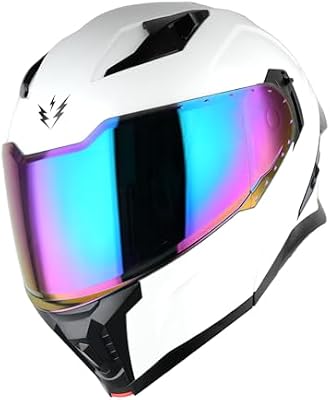
The KT928 is a flip-up full face with a two-layer visor system: a smoked shield outside, a smoked sun visor inside, and the extra clear shield the bullets add on top. The shell is thermoplastic, the whole helmet weighs 5.44 pounds on the spec sheet, and the interior pads are removable and washable. 1Storm states the helmet meets FMVSS 218, the DOT standard.
One thing to know about that DOT line. In the United States, manufacturers self-certify their helmets against FMVSS 218, and the government doesn't crash-test each model before it ships. Every DOT helmet on our motorcycle helmet table carries the same kind of claim, so the label tells you the standard was met on the maker's word, not that an outside lab signed off.
The spec table is thin, and one gap is worth pausing on. There's no warranty row anywhere on the page and no term in the bullets. At 82.95 that's a real omission, because the parts most likely to fail on a modular helmet are the hinge and the visor sliders, and the listing commits to supporting neither.
Price only shows up after you select a size from the variant menu, so check the color and size you actually want before comparing against the table.
The owner text that grades its own helmet
The most useful document in the whole record is an April 2026 text structured as a pros and cons list. On the good side, the owner reports a comfy fit, a chin bar that snaps into place positively ("you know when it's latched"), a sun shield that moves up and down without going loose, a visor that holds steady in wind, and wind noise that's "relatively quiet (not actually quiet)" for a modular.
Then the cons, quoted closely because they're the honest part of a five-star review. Venting is not enough, in the owner's judgement, and the vent sliders can pop off under a heavy hand.
The noise, while decent for the category, "limits your ability to hear intercoms over 50-55mph." The same owner closes by saying they'd buy it again and that it beat the previous helmet they used for the same purpose.
That's the shape of this record. The praise is real, and the limits sit inside it, stated by the people who kept the helmet anyway. Nothing in the other four texts contradicts any of it.
Where this helmet meets our intercom table
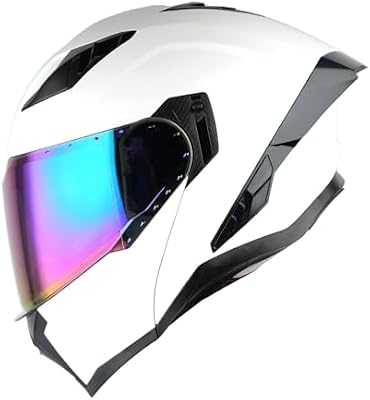
Two owners accidentally wrote the intercom section for us. The August 2026 text came from a rider who replaced a more expensive name-brand helmet with this one and installed a Cardo unit inside it, noting the pads come out easily enough to make the install simple.
The April text puts a number on the acoustic side: above roughly 50 to 55 mph, helmet noise starts to bury the intercom, by that owner's experience at their speeds on their bike.
Put those together and the KT928 reads as a workable intercom host with a speed ceiling. If your riding lives under 50 mph, the record gives you no reason to worry. If you spend hours at highway speed and depend on comms, that's the spec to weigh against the intercom comparison table, because the helmet's noise floor will decide how much volume headroom your headset needs.
One more fit note from the category. Modular helmets are popular with riders who wear eyeglasses, since the chin bar opens for fitting without removing the frames, and the flip-up earns its keep at gas stops. The June 2026 owner mentions exactly that: flipping the chin bar for air and for paying, without unstrapping.
Repeat buyers, and the half star nobody explains
The strongest ownership signal in a five-text record is repetition, and this record has it twice.
The only voted text, from September 2025 with two helpful votes, comes from a rider who owned an earlier 1Storm and calls this one a good upgrade. The June 2026 owner liked the first one enough to buy a second in a different color. Neither repeat purchase came with a complaint attached.
Now the part the record can't settle. The page says 4.5 stars, the five texts all say five stars, so twenty of the twenty-five ratings are untexted, and the missing half star lives somewhere among them.
Nobody wrote down what cost it. It could be sizing, it could be a hinge, it could be a box with a missing shield. The honest answer is that the written record shows no defect worse than the April owner's list, but the rating says someone out there disagrees silently.
The hinge itself is the part we'd most want tested, and the record can't do that yet. The pivot mechanism is the classic modular failure point, the oldest text here dates to September 2025, and no owner reports long-term wear on the latch or the sliders. The latch gets praised for its positive engagement, which is promising and unproven at the same time.
Anyone who tells you this hinge survives three seasons is guessing, because no owner in this record has owned one that long in print.
A first modular for slow riding, not a highway lid
The KT928 fits a specific buyer well: someone who wants the flip-up convenience, rides mostly under highway speed or tolerates the comms ceiling, wears glasses, and doesn't want to spend three figures to find out if modular suits them. On price it sits close to the middle of the 257 helmets we track, and the exact position moves with every price change, so check the live helmet table for the current figure.
Spend differently if noise is your priority. One owner's account caps usable intercom audibility near 55 mph, and no other text contradicts or confirms it, so treat the ceiling as unmeasured but real. Riders who live at 70 mph with a passenger on comms should look at quieter lids on the same table and budget accordingly.
The missing warranty tips the scale for careful buyers too. A helmet with no stated support term, sold by a brand whose own record can't yet testify to hinge longevity, is a reasonable first modular and a harder recommendation as the one lid you'll wear for years. If the price on the table sits well under what we saw, that math improves.
FAQ: self-certified DOT, the unconfirmed spare shield and the young hinge record
Is the DOT certification on the KT928 independently tested?
No. 1Storm self-certifies that the helmet meets FMVSS 218, which is how the DOT standard works for every manufacturer in the United States. No outside lab tests each model before sale. If you want third-party tested shells, look for ECE-certified modular helmets and expect to pay more.
Does every color ship with the extra clear shield?
The title and the first bullet promise one, but the listing has no parts row that says what's in the box, and no owner text mentions the clear shield in either direction. If the spare shield is the reason you're buying, confirm with the seller before ordering, because the page alone won't commit.
Is the 1Storm quiet enough to hear an intercom?
One owner reports the limit plainly: wind noise starts to bury intercom audio above 50 to 55 mph. Another owner installed a Cardo in theirs and kept the helmet. Both accounts are real, they just measure different things, so the workable summary is that the helmet hosts a comms unit fine at moderate speed and gets loud past it.
Should I worry about the chin-bar hinge?
Not yet, and that's the honest state of the evidence. The latch earns specific praise for engaging positively, no text reports a hinge failure, and the record is too young to prove durability in either direction. The missing warranty row is the practical backstop to watch if you buy one.