Group riding used to mean real money. A four-pack of name-brand intercoms costs more than some helmets do, and the ten-rider systems sat at the top of that pile. So a single unit at 42.99 that claims ten riders and 1500 meters of range reads like a misprint the first time you see it.
The catch is not the price, it is the record behind it. Seventeen ratings is a thin sample, and the ten written reviews split into two very different groups. Seven come backed by a purchase, and most of those report something going wrong.
Three carry no purchase marker and read like the listing itself, marketing numbers and all.
That split decides what this review is. I walk through what the purchase-backed owners actually hit, what the positive texts confirm, why the unverified ones deserve caution, and where the spec table argues with itself before you spend 42.99 on a group kit that has to work for everyone at once.
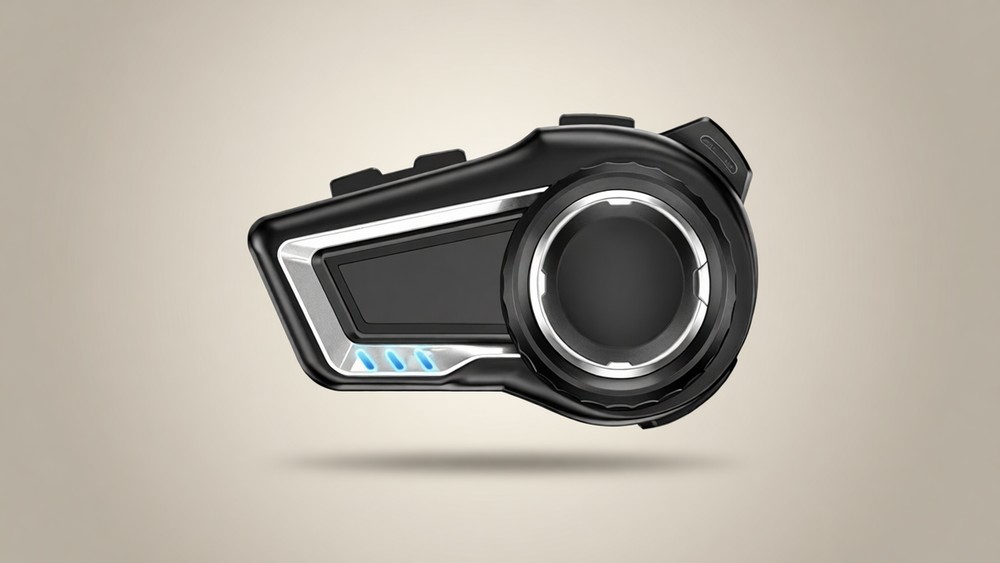
The X10 sells for 42.99 when I checked, and on price per rider it sits in the cheapest fifth of the 192 intercoms we track. That money buys Bluetooth 5.4 hardware, a claimed 1500 meters between any two riders, and a 2-year manufacturer warranty, all behind a buyer record that is only 17 ratings deep. See the current Chtoocy X10 price on Amazon.
Two records, one listing
The headline number is 3.8 stars from 17 ratings, and the shape underneath it is odd in a useful way. There are no 2-star reviews at all. The histogram runs 41 percent five-star, 23 percent four, 23 percent three, and 13 percent at one star, so opinions jump from content to unhappy without passing through the middle.
The record is young. The oldest written text dates to February 2026, which means nothing here proves durability past about eight months, no matter what the warranty row promises.
The ten texts divide into seven verified and three unverified, and the two groups describe almost different products. The verified texts are full of snags, broken parts and returns.
The unverified ones are smooth, detailed, and suspiciously close to the bullet points on the listing. Reading them as one record gives you 3.8 stars of average and no signal. Reading them apart is where the actual information sits.
Five of seven purchase-backed texts hit a snag
Five of the seven verified texts report something wrong. Each account belongs to one owner, so this is a list of what can happen, not a defect rate.
A microphone arrived broken, and the replacement unit shipped with its menus in Chinese. The printed instructions for changing the language did not work, and the owner describes a support call that went nowhere before they hung up.
The reconnect routine has frustrated an owner from the purchase-backed group, who reports that after using the X10 with a phone, getting the intercom re-paired takes more effort than a button press should, and calls the routine a headache. An unverified text mentions a pre-ride reconnect that needs doing again before some rides, without calling it a dealbreaker.
The sharpest account is a group order. One owner bought in with six friends for a group ride, and every unit in that group of seven came back. The complaint was intercom sound quality, the same issue for all of them, and the owner notes the music quality was actually good.
Two hardware faults round out the list. A clip piece broke while one X10 was being fitted to a helmet. And a phone-call microphone runs quiet enough that the people on the other end barely hear the rider.
What the small record does confirm
The most-endorsed text in the record, at 2 helpful votes, is positive, and it covers the exact use case the listing sells.
An owner wanted three people talking while riding dirt bikes, found most options built for two, and reports the X10 handled it. Installation was easy with room to adjust the position afterward, the smaller of the two microphone types still sounded good, the units reconnected on their own after someone dropped out of range, and the range ran further than expected.
Music comes through loud per one owner, who bought the X10 mainly for that and has not tried the ten-rider function at all. Installation shows up as easy in both verified positives.
The remaining verified text is in Spanish, and it praises the sound and the build quality while noting the road test of the mesh range is still pending. That is an honest summary of this whole record: the parts that get confirmed are the parts close to the helmet. The parts that make it a group intercom stay unconfirmed.
One text reads like the listing, two do not
Three of the ten texts carry no purchase marker, and they are not the same kind of text. Two of them read like balanced owner accounts. They report real friction: a connection that turns inconsistent with more riders or at longer distances, wind and road noise muffling conversations, pairing that took trial and error, and a pre-ride reconnect that comes back now and then. Those accounts are usable, as long as the missing purchase marker is part of the weighing.
The third is different. It restates the marketing numbers almost word for word: 1500 meters point to point, reconnection in about five seconds, 96 percent of ambient noise filtered out, dual noise reduction, music share. It contains no measurement and no fault a buyer could check. And it describes riding with a group of more than ten friends, on a system rated for ten riders, a claim the hardware at its stated limit cannot support.
This is not a verdict on any individual buyer. It is a pattern worth naming: when a text echoes the listing's own figures back in the listing's own order, the honest move is to discount it and weight the seven texts backed by a purchase. On this listing, that weighting moves the picture from mixed to rough.
Forty millimeters in the bullet, twenty in the table
Numbers that disagree
The listing disagrees with itself on the speakers. The bullet promises 40mm drivers. The spec table files the audio driver size at 20 millimeters.
One of those numbers is wrong, and since driver size is a plain hardware fact, a buyer cannot check which from the page alone.
The noise rows mix categories too. The table claims Active Noise Cancellation, which is microphone-based cancellation of ambient sound.
The bullets describe CVC 8.0 and DSP, which process call and intercom audio after the fact. Those are different features, and the table row overstates what the bullets actually offer. The certification row cites ANATEL, the Brazilian regulator, on a US-market listing, and the connectivity field reads Bluethooth while the jack reads Tpye-C, two typos sitting on a live page.
Then there is the range, and it deserves its own look.
What the 1500-meter claim rests on
Standard Bluetooth transmits at low power, typically reaching up to 10 meters and about 100 meters in the best case (Wikipedia), and Bluetooth 5's long-range modes top out near 400 meters at reduced speed.
The 1500-meter pair-to-pair figure therefore rides on the vendor's own range modes and open terrain between riders, not on the Bluetooth standard. Nobody in the record has measured a distance. One owner says the range ran further than expected, which is encouragement, not confirmation.
The same caution covers the other headline figures. The 96 percent noise-filtering claim and the 30-hour talk time have no test behind them in the record, and the only owner battery signal is that the battery lasted decently on day trips. A full charge takes 2 hours per the table.

Common questions
Is the Chtoocy X10 worth 42.99? On per-rider price, it is close to the top of the 192 intercoms we track, and no unit near it claims ten riders. The verified record is the risk: five of seven verified texts report a fault or a recurring annoyance, including a group of seven who all returned theirs. At this price the downside is a cheap return rather than an expensive mistake, and that is the honest way to size the gamble.
What is the real range? Nobody has measured it. The listing claims 1500 meters between any two riders, which requires the vendor's own range modes and open terrain, since standard Bluetooth manages about 100 meters in the best case. One owner reports range further than expected with no number attached.
Does the ten-rider mode actually work? No text confirms it. The largest group any purchase-backed owner describes is three people on dirt bikes. One owner who praises the music has not tried the group function at all, and the only text claiming a bigger group is the unverified one that also claims more riders than the system allows.
Will it survive rain? The listing carries an IP65 rating, which covers rain and splashes. Nobody in the record describes riding in rain, so the claim has no owner evidence behind it either way.
Who should spend differently? A group that rides together every weekend needs intercom audio it can trust, and the one group order in this record ended with all seven units returned. Serious group riders should start from our intercom comparison table and price a proven mesh unit per rider before settling for the cheapest claim in the category. A pair of casual riders who mainly want music and the occasional check-in have the clearest case for trying the X10. If you are equipping exactly two helmets, note that the family's two-pack rung costs more per helmet than buying this single twice, so two singles is the cheaper route to the same hardware.
