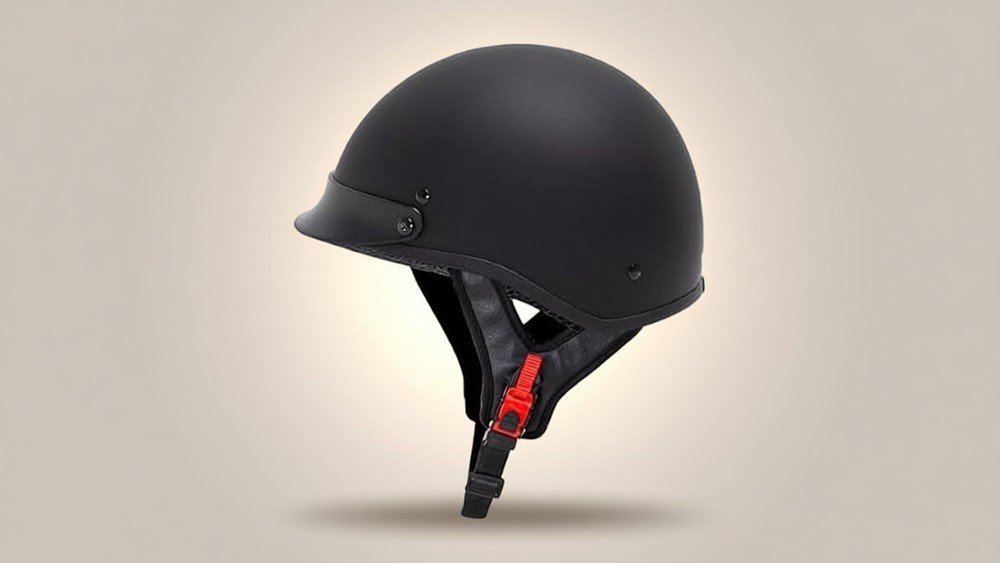
A half helmet is the cheapest legal head protection you can buy, and at 33.24 the Cartman sits about as deep in that category as anything we track. Cheap and popular is a combination that deserves a closer look than its star rating, because the money you save is only real if the helmet fits the head you have.
The owner record for this one is unusually clean on one axis. Every written text carries a purchase marker, which is rarer than it should be. It's also unusually lopsided on another: nobody in the recent record has dropped it, crashed in it, or owned it through a season. All ten texts are short, recent, and almost all about fit.
Fit is where the record earns its keep. One rider reports the sizes running large after paying return shipping on a Medium, and a second offers a cap-size reference point that points the same way. The most detailed text is a one-day return that explains exactly why, and that text is the most useful thing in the whole record for anyone about to order blind.
The Cartman matte black half helmet is one of the cheapest helmets in the 257 we track and one of the best sellers in its whole category, and the record suggests the popularity and the price are the two things you can count on.
The texts call the quick-release buckle out three separate times and call the helmet comfortable, sturdy, and worth the money. The complaints are all about fit and bulk, and they come from owners who bought the right size on paper. This is a helmet where the shape of your head decides more than the size chart does.
Two orders, one lesson about size
The clearest sizing evidence comes from one owner who did the experiment for you. They ordered a Medium, found it way too big, sent it back, and refit into a Small. Their advice is to order one size smaller than you think. That is one rider's path through the chart, not a measured sizing rule, but it is the single most actionable line in the record.
A second owner offers a reference point you can actually use. They bought a Large and report it fits pretty good, and their baseball caps are 7-1/8. If you know your cap size, that is a concrete anchor, and it is worth more than the listing's chart because it comes from a head that is already wearing one.
They also call it sturdy, comfortable, and well worth the money, so the size worked and so did the helmet.
A third owner returned theirs after one day, and the reason was shape rather than size. That text describes a front-to-back fit that ran snug with loose space at the sides, on a head that is not wide. No size adjustment fixes that, which is why the return happened so fast.
Two sizing reports and one shape report, all purchase-backed, and none of them contradict the quality of the shell.
Head shape decides this helmet
The one-day return is the most detailed text in the record, and it is worth walking through because it maps the failure mode. That owner has found enough space at the sides to make the helmet neither comfortable nor safe, and guesses it might fit a rounder head properly.
The 1-star text in the record lands on the same fault from the other side, calling it too bulky on the head while still allowing it was comfortable.
Put together, the complaints describe a shell with a particular internal volume, and heads that do not match it feel it immediately. The same detailed text notes the sides come down far enough to press on larger ears without covering them, and that no ear pads are offered with the helmet. Padding is called decent, if a little stiff.
The record contains no complaint about the shell, the finish, or the build quality. One owner says it looks nice, another that it met their expectations and needs, and the matte black finish draws no criticism anywhere. The fault line in this record runs entirely through geometry.
Check it by trying the helmet on with the strap fastened, front to back snug against the forehead with no gap at the temples, because a half helmet's protection depends on a snug fit to work at all.
The strap record splits three ways
The chin strap draws three different verdicts from three different texts. The detailed return calls the strap acceptable but thin for a motorcycle helmet, and says they could not vouch for the strength of the quick-release latch material after a single day.
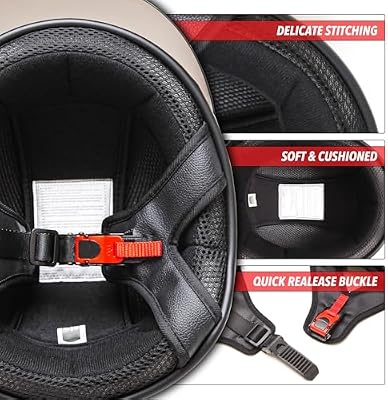
One owner lists the quick release as a reason they like the helmet. A third calls it the quick-release chin strap they love.
The category context behind that disagreement is worth stating plainly. Helmet protection is designed around a securely fastened strap, and the benefits drop sharply, or vanish, when the strap is not fastened or cannot hold. A strap a rider calls thin for motorcycle use is worth a close look on any helmet, and especially on the cheapest one in a lineup.
The record does not settle the latch question, because the one text that raises it ended in a one-day return.
What the record does support is that the quick-release mechanism works, adjusts with gloves on per the listing, and satisfies the owners who kept the helmet. The thin-strap report stands as one data point against it. If you buy one, that is the part to inspect first.
What the bullet promises and what the record narrows
The listing's bullet calls the helmet ideal for motorcycle riding, cycling, and other outdoor sports.
One owner's text narrows that claim from the inside: they call it very nice for the price but would not recommend it for a motorcycle on the road, and their own purchase was for riding a mini bike. That is one rider's judgment about one helmet, but it comes from someone who owns it and chose to draw the line narrower than the bullet does.
The use-case spread in the record is wider than the bullet in the other direction too.
One text reports an 8-year-old child using the helmet, while the listing's own detail table says the age range is adult. The record shows what people do with it. It does not make a child-size recommendation, and a helmet rated for adults is not sized or tested around a child's head, so that text is a report, not an endorsement.
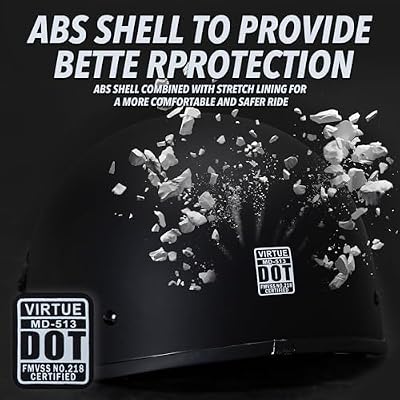
Nothing in the record stress-tests the shell. No text reports a drop, a crash, or an impact, so the DOT claim on the listing has no owner evidence behind it in either direction. The listing states the shell is lightweight ABS over a thick, fully vented, high-density EPS liner, and that it meets or exceeds FMVSS No. 218.
DOT certification in the US is the maker's own attestation to that standard, checked by no independent lab before sale, so the label is the floor the maker says it meets.
The coverage question is the one worth weighing before any half-helmet purchase, whatever the brand. Studies of motorcycle crashes found major impact at the chin-bar area in 35 percent of cases, and a half helmet leaves that entire zone uncovered. That is the trade the price buys, and it is a trade some riding courses decline entirely by prohibiting half helmets.
What the money buys
At 33.24, this sits in the cheapest fifth of the 257 helmets we track, and the listing's best-seller rank sat at 14 in its category when I checked. That combination, near the floor on price and near the top on volume, is the strongest supported claim in the whole record.
The helmet was in stock with the buy box on when I checked, the page states a 1-year warranty, and the weight row reads about 2.1 pounds.
What it does not buy
The price does not buy coverage above the legal minimum, ear pads, or an owner-proven impact record, because none exists in the texts. If you want more coverage at a still-modest price, our Vcoros half helmet review covers another budget half shell whose record splits differently, and the helmet comparison table shows the full range between the floor and the full-face class.
Frequently asked questions
Does the Cartman half helmet run large? One owner says yes outright: a Medium was way too big and the refit landed on a Small, with advice to order one size smaller than you think. A Large fit an owner whose baseball caps are 7-1/8, which leans the same way. Start from those two data points rather than the chart alone.
What head shape does it fit? The most detailed text guesses it might fit a rounder head properly, describing a snug front-to-back fit with loose space at the sides on a narrow head. A second text calls it too bulky. The complaints are about geometry, not quality, so judge your own head against that description.
Is it DOT certified? The listing states it meets or exceeds FMVSS No. 218, the US federal helmet standard. DOT certification is the manufacturer's own attestation, not an independent lab test. Look for the DOT sticker on the back of the shell when yours arrives.
Can it be used on a motorcycle on the road? The bullet says yes and one owner says no, recommending it for a mini bike instead. No text in the record reports an impact either way, and a half helmet leaves the chin-bar area uncovered, the zone hit in 35 percent of studied crashes. The record does not settle the question, so it stays a judgment call.
What ages is it for? The listing's detail table says adult. One text reports an 8-year-old child using one, which is a report of what a household does, not a sizing or safety recommendation for children.