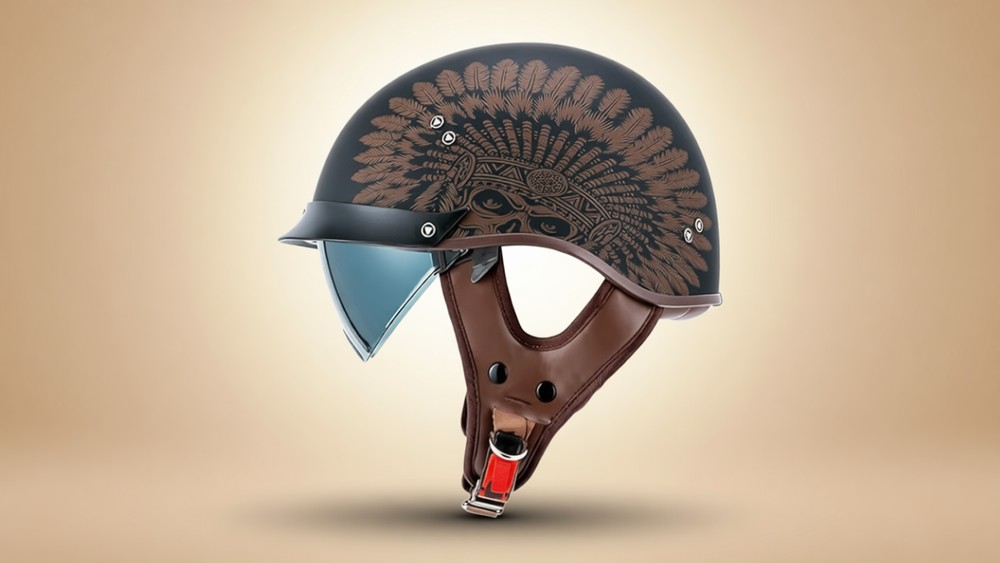
Half helmets sell on a simple promise: the minimum shell the law allows, so a rider can feel the air and still keep the top of the head covered. The VCOROS F07 sits at the cheap end of that market, and it adds the one feature riders usually pay more for, a drop-down smoked sun visor.
The hard part with an online-only helmet brand is not the spec sheet. ABS over an EPS liner and a quick-release buckle describe most of this shelf. What separates a good cheap half shell from a disappointing one is fit, and fit is exactly what this one's buyers argue about.
More than three thousand of them have rated the F07, and the record has a clear shape: a light shell with a visor people praise, sizing that runs bigger than the chart says, and one strange heat report with no company in the record.
The VCOROS F07 is a 59.99 half helmet with a drop-down smoked visor, a 4.4 average from 3,056 ratings, and a price that lands in the cheaper third of the 257 helmets we track.
Buyers agree on the visor and split on the fit, and not one text in the record describes a crash, so the DOT claim rests on paperwork rather than on anyone's story. Check the current F07 price on Amazon.
What the record says, and what the price is doing
About seven in ten of the 3,056 ratings are five stars, and four in a hundred are one-star. The written texts lean warm: the most-endorsed one calls it the best helmet its owner has purchased and carries the most useful sizing note in the record.
Almost everything in the record is a confirmed purchase. Exactly one text, a three-star return, comes from a purchase Amazon could not confirm, and every five-star text is verified. That is a cleaner record than most budget helmets get.
What the record does not settle is the part a careful buyer wants settled. Nobody has hit anything while wearing one. Nobody complains about wind roar, and nobody reports the liner or the visor mechanism wearing out.
The texts cover comfort, fit, the visor and one heat incident, and they stop there.
The price explains a lot of the warmth. In the cheaper third of everything we track, the live position renders in the specs box of our helmet comparison table, and it is the number that keeps this helmet in the conversation against better-known brands.
What the shell is made of
The build is a lightweight ABS shell over a high-density EPS liner, which is the standard formula at this price. The listing puts the weight at 2 pounds, and owners back that up: light weight draws praise in two separate texts, one of whom calls it not too heavy and says it sits comfortably on the head.
The feature list reads longer than the price suggests. A smoked drop-down sun visor retracts into the shell, a quick-release buckle replaces the D-ring strap, the comfort liner is removable and washable, and the box includes a helmet bag alongside the helmet. Five sizes run from small to XXL.
One paperwork oddity is worth knowing before you buy. The same listing carries three different model identifiers: the model name reads F-07, the model number reads MT-4, and the manufacturer part number reads A0100132-2. None of it changes what arrives, but it is the kind of sloppy detail that makes the certification check below worth ten seconds of your time.
There is no Snell or ECE certification here, which is normal at this price. The claim is DOT to FMVSS 218, the self-certification scheme every US helmet sits under.
Sizing: the chart and the shell disagree
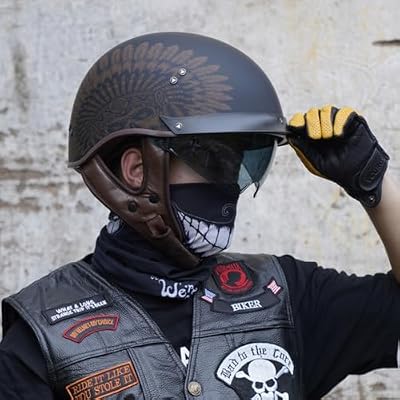
The most-endorsed text in the record is a sizing warning in disguise. Its author ordered a Large because the chart said Large, found it slightly too big, and reports that a Medium fits snug and comfortable. Take the tape measure over the chart, in other words.
Two other owners went the other way and returned the helmet. One writes that it is definitely not low profile and describes a mushroom head, and the other calls it super top heavy before sending it back. A fourth text splits the difference, saying it sits a little high on the head but fits good.
What nobody reports is a helmet that ran too small. Every sizing complaint in the record is about a shell that came in bigger than expected, and the most-endorsed text is the one that solved it by going down a size.
So the practical advice is the same as it was for the Yesmotor Hawk we reviewed: measure your head, expect this shell to run generous, and buy from a seller whose return window you have not burned through.
The visor, and its one documented limit
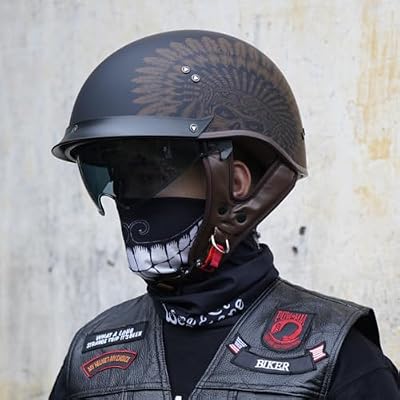
The drop-down visor is the reason most of these owners sound happy. It is smoked, it retracts into the shell, and it works with a gloved hand in the time it takes glare to become a problem. One owner names the different visors as the favorite part of the whole helmet.
It is also clear enough to matter. The most detailed text in the record calls the eye protection very clear and reports it holding up to 70 mph. Above that speed, the same owner writes, the eyes water and vision gets difficult.
That is the only wind-related complaint in the whole record. No text describes roar, buffeting or a visor that flutters, and no text reports the mechanism failing. The visor is the feature the record agrees on.
What a half shell can and cannot do
A half helmet covers roughly half the head, and that is the minimum coverage generally allowed by law in the United States.
What it gives up is the chin bar, and the trade is not cosmetic: studies find about 35 percent of crashes put major impact on the chin-bar area, which is the protection a full-face helmet adds and this shape cannot. The Wikipedia motorcycle helmet article is the source for both figures, and it is blunt about the direction of the trade: less coverage, less protection.
Two other facts from the same source belong in any half-helmet purchase. Helmets of every type reduce head-injury risk by about 69 percent and death risk by about 42 percent, and those benefits assume a fastened strap, because a helmet's protective benefit is greatly reduced or eliminated when the strap stays loose.
The other fact is the one that separates this helmet from a novelty lid: the EPS liner, since non-certified shells lack the foam that lets the brain stop gradually in an impact.
DOT itself is self-certification: the maker certifies the model against FMVSS 218 and the government spot-checks the market afterward. Riders who want the chin coverage back should look at the full-face VCOROS from the same brand, which is a different job rather than an upgrade.
Frequently Asked Questions
Is the VCOROS F07 really DOT certified?
The listing says it meets or exceeds DOT FMVSS 218, and the spec table files the certificate as DOT. Because DOT is self-certification, the honest answer is that the claim is the maker's. Check the rear of the shell when it arrives: a compliant helmet carries a permanent exterior label with the DOT symbol, the term FMVSS No. 218, the word CERTIFIED, a model designation and the maker's name.
Did one of these really melt?
One confirmed-purchase text reports exactly that: the helmet hung from a hand grip for two hours in 98-degree heat, and its owner found it had started melting. It is a single report among 3,056 ratings, written by someone with 50 years of riding behind them, and no other text mentions heat damage.
Treat it as a reason not to leave a dark helmet baking in direct sun, not as a pattern.
Does the F07 run big or small?
Big, on the evidence. The top-voted text went a size down from the chart and got the right fit, two owners returned theirs as far too large, and one says it sits high on the head. No text reports one that ran too small.
Is it quiet at highway speed?
The record does not complain about wind noise anywhere. The one speed-related note says the visor stays clear and useful up to about 70 mph, with watering eyes above that.
Half shell or something with more coverage?
That depends on the riding, not the helmet. For short warm-weather trips where the shape is the point, this is a competent cheap choice. For commuting at speed or anything involving highways you ride hard, the chin bar a half shell lacks is the protection the crash data says matters most.
Who should skip it?
Riders who want a genuinely low-profile shell, since two texts call this one anything but. Riders who commute at highway speeds daily should also look at more helmet, and not because this one failed anyone in the record. It simply does not carry the coverage.