One communicator, two helmets, and a shelf full of ways to buy the combination: that's the decision this listing sits in the middle of.
Cardo sells the Packtalk Edge bare, sells the second-helmet kit on its own, and sells the two in one box. This listing is that box, and its price behaves differently from most bundles we've tracked: it costs exactly the sum of the headset and the kit bought separately. Not a cent under, not a cent over.
Pricing at the sum of parts sounds like a virtue, and it is one. It also means the box buys you no discount for the convenience, and the record behind it is young: eleven ratings, two written reviews, and the only critical one praises the hardware while objecting to what it costs.
Below: what the price fingerprint establishes, what the two owners have said, and where this box fits against the ways Cardo packages the same hardware.
The Cardo Packtalk Edge with second-helmet kit is a one-headset box with the spare kit attached. The bare Edge single and the kit on its own are the parts it prices against, and the dual-pack version of the arrangement serves two riders. Where every Edge configuration lands per rider, the intercom comparison table sorts the full field.
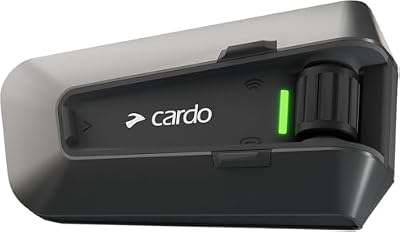
Priced to the penny at the sum of its parts
The box lists at 521.92. On the day we scraped it, we probed the bare Edge single at 395.96 and the second-helmet kit at 125.96, and those halves sum to 521.92 exactly. Buying this box costs precisely what buying the parts costs, which makes it the rare bundle you can judge without a calculator.
That fingerprint also settles a question an earlier listing left open. The covered Edge and JBL kit bundle lists at 512.92, and when we covered it, no standalone Edge-plus-kit rung existed to check its halves against. This box is that rung.
It prices at exactly the sum the bundle was measured against, which makes the JBL bundle a real 9.00 saving against this arrangement, provided the kit inside the cheaper box fits.
The dual-pack version of this arrangement prices with the same honesty: 845.92, which is the plain Edge dual pack plus one kit at list. Across the whole shelf, Cardo's kit boxes are priced as parts, and the savings only appear when you stop buying a kit with every unit.
The kit the page never names
Nowhere on the page does the kit get a model number. The bullets describe it as 40mm speakers with Sound by JBL, interchangeable boom and wired microphones, and a fitment claim covering virtually all helmets except half shells.
The 40mm claim is worth only what the install makes of it: a helmet has no enclosure, so bass depends on getting the driver close to the ear (Wikipedia), which is why the fitment range matters more than the driver size.
A gallery card repeats the fitment line and adds the escape hatch in small print: a Half Helmet Kit is sold separately, and Cardo's own half-helmet rung was probed at 49.45 with only two left in stock on the day we checked.
The equality with the 125.96 kit stays a fingerprint, not a fact. The page never states which kit ships, and Cardo sells more than one. What the equality does establish is the price: whatever is inside costs you exactly what the separately sold kit would, so the worst case is a box that contains the wrong kit at a fair price, catchable inside the return window by checking the model marking.
The spec table is template furniture. Closure Type reads Hook & Loop twice and the material row prints Polycarbonate twice, rows that describe a helmet, not a communicator. Number of Items 1 and Number of Packs 1 are the only count rows that match reality, and no range figure, battery figure, rider count or warranty row appears anywhere on the page.
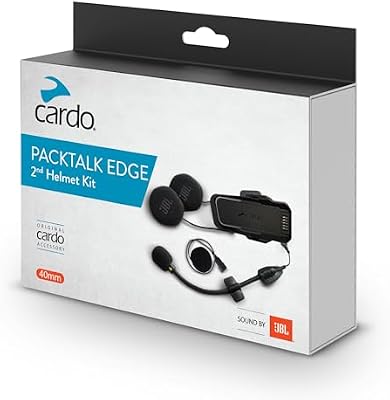
Two owners, and the margin objection
Eleven ratings carry a 4.5 average with a histogram that jumps from 87 percent five-star straight to 13 percent one-star, no middle bands at all. Two written reviews exist, both purchase-badged, both from 2025.
One owner has found it easy to work and rates the sound, in a five-star text of ten words. The other has left the box's only criticism, and it is an unusual one: the hardware is good, they say, but it costs far more than what it takes to manufacture. Neither text touches the kit half of the box, and neither describes a fault a buyer could avoid.
The price objection lands on a real target, though not the one the owner may have meant. This box adds zero margin over the parts, so the premium it objects to is Cardo's own pricing structure, visible across the whole shelf: the bare single, the kit, and every combination priced to the penny. If the sum offends you, the parts offend identically.
Buy the bare single unless you need the second kit
If your communicator moves between two of your own helmets, this box is the one-stop version, and its honest pricing means you lose nothing by choosing it over the parts. If you already own an Edge, the kit on its own is the same hardware with a 986-rating record, and the covered second-helmet kit review walks owner install reports in detail.
If a second rider is involved, skip the kit math entirely. Two bare Edge singles at 791.92 or the plain dual pack at 719.96 serve that case, and the covered dual pack review covers the two-unit record. The dual-plus-kit box is the version with a spare kit for the pair.
The Edge single review remains the deep record behind every box on this shelf: 4.5 from 3,481 ratings, mesh range the most praised strength, and a cradle-connector failure cluster worth knowing before any configuration ships.
Common questions about the Edge and second-helmet kit box
Does the box save money over the parts?
No. It lists at exactly the headset plus the kit at their own prices. Its value is the single purchase and the return window, not a discount.
Which kit is in the box?
The page never says. The price matches the separately sold kit to the cent, so the worst case is the wrong kit at a fair price. Check the model marking inside the box within the return window.
Is this a two-rider set?
No. One communicator plus a spare kit serves one rider with two helmets. A second rider needs their own unit, and the dual-pack boxes exist for that.
What do owners say about it?
Two purchase-badged texts: one praises the sound and ease of use, the other praises the hardware and objects to the price. Neither faults the hardware itself.
Why is the one-star band worth reading?
Because its only text is a margin complaint rather than a product fault, which tells you the 13 percent one-star share is about Cardo's pricing, not about failures.