Two riders, one Cardo habit, and a checkout page that gives you a choice the listing itself never explains.
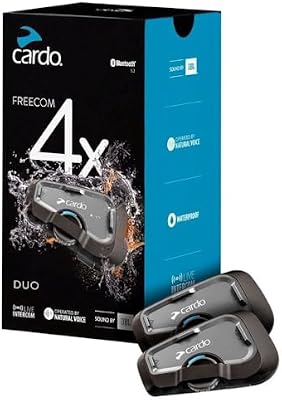
The FREECOM 4X sells as a single unit or as a 2-pack, and the two listings carry identical bullets that repeat a software-update line twice each. Nothing on either page says the pair costs 44.96 less than two singles, about 7.9 percent, one of the few real discounts we've measured this season.
The record behind both listings is the same 2,609 ratings, pooled by Amazon across the two rungs, so no buyer can read a track record for the box count they are actually buying. What the record does hold is a two-box story worth hearing before you order a pair: one buyer has found a dead speaker in box two, and the fix only surfaced because they tested both units the day they arrived.
There is also an argument one long-time owner makes, that the whole FreeCom line should fold into the Packtalk tier because of how each handles reconnecting after a red light. It is one account, but it names the exact trade you accept when you buy the cheaper line.
This piece works through the pair math, the pooled record, what two-box buyers should test on day one, and where the 2-pack fits against the single we reviewed earlier this fall.
The verdict up front: the FREECOM 4X 2-Pack is the honest way to buy two of these units.
At 521.96 against 566.92 for two singles, the discount is real and the hardware is the same four-way intercom with JBL-branded 40mm speakers we rated on its strengths and its pairing complaints in our single-unit review. The pair rung inherits everything we said there, good and bad, and adds one new question: what arrives in box two.
The pair math the listing won't do
Here is the arithmetic the two listings never perform. The single unit sold at 283.46 when we probed both rungs on the same day in late October.
Two of those cost 566.92. The 2-pack sells at 521.96, which saves 44.96, or about 7.9 percent. Per helmet that works out to 260.98.
That 7.9 percent matters because pair discounts are not guaranteed in this market. We have measured pair rungs all over the map this season: some Cardo and Sena two-packs price 2.5 to 5 percent under two singles, one Sena dual ran 18 percent under, and one BTQILEYOO pair priced 13.6 percent above its own two singles.
A 7.9 percent discount sits in the upper half of the observed range and is the second-best Cardo deal we have measured, behind the Packtalk Edge 2-pack's rung economics but without that unit's price.
The 4-way group claim deserves one honest note. You buy the 2-pack for two helmets, and each unit can join a four-rider group. Price per helmet served is the number our comparison table sorts on, and at 260.98 per purchased unit this pair sits among the pricier intercoms we track, which matches what our review of the single already established.
What the box count does not change
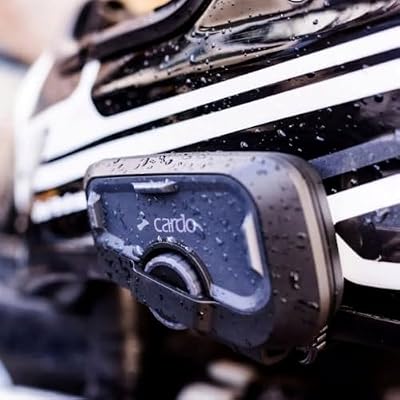
Nothing about the hardware changes with the box count. Same 13-hour battery, same 2-hour charge, same waterproof shell, same 1.2-kilometer intercom claim over a Bluetooth 4 core, a figure that describes a unit-to-unit link rather than the roughly 10-meter reach of ordinary phone-class Bluetooth.
The spec rows are identical down to the template junk: the 2-pack's table prints Unit Count of 1 on a two-unit box, files it under In Ear and True Wireless like an earbud, and carries a Portuguese-language certification row. Read past those. The real spec story is the one that earlier review told.
Test both boxes on day one
The most useful pair-specific account in the record comes from April 2024. A family ordered the duo for weekend rides, checked both units after delivery, and found one speaker silent unless the wire at the speaker pigtail was bent at the plug. They called Cardo support, who had them plug the speakers into a phone to confirm the fault, and replacement speakers arrived under warranty soon after.
Two lessons sit in that account. First, a two-box order doubles the chance that one unit has a fault, and this buyer caught theirs inside the return window because they tested immediately. Second, Cardo's support path worked when the fault was concrete: a described symptom, a phone test, a warranty replacement.
Our earlier review covers what happens when the problem is software and the symptoms are vague, and that record is much less kind.
The practical rule for any 2-pack buyer: pair the two units, play music through both speakers, and make a test call the day the boxes arrive. It takes ten minutes and it is the difference between a warranty swap and an argument about when the fault appeared.
One record, two listings
Amazon pools ratings across variant rungs, so both the single and the 2-pack print 4.3 stars from 2,609 ratings, split 72 percent five-star against 8 percent one-star. There is no way to read a track record for the pair rung specifically, and any review that pretends otherwise is guessing.
The record itself splits by age. The most helpful texts are warm: a top-rated account of a 10-minute first install, an owner whose speakers fit their Shoei's ear-pocket cutouts exactly, and a rider who moved from AirPods under the helmet and never went back.
The recent texts lean harder: the second half of 2026 brought complaints about music that sounds like hold music at volume, Bluetooth disconnects, an app that struggles to set up intercom groups, and one used-order box missing its mounting kit and microphone entirely.
We read the September 2026 one-star cluster one text at a time when we covered the single, so this article will not repeat that walk. What the pair buyer should take from it is narrower: several of those complaints involve getting units to talk to each other, and when two of your own units must connect every ride, pairing fragility matters more than it does for a solo rider.
One owner in the record pairs across brands, to riding partners on Sena units, and reports the connection works but the pairing dance must repeat after every power cycle or range loss. Two matching Cardo units avoid the cross-brand half of that problem.
What the controls and battery reports say
The longest recent critical text, from an unverified account in August 2026, is the most specific controls report in either sort, and it deserves its flags stated plainly. Its owner finds the three main buttons stiff and small with gloves on, says the dial presses upward far too easily, reports a backpack strap switching the FreeCom off by bumping the dial, and worries that the release tab needs enough force to threaten the mounting base.
One account, unverified, but it matches the shape of the button complaints from the single-unit coverage.
On battery, the claims hold in normal use. One owner reports seven hours of continuous music at medium volume, another rode over an hour with the battery still reading full. The 13-hour figure describes talk time under Cardo's own test conditions, and nobody in the captured record reports falling short of a riding day.
On audio, the record splits in a way our coverage of the single already mapped. The JBL-branded 40mm speakers earn real praise for volume in wind, and the same record carries a treble warning at high volume, a rider who found music sounded better with earplugs, and the 2026 hold-music complaint.
A helmet has no enclosure, so bass stays limited no matter whose name is on the driver. Set expectations for communication audio, not for concert audio.
FreeCom, or step up to Packtalk
One September 2025 text makes the case against this entire product line, and it is too specific to ignore. Its owner had run FreeCom units, found the Bluetooth connectivity hit or miss, and then upgraded to the Packtalk tier.
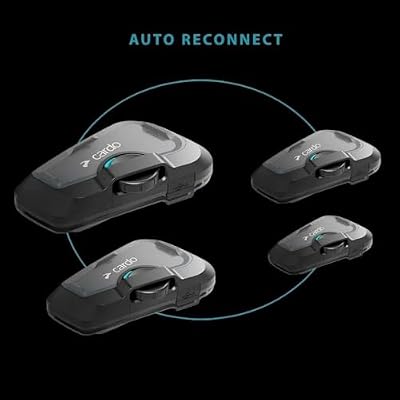
The difference they describe is reconnect behavior: Packtalk units remember their groups, reconnect on their own after a red light separates the riders, and work from the moment they power on, while the FreeCom needs the pairing process again after every power-off or out-of-range event. Their conclusion is blunt: they wish Cardo would stop selling the FreeCom line.
That is one rider's comparison, not our measurement, and it comes from someone who paid for the upgrade themselves.
But it names the exact trade this 7.9 percent discount buys. If auto-reconnect and group memory are worth roughly 200 more per pair to you, the Packtalk Edge 2-pack is the tier above, and our Packtalk Edge 2-pack review covers what the upgrade buys. The FREECOM 2X 2-pack sits below the 4X at a lower price with a smaller group size.
The pair buyer's real decision is between those three rungs, not between the 4X single and the 4X pair.
FAQ: what a pair buyer should know first
How much does the FREECOM 4X 2-pack save over two singles?
At the prices when we checked, the pair cost 521.96 against 566.92 for two singles, saving 44.96 or about 7.9 percent. Both rungs were probed on the same day.
Does the 2-pack have its own reviews?
No. Amazon pools the record across both rungs, so the 2,609 ratings cover the FREECOM 4X itself, not the box count. Our single-unit review reads that shared record in depth.
Is the FREECOM 4X waterproof?
The listing says waterproof, and unlike many listings in this class it prints the claim without an IP code attached. The captured record contains no water-failure reports in either direction.
What should I test when the pair arrives?
Pair the two units, play music through both speakers, and place a test call on day one. One 2024 buyer found a dead speaker in the second box this way, and Cardo replaced it under warranty within days.
Should I buy the 4X pair or a Packtalk pair?
If reconnect behavior and group memory matter more to you than roughly 200 per pair, the Packtalk tier is the upgrade one long-time owner argues for. If the budget leads, the 4X pair's discount is real and the four-way core is the same hardware.