Two riders who want Cardo's FREECOM 2X face a price fork the single listing never mentions, and the pair page is the cheaper side of it.
One page sells one headset. A second page sells two of them in a box, and it carries the same 3,097-rating record, the same 4.4 average, and a spec table with two battery rows that disagree by eleven hours. This review walks the pair page: what the box actually saves, which rows to ignore, and what the newest owners are complaining about.
The short version. The FREECOM 2X 2-pack is a real discount, about seven percent against two singles, on a two-way intercom with no mesh and no group mode. We already read the FREECOM 2X single review in depth, and the rating pool is identical on both pages. What the pair page adds is the arithmetic, the identity rows, and a 2026 complaint record about support silence and used-looking hardware.
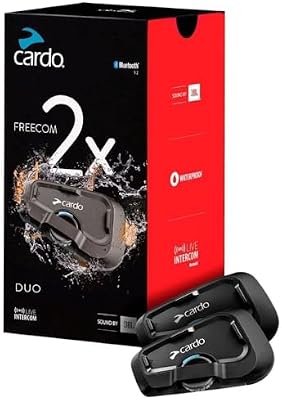
What the pair actually saves
The rung math favors the box, and we re-checked both prices on the same day. Two singles at 229.46 each come to 458.92. The 2-pack costs 427.46, so the pair saves 31.46, about seven percent off the two-single total.
That works out to 213.73 per helmet. Our intercom comparison table prices the row the same way, and the honest figure puts this pair among the most expensive fifth of the 210 intercoms we track. Cardo is a premium brand and this is premium pricing, so the discount is real but the starting point is high. The exact live position renders in the specs box on the table, where you can compare it against every other two-rider unit.
The ladder files the single and the pair as variants of one listing, and both rungs show the identical 3,097-rating pool. Everything the single review says about those ratings applies to the box of two.
One identity note before the record. The Number of Items row says 2, the Number of Packs row says 2, and a Unit Count row says 1, all on the same page. The two rows that matter agree, so the box holds two full headsets. The units are assembled in Ukraine, and the lot row on our capture points to a 2024 build.
Two battery rows, and what owners report instead
The spec table carries a contradiction you should see before you buy. The Battery Life row says 13 hours. The Battery Average Life row on the same page says 2 hours. Eleven hours apart, same product, same table.
The owner record settles it in the 13-hour row's favor. One of the two most-voted texts in our capture, at 24 helpful votes, comes from a rider at the two-year mark who charges about every two to three weeks on near-daily riding. A second owner rode about two hours a day for a week and sat at half charge. Neither of those is a 2-hour battery.
That same table cannot decide how the noise cancellation works either. One row says passive noise cancellation and another row lists active noise cancellation. The antenna rows split the same way, internal in one and external in the other. None of these contradictions change what ships, but they tell you how little attention the listing's data gets, so read the rows as noise and weigh the owners instead.
The honest limit sits elsewhere, and the listing prints it without noticing. The Intercom Range row claims 800 meters, half a mile, on hardware whose only radio mode is Bluetooth Classic. That radio holds a 40 to 400 meter band under ideal line of sight according to Wikipedia's Bluetooth overview, so the row is a manufacturer claim sitting above the physics, not a measurement. A July 2026 three-star text names the other cost of a two-way link: music sharing and intercom are either-or on this hardware. If you want music ducking under a group conversation rather than stopping for it, that is mesh territory, and the FREECOM 2X does not play there.
The support and used-unit complaints in the 2026 texts
The newest record has a shape, and it is not the sound.
Two verified 2026 texts report Cardo support going silent. An October text says flatly that the writer received no response after writing, and a July text calls the support line ridiculous, says nobody answers the phones, and calls the email a joke. Both buyers liked the sound and still rated the headset one star. A third verified text from February, at ten helpful votes, describes a defective headset with audio dropouts and a volume that climbed by itself, multiple factory resets that fixed nothing, and a fix that only worked after disabling the automatic volume control entirely.
Alongside the support thread runs a used-goods thread. A verified September text arrived with the mounting pads already stuck on, human and pet hair in the box, and no instructions. The owner cleaned it up, cut their own adhesive pads, and ended up pleased, but their own advice is to return it instead. An October text describes discoloration after three uses in six months and wonders aloud whether the headset was a return. Two of the ten most recent texts raise the question of previously owned hardware.
None of this damns the hardware, which the same texts call loud, clear, and easy to install. It damns the edges of the buying experience. Buy from a seller with a clean return path, and open the box on day one.
Sound, install, and the controls
The praise cluster is consistent and specific. Owners call the sound loud and clear, the calls come through above 55 miles an hour with the visor up in one account, and a rider on a loud work bike reports hearing music and conversations at 70 plus even over the siren. The 40mm JBL speakers earn their space when they sit on your ears. The most detailed sound text calls the result a concert in a shell and warns that a modular helmet without speaker pockets will feel the pressure, because these drivers are thick and broad.
Installation reports are easy across an HJC i80 and a Scorpion AT-960, and the boom mic needed a few position attempts before one owner found the comfortable spot. The FM radio earns its own praise, with better reception than the cheaper units one buyer tried first, and five presets that work.
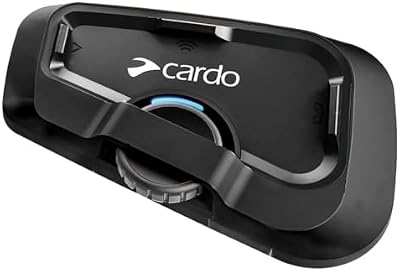
The controls take getting used to. Powering on and off means pressing two buttons at once, which one August owner calls tricky with the helmet on. The February text adds that the volume wheel sits on the bottom of the headset. A 2023 tip still applies: enable Bluetooth on the phone first, then power the Cardo, because the reverse order sometimes fails to connect.
FAQ
Is the 2-pack cheaper than two singles?
Yes. Two singles cost 458.92 at the single listing's live price and the 2-pack costs 427.46, a saving of 31.46, about seven percent. We re-checked both prices on the same day.
How long does the battery really last?
Trust the 13-hour row, not the 2-hour one. Owners report charging every two to three weeks on near-daily riding, and one measured about fourteen hours of use down to half charge. Nobody in the record supports the 2-hour figure.
Can two of these share music while talking?
No. A verified owner states it directly: music sharing and comms are either-or on this two-way intercom. There is no mesh mode to blend them.
Should you buy the pair or two singles?
The pair, if both riders are committed, because it saves about seven percent and the rating pool is identical. Buy one single first only if one rider might bail, and check the return path either way, given the used-unit reports above.