At 28.99, a helmet headset sits below the price of most phone mounts, and the BTQILEYOO Y10-2X sits in the cheaper third of our intercom table. The title promises a Dual 300m intercom, Bluetooth 5.3, smart noise reduction and IPX6 waterproofing, which is a lot of promise per dollar. The box, as the spec table quietly admits, holds one unit.
That gap between the title and the box is where this review starts, because it changes what the money buys. The record behind the listing is small but unusually honest for this tier: 86 ratings at 4.2 stars, 13 written texts, all carrying the purchase badge, and one of them deep enough to cover two riding seasons.
What follows is what those 13 owners actually used this headset for, what the listing argues with itself about, and the one feature the record cannot confirm at all.
The BTQILEYOO Y10-2X costs 28.99 at check time, sits in the cheaper third of our intercom value table, and holds the number 26 rank in its Amazon category, which for a clip-on headset at this price is the strongest demand signal in the whole record.
The owners rate the music and the battery. The intercom works for casual two-up use, with three owners reporting it alongside a partner. The 300 metres remains a paper figure, and the phone-call speaker volume is the one repeated caveat.
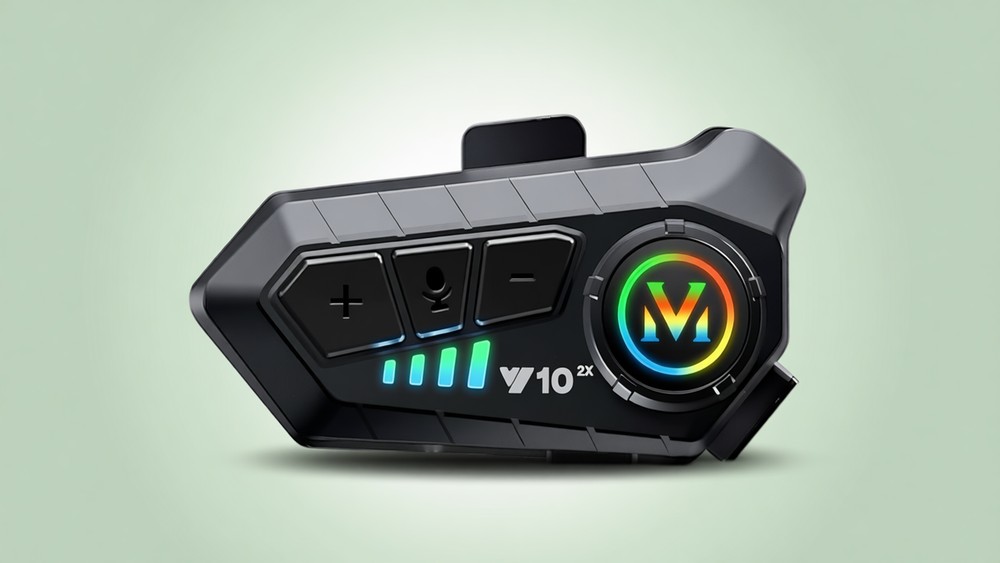
What Dual means, and what the box actually holds
The title says Dual 300m intercom. The spec table says Number of Items 1, Number of Packs 1, and Unit Count 1 Count. Those rows are the honest ones: this is one headset, and the word Dual describes connection behaviour, not box contents.
The bullets name it more precisely than the title does, since one of them advertises connecting two mobile phones to the single unit and switching between them.
Two riders who want helmet-to-helmet talk therefore buy two boxes, which lands the real pair price at 57.98.
The owner record supports the pairing working once you do that: one owner writing in Spanish bought two and reports clear communication with their riding partner, and two more owners describe using the intercom with a girlfriend or partner on rides, all positively. None of them measures a distance, and the 300 metre figure goes untested by every text in the record.
The distance claim deserves its context. The spec table's own Bluetooth Range row reads 10 metres, which is the figure for the phone link, and that is the number Classic Bluetooth actually delivers: typically under 10 metres, up to about 100 at best, with the long-range modes in Bluetooth 5 reaching 40 to 400 metres only under clear line of sight (Bluetooth, Wikipedia).
A 300 metre rider-to-rider claim is a different radio problem from a phone link, and the listing does nothing to explain how a 28.99 clip-on closes it. Ask for a measured report before you plan a ride around it.
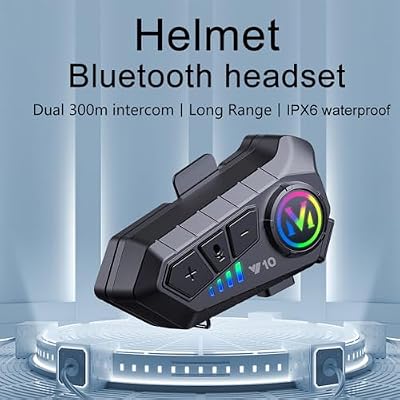
The battery bullet that argues with its own spec table
Bullet three on this listing is a sentence worth reading slowly. It says charging for 20 minutes gives a battery life of 2 hours, then continues that the headset offers 32 hours of music playback and up to 18 months of standby, all in one paragraph.
Those numbers cannot all describe the same thing, and the spec table does not resolve them: it carries Music Playback Time at 32 hours, Battery Average Life at 30 hours, a 1000mAh cell, and the same 18-month standby figure.
The most plausible reading is that the bullet is a garbled fast-charge claim, that 20 minutes on the USB-C port buys a couple of hours of use, and that 32 hours is the full-charge figure the spec row carries. That is a decode, not a fact, and I would not repeat it as one.
What the record does have is one real-world battery account, and it is a good one: an owner reports making multiple trips, two to four, on a single charge and still not having recharged it.
Another owner calls the battery life long in a shorter text. Between the garbled bullet and the owner accounts, the 30-hour spec row is the number I would plan around, and even that is paper until your own meter says otherwise.
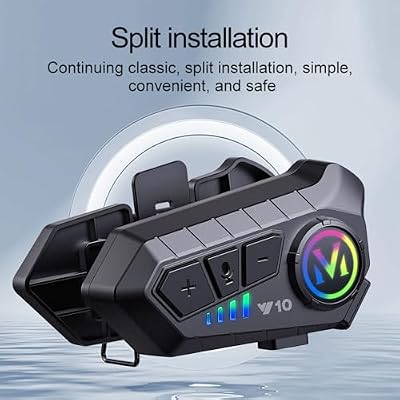
The one deep account, and the durability it carries
The top-voted text in this record is also the only one with helpful votes at all, ten of them, and it does the job of a small owner's manual.
The buyer wrote in October 2024, paid about 20 at the time, and listed what actually ships: speakers, two sets of microphones, and a metal clip for the helmet. That detail mattered, because the listing's own description said nothing about included parts, which was the reason they wrote the review in the first place.
Their sound notes are the honest kind. Thin bass, but music clear at moderate volume with enough road awareness left to hear what is going on around them.
Then came the update, written at the end of the 2025 riding season: the units were still working just fine. That is the entire durability record the Y10-2X has, one owner across more than a year of use, on a headset whose warranty row reads one year from purchase. It is a good sign, and it is one data point.
The spec table fills in the rest of the box contents the listing's marketing skips: a clip-on base, a charging cable, instruction manuals, speaker and microphone adhesives, and one wireless unit. The two-microphone setup from the owner's text is real, a boom mic plus a wired option, and one owner reports trying both and preferring having the choice.
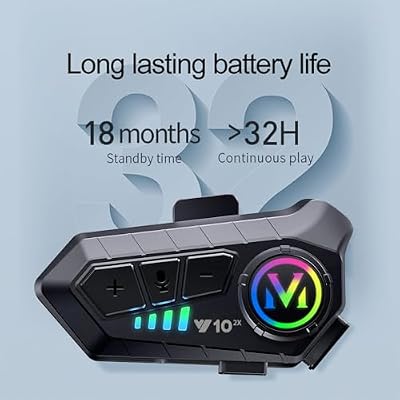
Music yes, phone calls the weak side
The record's clearest split sits between what this headset plays and what it hears. On music, the texts lean strongly positive: clear sound on a loud bike, comparisons favourable against hardware costing many times more, and one owner who returned a pair of Sena headsets they had paid more than 600 for, saying these sounded better to them.
Another compares it against a Cardo costing several times as much and reports it holds up. Both are single-owner comparisons and I would weigh them as that, not as measurements, but the direction is consistent and the price gap is not close.
Phone calls are the other side. One owner, otherwise impressed with the music, reports they could barely hear callers at all, which surprised them given how good the music sounded, while the callers on the other end heard them clearly with no bike noise behind the voice.
The only other audio note bearing on calls is indirect: one owner rates the sound as not the best but very good for the price, and nobody else in the record mentions call audio at all. The asymmetry in the first account is the pattern worth remembering, because it means the complaint may never reach you in your own testing until somebody on a call tells you they cannot make out your replies, or you cannot make out theirs.
There is one install lesson the record teaches for free. The owner who was initially disappointed with the volume traced it to speaker positioning, and reseating the speakers against their ears made all the difference. That matches how on-ear helmet speakers behave in general, and it is the first thing to try before concluding the hardware is quiet.
A number 26 rank, and a spec sheet full of borrowed rows
The demand fact first, because it is the strongest single number in this record: the Y10-2X holds the number 26 rank in Powersports Bluetooth Headsets at 28.99. Whatever the tier's weaknesses, a lot of riders are buying this, and the histogram agrees, with 59 percent five-star and only 5 percent one-star.
The spec sheet around the price is template work, and it borrows rows the hardware does not earn. There are Active Noise Cancellation entries on a clip-on helmet speaker, which is a headphone-spec row pasted onto a different product. The Water Resistance Level row says Waterproof while the title says IPX6, and IPX6 is a jet-spray rating, not submersion, so the title is the careful one.
A minimum operating temperature of minus 20 degrees Fahrenheit and an RGB ring light go unmentioned by every owner, as do the voice assistant and 10-second auto-answer features. None of that is disqualifying at this price, but it tells you the table describes a spec-sheet product, not a measured one.
The warranty row is real and short: one year from purchase. In this category that is below the multi-year terms some budget brands now print, though it beats the rows that read no warranty at all, and the two-season owner account above suggests the hardware outlives the paper.
Frequently Asked Questions
Do I need two units to talk to a passenger?
Yes. The box holds one headset, whatever the title's word Dual suggests. Two units cost 57.98, and the owner record reports clear two-up communication once a second unit is in the picture, though no owner has measured the range between them.
Is the 300 metre intercom range real?
Untested in this record. The spec table's own Bluetooth Range row reads 10 metres, which is the phone-link figure, and Classic Bluetooth typically delivers under 10 metres and up to about 100 at best. Treat 300 metres as a marketing claim until an owner reports a measured distance.
How is the battery in real use?
The one detailed account reports multiple trips, two to four, per charge without recharging. The spec rows claim 32 hours of music playback from a 1000mAh cell. The bullet promising a 2-hour battery life from a 20-minute charge is garbled listing copy and should be read as a fast-charge claim, not a spec.
Who should buy this, and who should spend more?
Buy it as a solo music, calls and navigation headset at a price where the gamble is small, and budget for a second unit if two-up talk is the actual goal. Riders who need proven intercom range, verified waterproofing or a longer warranty should spend more, and our Fodsports T1 PRO 2-pack review covers the other end of the budget tier, a two-unit box with its own quality-control story.