Ten-rider intercoms keep landing in the budget rows of the market, and BETOWEY's S5 is one of the boldest about it. The family now sells two ways, a single unit and a two-pack, and the single-unit listing is the one a rider lands on when they want to add one helmet at a time.
The pitch is the same on both pages: Bluetooth 5.3, audio multitasking, two microphones in the box, and a chain of up to ten helmets for less than the price of one name-brand unit.
The problem is the record, and the record has just changed shape. When we reviewed the two-pack in October, the failure texts all sat in 2026 and the 2025 texts read clean, which made the story look like a bad production year. The newest capture breaks that reading with a verified failure text from November 2025.
We scraped the single-unit listing and both review sorts signed in, merged them against the record our October review worked from, and set the price beside our intercom comparison table. What follows is the pack math, the failure that changes the timeline, the language pattern running through the record, and what one helmet of this pitch is worth.
The verdict up front. The single-unit S5 at 55.99 works out to 5.60 per rider against the ten-helmet capacity, which sits in the cheapest fifth of the 210 intercoms we track. The two-pack charges the same amount per helmet, so the pair buys no discount over buying twice.
Our two-pack review covers the family's range claims and the sound-and-service side in depth, and everything there still stands.
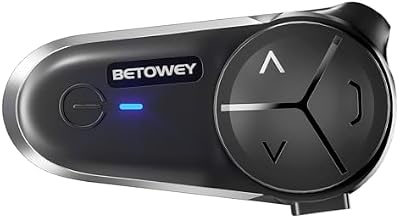
The single rung, and the pair that saves nothing
The S5 ladder is easy to read, which is more than the two-pack listing could say for itself.
Amazon's variant data lists two rungs, B0DPFVGW7D for Single Pack and B0DPFV9RK8 for Dual Pack, and the details table on this page counts correctly: Number of Items 1, Number of Packs 1. The two-pack page prints Number of Items 1 against a box that holds two, a contradiction our October review documented, and this page doesn't share it.
The pack math is simple. One unit costs 55.99. The two-pack we checked in October was 111.99, which is 56.00 per helmet with a penny of rounding.
The pair is a convenience purchase, not a discount, so a rider adding one helmet at a time loses nothing by buying the single rung twice.
At 5.60 per rider the single rung sits in the cheapest fifth of our table, and the exact live position sits on the comparison table because the listing reprices often.
Two honest notes hang on that figure, same as they do for every ten-rider budget listing. The per-rider metric flatters a ten-helmet claim nobody's exercised, and it prices the Bluetooth chain as if it holds together at group distances, which no owner has tested.
A fourth failure joins the record, from 2025
The two-pack article worked from 47 ratings and read the record as one clean split: seven 2025 texts showing a happy crowd, three 2026 texts showing hardware that failed. Today the pool reads 48 ratings at 3.5 stars with the bands at 42, 18, 8, 10 and 22 percent, and the capture behind it holds a text the earlier scrape missed.
That text is from November 7, 2025, it carries a purchase badge, and it describes a duo pack where trouble started in the box. One unit's volume-up button didn't work from the start, and the other later died, leaving only a light and no function.
The rider's account joins three later verified failures: connection cables that broke inside the first year with no replacement part to be found, a unit dead at its first recharge that wouldn't revive after a full night on two different chargers and cables, and a radio so bad on calls that the rider resets it and calls back.
The clean 2025-versus-2026 split is gone. The record now shows verified hardware failures in both years, four purchase-badged accounts in all, and two of the four describe units that misbehaved from day one. That pattern looks less like one bad production run and more like the ordinary box lottery of a budget brand, with a one-year warranty behind it.
The language pattern in the record
Twelve unique texts make up the written record, and nine of them are in Spanish, Italian or French. Every one of the four failure texts is written in Spanish or French. All three of the English-language texts are positive, praising sound, service or battery life.
Two of the Spanish-language failures were reviewed in the United States, so this is a pattern in the language of the texts rather than a clean map of where these units break. It matters for a practical reason: a buyer who reads only the English third of the record sees a spotless product, and the 3.5 average lives almost entirely in the part they skipped. The failure accounts are purchase-badged and specific, and reading them isn't optional if you're deciding on the S5.
The 3.5 figure averages two stories, and neither story is hidden. One describes a headset with clear sound, a battery that lasts, and a support team that answers. The other describes hardware that failed in year one with a warranty that runs out right about when it does.
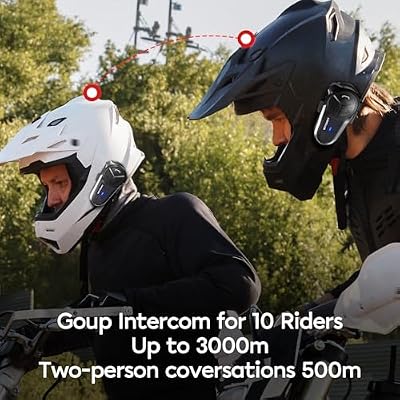
What the good texts agree on
The positive side of the record is thin on detail but consistent on three points. Sound clarity gets named in five texts, one buyer credits customer service with resolving an issue outright, and a second calls the service excellent without saying what for. Battery life has owner backing in the Spanish texts, alongside the 16-hour operating and 150-hour standby claims from the 1000mAh battery.
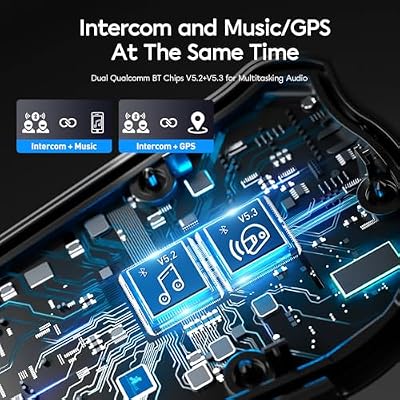
The audio multitasking pitch, music mixed over a live intercom without mode switching, gets named fondly by one rider.
The only independent range figure in the record comes from one owner who reported flawless performance at about 600 meters in rural areas, with the full claim untested. Our two-pack review decodes the 500-meter and 3,000-meter claims against how Bluetooth radio actually behaves, and phone-class radio reaches nothing like those numbers (Wikipedia, Bluetooth).
The listing's own paperwork needs the same skepticism it got on the two-pack page. A Noise Control row claims active noise cancellation on a headset at this price, the Control Method row says Remote with no remote in the box, and the Water Resistance row says Water Resistant with no IP code anywhere. None of those rows describe the headset a rider actually mounts on a helmet.
One S5, two S5s, or the cheaper mesh gamble
The decision this page forces is about scale, not features. For one helmet at 55.99, the S5 offers the cheapest way into a ten-rider-capable chain, both microphone styles in the box, and a support team with a credited fix. Nothing about the single rung changes the family risk: the failures are verified, they cluster in year one, and the warranty runs one year.
A rider adding helmets one at a time can buy the single rung repeatedly at the same per-helmet price as the pair, so the choice between the rungs is purely about how many boxes arrive at once.
A rider who wants to spend less per helmet should look at the THETREE X10 single we covered the same week, which sits at 39.99 with mesh on paper and a two-year warranty row, against a record that's younger and mostly unbadged. A rider whose group actually depends on ten connected helmets should treat both as experiments, because neither record exercises the group claim.
Buy the S5 single if you ride in pairs, want music mixed over the intercom, and accept that the verified failure accounts are the most detailed texts in the record. Skip it if the whole group staying connected is the point of the purchase, because that's the one claim nothing on this page supports.
Frequently asked questions
Does the single pack really contain one unit?
Yes, and this page counts correctly. Number of Items and Number of Packs both say 1, and the variant ladder lists Single Pack and Dual Pack as the only two rungs. The dual-pack listing is the one whose details table can't count its own box.
Is the single pack better value than the two-pack?
The per-helmet price is the same. One unit costs 55.99 and the two-pack we checked was 111.99, which is 56.00 per helmet with a penny of rounding. The pair buys convenience, not savings.
Does the S5 pair with intercoms from other brands?
The listing and the Compatible Devices row claim it does. No text in the record confirms it or contradicts it, and cross-brand pairing is a known weak point across budget headsets, so treat it as untested rather than true.
How long does the battery last?
The listing claims 16 hours of operating time and 150 hours on standby from the 1000mAh battery, and the Spanish-language texts back the battery life in real use. No owner in the record reports a full 16-hour day.