A BBSHD motor that suddenly stops responding, or cuts out under load and comes back later, usually has a working motor with a dying controller inside it. The gears, bearings and drive train are fine. The board that switches the current is what failed, and that is the situation this BAFANG replacement controller exists for.
It is a part, not an upgrade, and the record behind it is the thinnest of anything we have rebuilt this year: nine ratings, three written texts, and the only critical voice is a video nobody can watch. What the deepest text does establish is concrete and useful, because that buyer opened the box of the current revision and described what is actually inside.
The decision this page forces is a fit question, and the listing itself says so in plain words. Before you order anything, you should confirm which controller version your motor carries. Everything else in this review is downstream of that check.
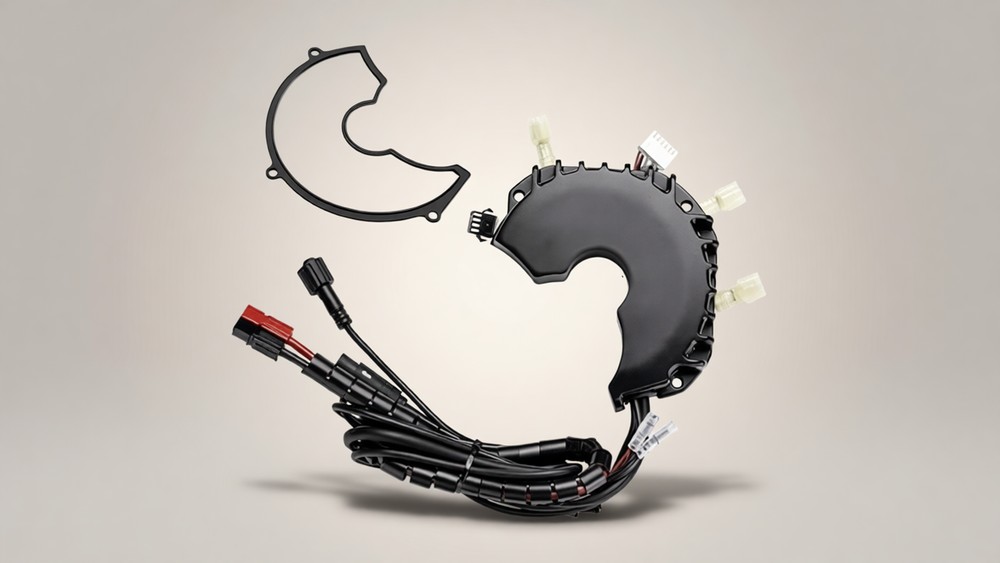
Why the controller is the part that fails first
An e-bike controller has the hardest job on the bike. It switches battery current through the motor's windings thousands of times a second using banks of transistors, and every one of those switches wastes a little heat. It also carries the logic that guards against over-voltage, over-current and thermal faults, and it reads the Hall effect sensors that tell it where the motor sits in its rotation, per Wikipedia's article on electronic speed controls.
All of that electronics lives inside the motor housing on a mid-drive, where heat soaks and vibration never stop.
The failure the deep text hints at is the one this part answers. When a BBSHD's controller dies, the motor, the gears and the bearings usually outlive it, and the whole unit doesn't need replacing. A replacement board at about a third of a complete BBSHD kit's price is the difference between a weekend repair and a new drive.
That is the promise, anyway. The catch is that Bafang changed the board's wiring over the years, and the change isn't cosmetic.
The version check is the whole purchase
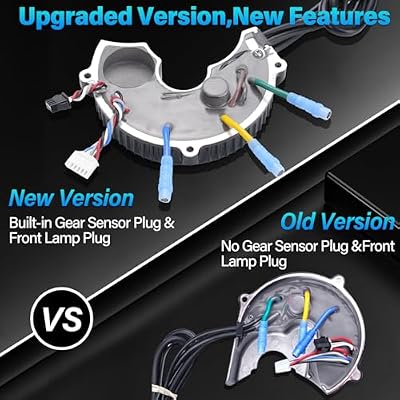
The listing's second bullet is the only sentence that matters: this is the new version of the mid-drive controller, with ports for a gear sensor and a light, and the seller tells you to confirm your controller version before ordering. That warning is boilerplate in tone and load-bearing in fact.
The two revisions do not differ in how they drive a motor. They differ in what plugs into them.
The one text that explains the difference in practice comes from an owner who bought this board as a spare for a BBSHD off-road bike. The board carries the gear sensor built in, and they date that generation to roughly 2020-2021 onward, when bikes started showing gear position on the display.
The practical test they imply is simple: look at the cable exiting your motor. If it has the gear-sensor port and your display shows gear position, this revision matches. If it does not, the seller's confirm-first advice is the only guard, and their support channel is the right place to send a photo of your connectors before money moves.
The same text removes one fear about the new wiring. Every connector on this board is keyed, shaped so the wrong plug can't go into the wrong socket. The routing wants care, but the connectors make the classic mistake impossible.
What the deep text establishes about the board
That owner's account is the most useful document on this listing, and it starts with the board's construction. The board is completely potted: all the connectors sit immersed in protective resin, so moisture never reaches the control electronics. For a component that lives inside a motor housing, that is the feature that decides whether the replacement outlives the season.
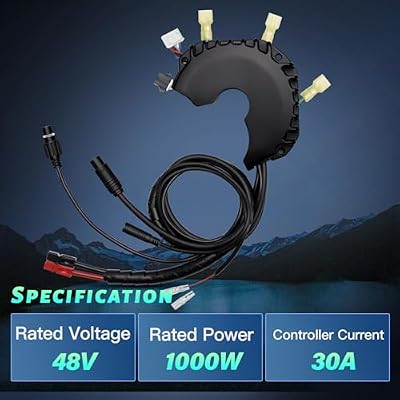
The numbers line up with the rated spec. The board is rated at 48V and 1000W, and the owner states it supports a peak of 1440W, which is 48 volts times 30 amps.
A rated continuous figure below the peak is the normal headroom pattern for these boards, not a contradiction. It carries the leads for a throttle and a display, which matches what a BBSHD owner reusing their existing setup will need.
One honest limit sits at the end of that text: the owner had not mounted the board yet when they wrote it. Their install-difficulty note still carries weight, because it matches the hardware's layout. The controller sits inside the protection cap together with the motor, and the wiring wants some familiarity, so it isn't easy for anyone who has never opened a motor.
What they had not done is ride it, so no text in the record describes a completed install of this board on a bike.
A spec table pasted from a bicycle
The spec table under this listing describes a bicycle that doesn't exist. It lists one speed, disc brakes, dual suspension, a twist-grip shifter, a rear derailleur and a wheel size of 1 inch. The theme row reads "Cars".
None of it describes a controller board, and a buyer who reads spec tables carefully will learn nothing here about the board.
The detail rows degrade further. The model number prints as a garbled string that looks like "48V 1000W Controller" run through an OCR pass. The warranty type reads Limited with no term attached, so the only stated coverage on the page is whatever the seller's after-service bullet promises.
The one useful detail hiding in the table is the comparison module underneath, which quietly lists the BBS01B and BBS02B controller variants of the same family.
That module matters because the live title has drifted. It now names BBS01B, BBS02B and BBSHD fitment, while the first bullet says rated 48V and 1000W for the BBSHD. A BBS01B is a 250W motor and a BBS02B is 750W, so a 1000W-rated board is not a like-for-like drop-in for either.
Treat the bullet and the version warning as the honest spec, and treat the title's breadth as search-bait until the seller confirms otherwise.
Nine ratings and one unwatchable video
The record deserves an honest frame. Nine people rated this part 4.2 out of 5, and three left written texts. One of those three is a German two-star review whose text is a video we can't watch, so the only critical voice in the record is silent to us.
The other two are five-star Italian texts, both without a purchase badge, and the deeper of the two is the pre-install account quoted above.
The second Italian text describes hiring an expert for the install and reports the bike pulls harder afterward, with battery life they call long. It also claims the board works with most bikes in commerce, which is the listing's own fit language repeated back. Between the two texts, the one worth trusting is the one that admits what its author had not done yet.
That is a thin foundation for a purchase, and this review won't pretend otherwise. The part itself is a Bafang OEM board at a fair price with one genuinely useful technical description behind it.
The risk is not the board. The risk is buying it for a motor it doesn't match.
The repair math, and when it wastes the money
At the price we checked, this board costs about 0.116 per rated watt, which puts it 27th of the 182 kits and controllers we track against a median near 0.19. It sits in the cheaper third of the conversion kit table.
Our BBSHD kit review covers the full-motor end of that trade, and the BBS02B sibling review covers the cheaper motor family the title now also names.
The math only works when the diagnosis is right. A new board fixes a dead controller and does nothing for a failed speed sensor, a damaged cable, or a display with its own fault.
So before ordering, photograph the connectors on your current cable and compare them against the listing images. Send the photo to the seller if the ports don't match, because their confirmation costs nothing and a wrong board costs a return cycle. Keep the old board until the new one has real miles on it, since reverting is easier than diagnosing from memory.
Buy this board if your BBSHD carries the gear-sensor generation of wiring, your diagnosis points at the controller, and you're comfortable with an install that wants patience. Skip it if your motor predates the gear-sensor port without seller confirmation, or if the fault could be anywhere else in the system, because a board that can't talk to your display is an expensive paperweight.
Frequently asked questions
Will this controller fit my BBS02?
The title says so and the bullet says no. The board is rated 48V and 1000W for the BBSHD, while the BBS02B is a 750W motor. The listing's own comparison module lists separate BBS01B and BBS02B variants, and that is where the family fitment question should be settled before buying this board.
How do I know if I have the new version?
Count the ports on the cable exiting your motor. The new revision carries ports for a gear sensor and a light, and the owner who described the board dates the gear-sensor generation to roughly 2020-2021 onward, when displays started showing gear position. If your display shows gear position, you likely have the matching wiring.
Is installation difficult?
For anyone who has never opened a motor, yes. The controller sits inside the protection cap with the motor and the wiring wants familiarity. The keyed connectors prevent wrong connections, and one buyer in the record hired an expert rather than attempt it.
What does the resin potting actually do?
The connectors and control electronics sit immersed in protective resin, which keeps moisture off the components. For a board living inside a motor housing, that is the feature the deep text singles out, and it is the one you cannot check from a spec table.
Can anything in the record tell me how long this board lasts?
No. The deepest text was written before installation, the other positive text is generic, and the one critical review is a video with no readable text. Nobody in the record reports long-term reliability of this board.