Group rides run on promises. Somebody read that mesh intercoms keep ten riders connected through hills and dead zones, and somebody else checked the price of the systems that made mesh famous and quietly changed the subject. The budget shelf answers with its own version of the same pitch, and the numbers on the box keep getting bigger.
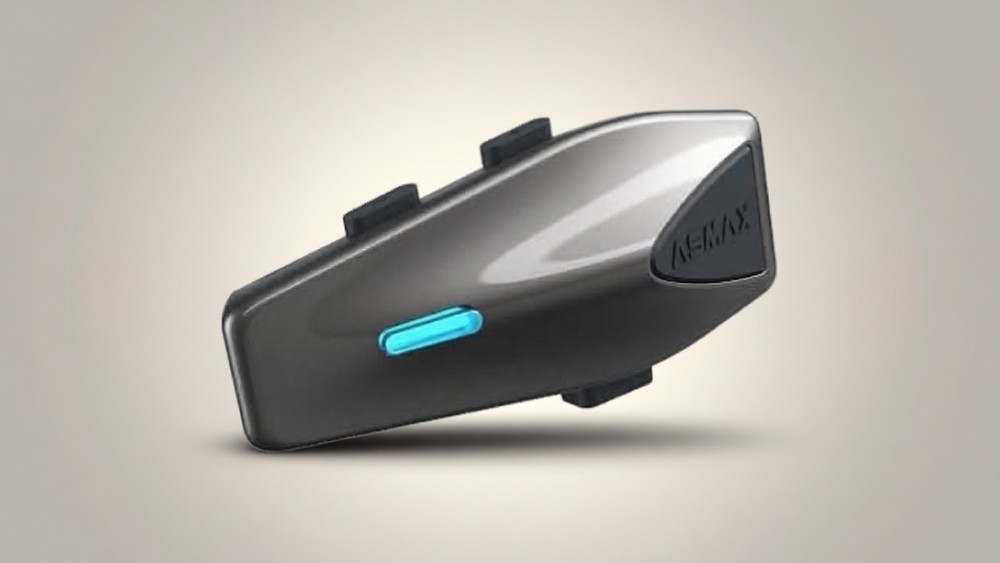
The ASMAX S1 is one of the loudest of them: eight riders over five miles, fifty over a phone network, voice control that works offline, all for less than one of the big-brand units costs on sale. A claim list that long usually raises a simpler question than any of the features. Does anybody who bought this thing actually use it that way?
There's one honest way to find out, and it isn't the bullet points. It's what the people who paid turned up.
The ASMAX S1 sells as a single headset at a checked price of 83.99, rated 4.4 from 1,084 ratings, and Amazon's helmet-communication bestseller list had it at number 5 when checked.
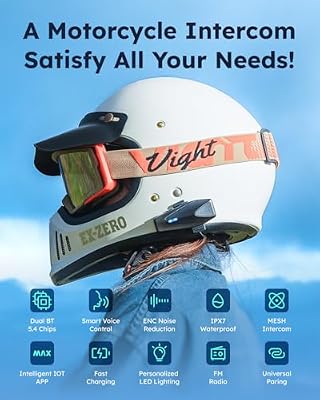
The pitch is a stack of big numbers: mesh for 8 riders across 5 miles, a 5G mode reaching 50, Bluetooth 5.4, offline voice control with a Hi Max wake word, IPX7 waterproofing. The recent owner record is much smaller than the pitch. All 10 captured texts carry a confirmed order behind them, warm and short, and not one mentions mesh, a group, or any distance.
The one use described is a rider and a pillion on the same bike, talking over multipoint. On value: our comparison table divides 83.99 across 2 seats to about 42 a rider, close to the middle of the 192 intercoms we track, but the box holds one unit. The honest first-rider cost is the full 83.99, and a rider plus a passenger needs two boxes, about 167.98.
The listing argues with itself
Before the pitch, the paperwork, and here it's worth reading. The spec table's Model Name field reads S2 Helmet Bluetooth Headset, on an S1 listing. The bullet claims 13 hours of intercom while the spec table's battery life field reads 18.
Range appears three different ways: a 5-mile mesh bullet, 3 to 8 km in the spec table, and 1.6 km for plain Bluetooth. Noise Control reads Active Noise Cancellation, which is a feature for the person wearing the headset, while the bullets describe ENC microphone noise reduction, which is a feature for the person hearing you. Those are different products' promises.
None of this proves the headset is bad. It proves the listing was filled in loosely, and that is a reason to weigh the claims that matter to you against the owner record and the return window rather than against the bullets. A seller that cannot keep its own model number straight has not earned the benefit of the doubt on 5-mile mesh.
What mesh means, and what would prove it here
The word mesh does real work in this category, so it's worth being precise about what it buys.
In a genuine mesh network, every unit relays for the others and the chain self-heals around a broken link (Wikipedia, Mesh networking). That property is what lets a large group stay connected when one rider drops behind a hill, because the message hops through the riders between. An ordinary Bluetooth chain does none of that, and cross-vendor interoperability between mesh systems is not assured either.
The S1's mesh lives in Group Mode, and its headline 5G mode needs a firmware update and the ASMAX app per the listing's own bullets, so the biggest claims are software-gated.
What the owner record offers as proof of any of it: nothing yet. No captured text describes a mesh group at any size, working or not. A rider who needs 8-unit touring should treat the claim as untested here and buy inside a return window, or see what mesh owners actually ran into on the EJEAS Q8.
Voice control: the feature half-documented
The genuinely different thing about the S1 is not the mesh. It's that the voice control runs on the headset itself, offline, with a Hi Max wake word, so commands work in the mountains where the phone has no signal. One owner reports that the smart voice control makes it easy to use while riding without constantly messing with buttons, which is exactly the job it exists for.
The friction is real too. Another owner is still figuring the voice control out, and calls the instructions inadequate: no charging information, very little about installation, and a website video that does not help. There are 3 physical buttons as the fallback, and the same owner still calls it a nice unit for the price.
Read those two together and the feature lands as promising but half-documented: plan to spend some setup time on it, and do not expect the paper manual to carry you.
What IPX7 actually promises, and what the battery claim lacks
The waterproof rating deserves its own decode. IPX7 under IEC 60529 means the headset survives 1 meter of fresh water for up to 30 minutes (Wikipedia, IP code).
Jet protection is not cumulative beyond IPX6, so an IPX7 unit has not passed a hose test, and the X means dust protection went untested. The bullet's rain, dust and snow list outruns the rating on two of its three words. The owner record's weather evidence fits the rating fine: one rider took it through first rain with no problem.
On battery, the claims multiply. The listing says a 980mAh cell, a 60-minute charge, 13 hours of intercom, 16 hours of music and 96 hours of standby.
The spec table says 18 hours. One owner says only that the battery seems to last a decent while, and nobody meters it. The honest plan is a charge a day and a shrug at the rest until somebody publishes a number.
FAQ: the untested mesh, the IPX7 small print and the three battery figures
Does the 8-rider mesh work?
Untested here. No captured owner text reports any group at all, so the 8-rider claim rests on the listing alone. Mesh means units relay for each other and self-heal, which ordinary Bluetooth chains don't do, and the S1's mesh modes are gated behind Group Mode and app firmware per the listing.
Can it talk to Sena and Cardo units?
The listing claims universal pairing plus a CloudTalk app mode for cross-brand contact. In mesh generally, cross-vendor interoperability is not assured, and no captured text confirms a working cross-brand link. Plan on it as a claim, not a capability.
Is it waterproof?
IPX7 means 1 meter of fresh water for 30 minutes. Jets and dust are not covered by the rating, and one owner has reported rain with no problem, which is the entire weather record.
How long does the battery last?
It depends which line you read: 13, 16 or 18 hours of use, or 96 hours of standby. Nobody who bought one has published a measurement, so plan a charge a day for a full riding day.
What does a rider plus a passenger pay?
Two boxes at about 167.98. The table's 42 a rider figure divides one box across two seats, which is how every single-unit listing makes itself look cheaper than it rides.