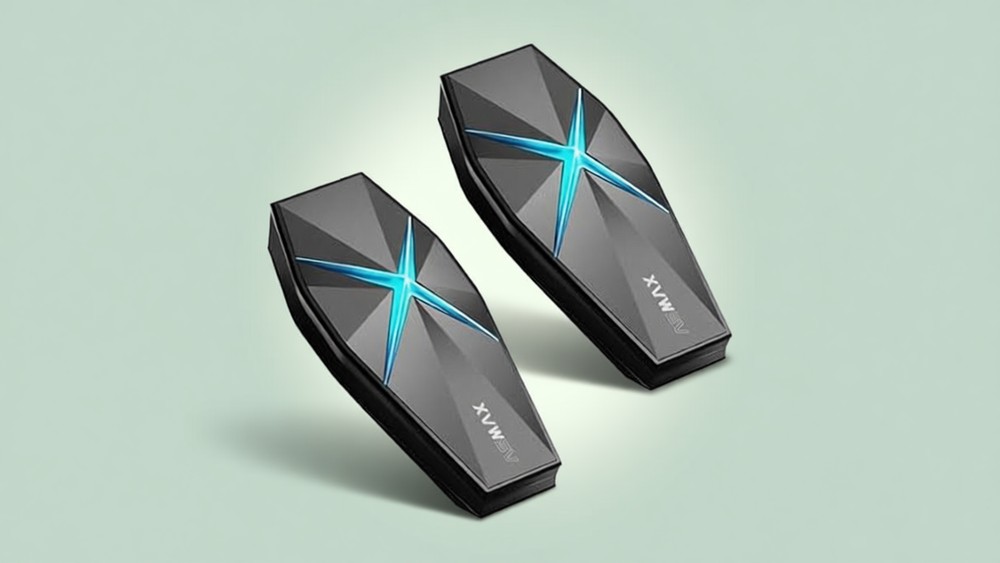
Buying two full mesh units is the most expensive way to buy the F1s, because it costs about 130 per seat, which sits near the top of everything we track. This premium price buys Mesh 5.0 for ten riders, CloudTalk for fifty, and offline voice control. It suits riding couples who want identical firmware and one warranty. The range claim gets halved in real terrain.
What two units get you that one cannot
Buying the pair for 259.99 saves about ten per seat compared to buying two single units at 139.99 each, which makes the math work for those who ride together. You get matched firmware revisions on both boxes, so you won't have to worry about software mismatches. One warranty covers both devices, which simplifies the process if a part breaks on the road. Solo commuters should skip this pack entirely, because the single unit is strictly better for a person who travels alone.
This set is built for passenger pairs or couples who need to stay connected, or for riders who want a spare ready in case one fails during a long trip. Having a backup means a dead headset does not end the ride, you just swap mounts and carry on. A verified buyer noted that the install was easy, which helps when you want to get out and ride quickly.
Recent reviews show the 40mm speakers stay loud enough for the highway, so you can hear your friends even when the wind pushes hard against your helmet. The mesh connections hold up in stop-and-go traffic. One owner reported a defective unit, but support fixed it fast, which is the only field evidence we have on how the brand handles a failure. That calm is what you are really buying with the second unit.
Mesh 5.0 and CloudTalk: the claim, the half, the catch
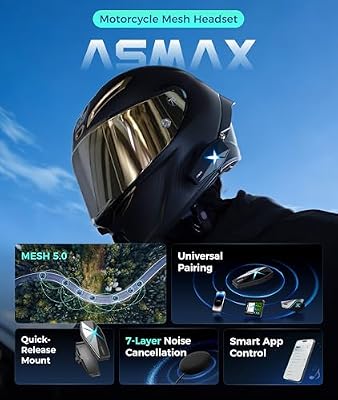
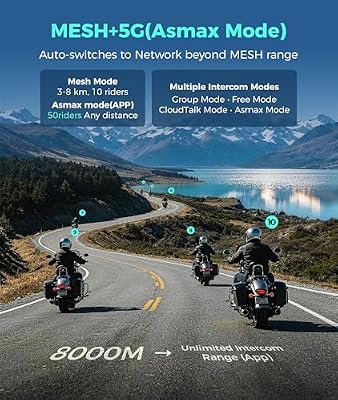
The box claims a five-mile span for the mesh network, but independent guidance puts real mesh range at roughly half a mile to a mile in actual terrain. Since line-of-sight claims assume flat open ground, expect much less through hills and trees. The mesh self-heals when a rider drops out, so nobody stops to re-pair the way older Bluetooth chains forced.
CloudTalk extends the group to fifty riders over cellular data, but the feature dies right where the 5G or 4G signal dies. Hit a dead zone and the units fall back to the mesh's own radio range instantly. You lose the long-distance link the moment the cell towers disappear. Plan routes around the signal map if fifty-rider talk is the reason you are buying.
Independent guidance puts real mesh range near half a mile to a mile between adjacent riders, which matches the halved-claim pattern. The five-mile figure is the open-terrain ceiling, not the plan for your typical ride. If the group stretches too thin, the link breaks and you ride in silence until you close the gap.
Sound, battery, and the controls that work with gloves
The 40mm speakers carry EQ modes, and the dual-chip Bluetooth 5.3 keeps music and intercom on separate processors, so switching between a playlist and a conversation does not drop either one. Music ducks automatically when someone talks, then comes back when they finish. That priority handling is what separates the two-chip designs from the budget single-chip units that fight over one audio channel.
The battery claims 22 hours of talk and 35 hours of music from a 1250mAh cell, with a full charge in fifty minutes. Those figures are recent listing claims, and no long-term owner data has stress-tested them yet, so treat them as the optimistic case. The parts you can bank on: the charge speed, and the fact that you can keep using the headset while it charges, which turns a lunch stop into a full top-up.
The rotary dial gives tactile clicks you can feel through thick gloves, and the offline voice control still works deep in a tunnel where phone assistants go quiet. The lab claims ninety percent noise cancellation at 100mph, while recent owners describe clear audio near 75mph in a full-face helmet. Open-face riders lose some clarity to wind, which is a limit of the category, not this unit. IP67 sealing and the quick-release mount round out the practical side.
Who should buy it, and who should spend differently
If you and a partner ride together regularly, this two-pack makes sense because you get matched firmware and a two-year warranty covering both units. The mesh self-heals when someone drops out, so the group stays linked without anyone stopping to re-pair. For a rider-plus-passenger combination, the pair is the natural purchase and the per-seat premium buys real convenience.
Skip it if you ride solo, because the single F1s gives you the same hardware for less. Skip it if your group has three or more riders who each need their own unit anyway, since singles add up the same way. And think twice if your routes cross dead zones, because CloudTalk will not save you there. Compare the per-seat position against everything else on our intercom comparison table, see how the family shapes up in the ASMAX S1 review, and check today's 2-pack price before you decide.
Frequently Asked Questions
What is the real mesh range between riders?
Plan on roughly half a mile to a mile between adjacent riders in actual terrain, even though the box claims five. The five-mile figure assumes flat open ground with no obstructions, and hills, buildings, and even helmet shells cut it fast. The saving grace is that mesh self-heals: when a rider drops out of range and comes back, the network rebuilds itself without anyone stopping to re-pair.
Is the 2-pack cheaper than buying two singles?
Yes, by a little. The pair runs 259.99 while two singles at 139.99 each would cost about 280, so you save roughly ten dollars per seat. The bigger benefits are practical: both units ship with matched firmware, and one two-year warranty covers both boxes instead of two separate claims.
Does CloudTalk work when there is no cell signal?
No. CloudTalk rides on your phone's 5G or 4G connection, so it disappears exactly where the signal does. In a dead zone the units fall back to the mesh's own radio range, which is the half-mile-to-a-mile figure above. If your regular routes cross areas with no coverage, treat CloudTalk as a bonus you will rarely use, not a feature you can plan around.
Can the F1s pair with other brands of headsets?
One-to-one Bluetooth pairing with other brands works, so you can talk to a friend on a Cardo or Sena at basic intercom level. But Mesh 5.0 groups and CloudTalk are ASMAX-only features, and they are the reason to buy an F1s in the first place. A mixed-brand group falls back to Bluetooth chains with all their usual limits.
How long does the battery actually last?
The listing claims 22 hours of talk time and 35 hours of music from the 1250mAh battery, with a 50-minute full charge. Those figures are recent listing claims and have not been time-tested by long-term owners yet, so treat them as the optimistic case. The charge speed and use-while-charging support are the more verifiable perks: even if real talk time lands lower, a 50-minute top-up at a lunch stop covers the difference.