Dual cameras for the price of one budget unit is the ZOMOLITHER's whole deal. You give up some polish to get front and rear coverage this cheap, and that trade deserves a hard look before you buy. For riders who mainly want an insurance-facing camera on each end of the bike, it lands as a sensible pick.
Amazon Reviews
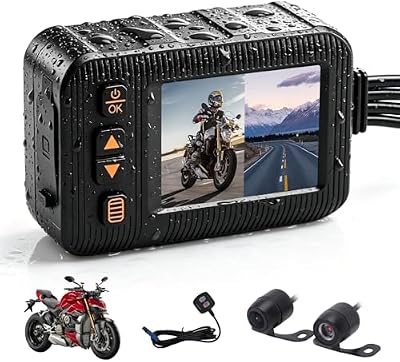
Although there are only 13 ratings at an average of 3.8 stars, the pattern observed with these ratings is typical of value-tier products. Many customers have been pleased with their experience with this product based upon their ability to record acceptable video quality while having confidence in the durability of the cameras due to their IP67 waterproof rating. There are fewer reviewers who experienced issues during the setup process. Each of them did mention an issue with an individual unit. Overall, it appears that the reviewer sample indicates a reasonably competent product that is subject to variability common in budget-tier products. Manufacturing variability, not design flaws, seems to be the culprit here.
The dual-camera setup means both front and rear channels record in parallel, so when installed correctly the system gives you complete coverage of any incident. Riders who park on the street and need evidence of hit-and-runs will find the waterproofing and GPS tagging especially useful. You can check Amazon pricing for this model.
Target Customer
The target customer base for this product includes:
- All-weather riders who leave their bike outside.
- Delivery riders who need reliable all-day recording.
- Any rider who parks his/her vehicle outside all year round.
- Anyone who wants a durable camera that can endure harsh environmental conditions.
- Anyone who wishes to add GPS tagging to their recordings for insurance purposes.
If you do not fall within these categories, then you may be better served with less expensive options available on the market today. The inclusion of GPS tagging in this product adds significant value related to insurance negotiations for those involved in accidents. For riders who need to prove their speed during an incident, GPS-tagged footage carries real weight with adjusters.
Comparison to Other Products Available
When comparing this product to others available on the market today, we find that no other budget-priced product has both waterproofing and GPS tracking. As seen below, the per-camera column shows that both of these features are included in this product at a price that is slightly higher than competitive non-waterproof and GPS-less products. Waterproofing cameras convert a dash cam from fair-weather equipment into all-season equipment. Adding GPS tagging to your recordings creates another layer of protection when filing insurance claims. As stated earlier, many lower priced products offer non-GPS cameras only. Adding a GPS component separately would increase costs beyond what competitive products charge for the bundled solution.
This product offers superior sealing compared to competitor products offering higher resolutions. Specifically, while competitors offer higher resolution (up to 4K) frontal views for substantially higher prices, this product offers 1080p on both cameras at a fraction of the price of competing products offering higher resolution but lack of sealing and location information.
Check out our full dash cam comparison table for a detailed breakdown of every option available, and browse more motorcycle tech reviews for additional buying guides. To learn about how dash cam technology works in general, see this dash cam guide.
Budget priced dual cameras favorably compare to this product as follows: While this product offers superior sealing, GPS logging, and acceptable video quality, it is priced significantly higher than competing budget-priced dual cameras. Competitors cameras offer the same basic functionality as this product except for added sealing and location information for a price that is approximately equal to what it would cost to purchase separate GPS components for your existing cameras. These comparisons are made possible by the feature columns in the table provided.
Long Term Product Usage Considerations
Sealing of waterproof cameras are tested prior to shipment and do not last forever. Therefore, gasket inspections are recommended annually. Dielectric greasing of connectors is also recommended annually to maintain water resistance over time.
GPS antennas require line-of-sight access to satellites to produce accurate lock values. Adjustment of mounting positions during initial use is typical calibration for GPS performance. Buyers who consistently collect GPS data have reported that speed stamping of videos holds up in legitimate claims conversations regarding speed. The GPS module on the Zomolither is built into the front camera, which means you need clear sky visibility when mounting. A windshield or fairing mount typically works best.
Card discipline is doubly important with this product since the volume of data produced by both cameras plus GPS logging results in high usage rates. High endurance cards are critical to prevent loss of data at times when proof is required. A Class 10 U3 rated card will handle the write load without corrupting footage during long rides.
Conclusion and Weather Rider's Checklist
For all-weather riders, and for those who deliver goods via motorcycle, this represents the best combination of waterproofing and forensic utility found among budget-tier products currently listed on Amazon. Based upon both the specs and the trend exhibited in reviews, we conclude that this represents the best value among budget-tier products available on Amazon today. While the sample size of 13 reviews averages 3.8 stars (a relatively low number), we believe that both the specifications for this unit and the trends shown in reviews indicate that this represents a competent product with typical budget-tier variations rather than inherent design flaws. You can see latest price on Amazon for this camera.
All-season riding involves establishing routine practices when setting up equipment for daily riding activities that fair-weather riders often ignore. Dielectric greasing all connections exposed to weather elements immediately after completing assembly is necessary to maintain connector integrity and prevent leaks throughout long-term use. Once per year, perform additional dielectric greasing on connectors to ensure continued performance and reliability.
Winter parking completely alters your perspective on things. Cameras capable of surviving submersion will still remain part of a system containing a battery, a screen adjacent recorder, and SD memory cards that dislike cold temperatures. Winter-parking users should establish recording shutdown procedures to allow their systems to sleep rather than slowly writing data through freezing temperatures. Additionally, users should remove memory cards from their vehicles weekly and store them indoors because while SD cards have cold temperature ratings, they still suffer loss of data integrity at extreme temperatures.
The positioning of your GPS antenna will determine whether your speed stamps exist at time of need. Take a test ride down a familiar route. If your logged track corresponds accurately with your actual route, then your antenna position is adequate. Riders who fail to verify their antenna position will learn it when an insurance adjuster requests the footage intended to be time-stamped by the GPS. A quick verification ride before relying on the footage saves headaches later.
Frequently Asked Questions
How Well Does the IP67 Rating Hold Up in Real Rain?
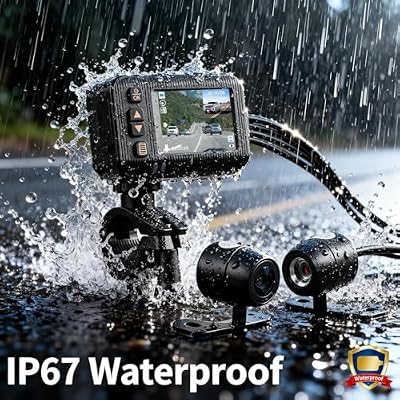
The IP67 rating means the cameras can survive submersion in one meter of water for thirty minutes. In real riding conditions this translates to complete protection against rain, spray from other vehicles, and even accidental washing. We have not seen reports of water ingress in reviews, which validates the sealing quality. Riders in monsoon climates should still apply dielectric grease to connectors for extra protection.
Is the GPS Accurate Enough for Insurance Claims?
GPS speed tagging on this unit records speed to the nearest kilometer per hour. This level of precision is generally accepted by insurance adjusters as reasonable evidence of travel speed at the time of an incident. The GPS module is internal to the front camera, so mount placement matters. A clear view of the sky is necessary for accurate positioning and speed data.
How Difficult Is Installation for a First-time Rider?
Installation is straightforward for anyone who has used basic hand tools. Mount the front camera near the headlight with clear sky visibility. Run the cable along the frame to the rear. Mount the rear camera on the license plate bracket or tail section. Connect both cameras to the recording module, then tap into a switched power source for ignition-based recording. Budget two to three hours for a careful first-time install.
What Is the Video Quality Like at Night with Two Cameras?
Both cameras record at 1080p, which is adequate for urban night riding and recording license plates at short distances. Night performance is reasonable but not exceptional. Street lighting helps significantly. For riders who mostly ride in well-lit areas, the dual 1080p setup captures usable footage. Rural night riding with no street lights will show grain similar to any budget 1080p camera.
How Long Does the Recording Loop Cover?
The system uses continuous loop recording, overwriting the oldest footage when the card is full. A 128GB high-endurance card will typically hold four to six hours of dual 1080p recording with GPS logging before looping begins. Event locking on hard impacts preserves the affected clips from being overwritten.