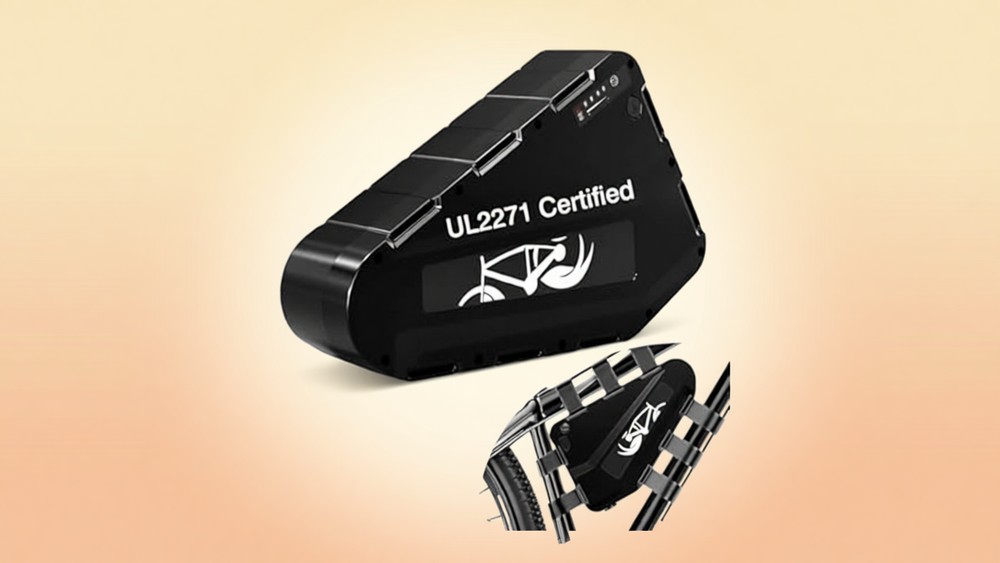
A high-power build needs a pack that can feed it, and the triangle space in your frame is where the big ones live. The ZLSHELIBK 52V 21.2Ah promises a kilowatt-hour and change plus a 60A BMS, which on paper covers everything from a 500W commuter to a 3000W monster.
Spec sheets like that are cheap to print. What tells you whether a seller stands behind the cells is the record after people have charged the pack, ridden it, and asked for help when something went wrong. This listing's record is four ratings, one detailed owner text, and it is not the kind of detail that reassures.
Here is what the record shows as of today, how the heat complaint in it compares with the industry's own numbers, and what the model number quietly tells you before you order.
Sixty amps at 52V is about 3120W of continuous headroom on a fresh pack, which just covers the 500 to 3000W motor window in the title. The capacity claim survives arithmetic too, because 52 times 21.2 is 1102.4Wh. On paper, this is exactly the triangle pack a high-power build wants.
The record is another matter. Four ratings, a 3.8 average, a 30 percent one-star share, and two written texts, both tied to confirmed orders. The only substantive text is negative, and most of it is about the seller rather than the pack.
The price also moved against you while the listing aged: our table recorded 399.99, about 0.36 per watt-hour, and the live page showed 499.99 with no buy box at all, about 0.45 per watt-hour. That sits among the most expensive per watt-hour of the 301 packs we track.
Nothing here proves the pack is bad. Nothing here proves it is good either. What follows is the record as it stands, the heat complaint read against the industry's own numbers, and the one number the title never states.
The heat complaint, read against the industry norm
One owner has found the pack got very hot while charging, and the seller told them the warmth was normal for a battery getting hot to the touch. The same message insisted the pack was safe, but that the owner should charge it outside. If a pack is safe, it does not need to be kept away from the house while it charges, and the contradiction is the tell.
According to Battery University's charging guide, a lithium-ion cell runs nearly cool during a normal charge because charge efficiency sits near 99 percent.
A pack can warm by about five degrees as it reaches full charge. More than ten degrees of temperature rise under moderate charging means stop using the battery or the charger until you know why. A pack hot to the touch partway through a charge sits far outside that band, whatever the support inbox says about normal.
That same owner has called the pack a rebranded Unit Pack Power unit, and has described a week of email exchanges that ended with a request for a phone call. We did not verify the rebranding claim, so it stays attributed. The return terms the owner has described are concrete though: shipping paid by the buyer, tracking number required.

What the model number admits that the title withholds
The title says 52V and stops there. The model string, mini2170/14S4P/53G, says more: fourteen series groups of four parallel 2170-format cells. Fourteen groups at 4.2 volts per cell is a 58.8V full charge, and that is the number both the charger and the controller have to live with.
That layout is why a 52V pack is not a 48V pack with a higher number on it. A 48V controller's low-voltage cutoff sits below where a 14S pack's floor is, so it can keep drawing the pack down past the point the cells are happy with. A 48V charger can never fill it in the first place, because the matching charger has to put out 58.8V.
The single listing bullet covers weather: IP65, which the IEC 60529 standard defines as dust tight and protected against low-pressure water jets from any angle. It is a spray rating, not an immersion rating, and the bullet's own wording agrees. No submersion, no prolonged heavy rain.

How much weight a 4-rating record can carry
When we first logged this pack in February 2026, the listing carried eleven reviews and a perfect 5.0 average. Today the page shows four ratings at 3.8, seventy percent five stars and thirty percent one star with nothing in between. Two of the four raters left no text at all, and the five-star text is two sentences long with nothing in it about how the pack behaves.
A record this small can turn over with a single rating, so treat it as a hint, not a verdict.
Nobody in the record has reported range on a real bike, metered the capacity against the label, or pushed the 60A BMS anywhere near its ceiling. The things a high-power buyer most wants to know are exactly the things no text on this page covers.

Who can still consider it, and who should scroll the table
Consider it if you need a high-power 14S triangle pack, you are comfortable metering capacity on arrival, and you accept that the seller's support is an open question with one data point against it. Give the pack a supervised first charge on a non-flammable surface, and test the return window before you depend on it.
Skip it if this would be your first aftermarket pack, if a buyer-paid return would hurt, or if value is the point, because at 499.99 it works out near 0.45 per watt-hour and cheaper 52V packs are one sort away. See where the rest of the field sits in our battery comparison table.
Frequently Asked Questions
Is it normal for a lithium battery to get hot while charging?
Normally, no. Industry reference figures put a healthy cell nearly cool during charge, with up to about five degrees of warming near full and a stop line at ten degrees of rise. Heat you can feel through the case partway through a charge is outside that band, so stop and test.
What does 14S4P mean on this pack?
Fourteen series groups of four parallel 2170 cells. Fourteen groups at 4.2 volts gives a 58.8V full charge, and the four parallel cells in each group are what build the 21.2Ah capacity.
Is the pack waterproof?
It carries IP65, which covers dust and low-pressure jets from any angle. That is a spray rating, not an immersion rating, and the listing's own bullet says no submersion and no prolonged heavy rain.
Why did the rating fall from a perfect record?
The eleven-review, 5.0 record we logged in February 2026 is gone. The live page shows 3.8 from four ratings with a 30 percent one-star share, and the one detailed text reports heat during charging and a difficult return. On a base this small, one rating moves the average a long way.
What should I do first when the pack arrives?
Meter the capacity against the label with a real ride, give it a supervised first charge on a non-flammable surface, and confirm the return window still has time left. Those three steps cost an afternoon and answer the questions the record cannot.
If it isn't the right fit, the battery comparison table sorts every option we track.