The Yose Power pack is the safe choice in a market of anonymous packs, offering an established brand, a physical storefront, and claimed branded cells that cheaper alternatives lack. You pay for that: it prices near the expensive end of the 48V packs we track, and the seat-tube format caps capacity at 15Ah. The listing's range claim, 50 to 175 kilometers, is wide enough to be a disclaimer. Step-through and cruiser owners who need this format win here, and value hunters should look at generic downtube packs.
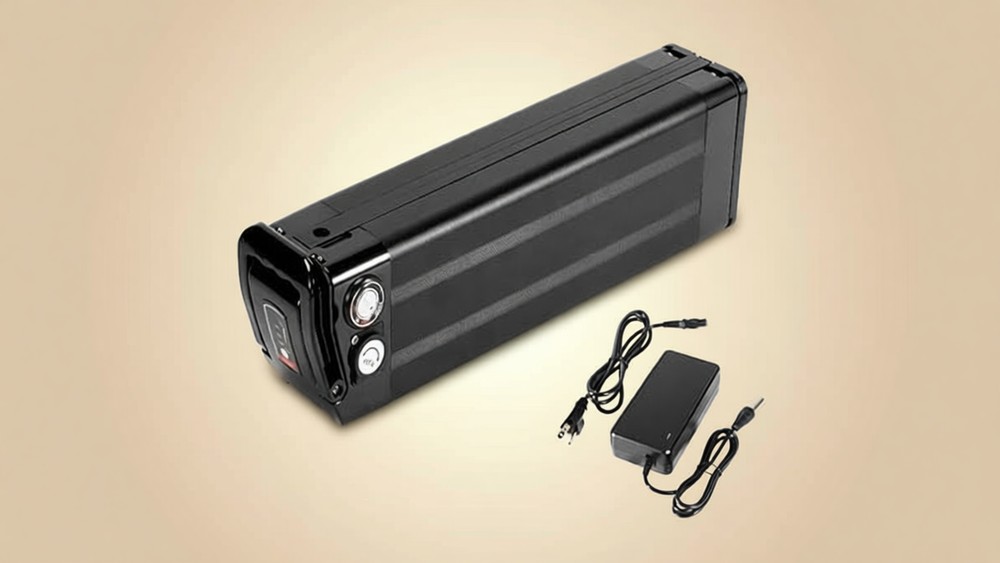
The 50-175km claim, and why a wide range is a warning
The listing claims 50 to 175 kilometers on a single charge with pedal assist. A span that wide, 31 to 109 miles, is a legal disclaimer wearing a spec sheet's clothes, because no battery delivers a fourfold range variation from riding conditions alone. The honest reading is that the seller does not want to commit to a number.
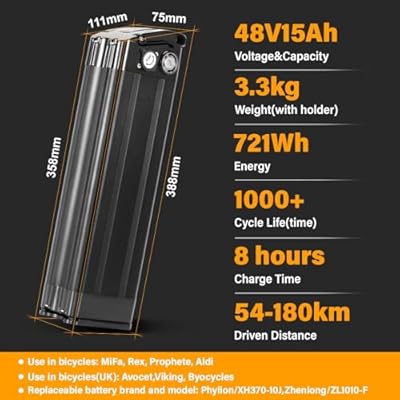
The arithmetic tells you why. This pack holds 720 watt-hours nominal, and depth-of-discharge limits put usable energy at roughly 580 to 620 watt-hours. At 15 to 20 watt-hours per mile with pedal assist, that is 29 to 41 miles. Throttle-only at 25 to 30 watt-hours per mile drops it to 19 to 25 miles.
The 109-mile top of the claim deserves its own arithmetic check: it would require riding at 6.6 watt-hours per mile, which means the rider is doing nearly all the work and the motor is a gentle nudge. That is technically possible and practically meaningless as a buying expectation. Plan around 29 to 41 miles of real assist riding and treat the rest as marketing.
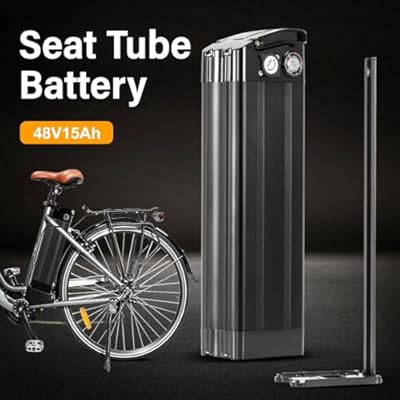
Seat-tube mounting: the format trade explained
The seat-tube format exists for frames where the downtube is unavailable or awkward: step-throughs, cruisers, and bikes with a low standover. The tube's diameter caps the case size, so 15 amp-hours sits near this format's ceiling, while downtube packs routinely hold 20 or more. That is the physics, not a brand choice.
The format's advantages are practical. External mounting makes this the easiest battery to remove for off-bike charging, a convenience Upway's battery-location guide also highlights for externally mounted packs. The integrated lock addresses the theft exposure that comes with any externally mounted pack. And the status indicator shows the charge state without powering up a display.
What you give up is capacity ceiling and, usually, price-per-watt-hour. The format has fewer competitors than downtube, which keeps prices higher across the category. Buyers are choosing fitment over economics, and for the right frame that is the correct choice.
What the brand name actually buys you
Yose Power is an established ebike battery brand with its own storefront and a customer history that anonymous marketplace sellers cannot match. Owner reports on their conversion packs include multi-year, multi-thousand-kilometer use, and one owner logged 11,000 kilometers on a single pack. That is the provenance argument in one data point: someone's fifth year with these cells is documented, where a no-name pack's history begins and ends with the listing.
The claimed branded cells matter mechanically. Better cells hold voltage under load, which means less sag on hills and slower capacity fade across seasons. A cheap pack can match the label on day one and lose a third of its range by year two, and the price difference between chemistries is smaller than the cost of replacing it.
What the brand does not buy is certification. This listing does not claim UL 2849 system certification, so the charging habits stay the same as with any lithium pack: hard surface, never unattended, and retire anything that swells or runs hot. A brand reduces risk. It does not remove it.
Power profile, charging, and daily use
The discharge split defines this as a 750W-class pack: 10 amps standard, 30 amps maximum. Sustained cruising sits well within the standard rating, and hills can pull the brief peaks without tripping protection. It is not a build pack for 1500W motors, and attempting to feed one will trigger the BMS.
The included 54.6V 2A charger fills the pack in about eight hours, which the listing states honestly. That is an overnight rhythm, and there is no quick-charge option in the box.
The lock and keyed holder are the daily-life features. The pack secures against casual theft, releases with a key for desk charging, and the two-pin discharge port connects to standard 48V conversion wiring. For riders whose bike lives outside, that combination is the difference between charging being a routine and being a production.
Who should buy it, and who should spend differently
Buy it if your step-through or cruiser frame needs the seat-tube format, you want a brand that will exist when warranty questions come up, and you accept paying for provenance over watts per dollar. For that buyer, this is the credible option in a thin market.
Spend differently if price per watt-hour is the metric, because generic 48V packs cost a fraction of this and our battery table shows the gap plainly. Yose Power's own 48V 10Ah silver fish pack is the family's smaller sibling, worth a look if 10 amp-hours covers your commute. Spend differently if you need more than 15 amp-hours, because downtube packs hold more in the same chemistry. And spend differently if you run a high-power build, because the 30A BMS is a 750W-class ceiling that a bigger pack simply does not have. The DYMOZYNE 20Ah packs are one honest comparison point in the universal format.
Frequently Asked Questions
How far will it really go?
Roughly 29 to 41 miles on pedal assist and 19 to 25 on throttle alone, from about 580 to 620 watt-hours usable. The 175km claim requires riding at 6.6 watt-hours per mile, which means the rider does nearly all the work.
Will it fit my bike?
It is a silverfish seat-tube format with a keyed holder. Measure your tube, and confirm your system accepts the 2-pin discharge port before ordering.
Is Yose Power a real brand?
Yes, with its own storefront and a long owner history, including a documented 11,000-kilometer report on one conversion pack. That is a provenance advantage over anonymous marketplace packs.
Why is it more expensive per watt-hour?
Branded cells, storefront support, and a niche seat-tube format with few competitors. You are paying for provenance and fitment, not raw capacity per dollar.
Can it run my 1500W motor?
No. The 10A standard and 30A maximum discharge make this a 750W-class pack, and a 1500W motor will trip the BMS protection.