A modular helmet makes one promise that a full face can't: chin bar down for the ride, flipped up at the fuel stop without unfastening anything. Prices on that mechanism have kept dropping, and XINGSILUC's flip-up entry sits near the middle of the field we track, with a dual visor setup and a size chart printed right on the listing.
The written record here splits in a way worth understanding before ordering. Five of the ten most recent texts carry no purchase badge, and several read like they were written by the listing itself, while the badged owners spend their words on sizing disagreements and wind noise.
There's also the small print on the certification line, where one safety standard gets named twice as if it were two. Below, what the badged record supports, what the size chart gets wrong, and the two long rides these owners have actually reported.
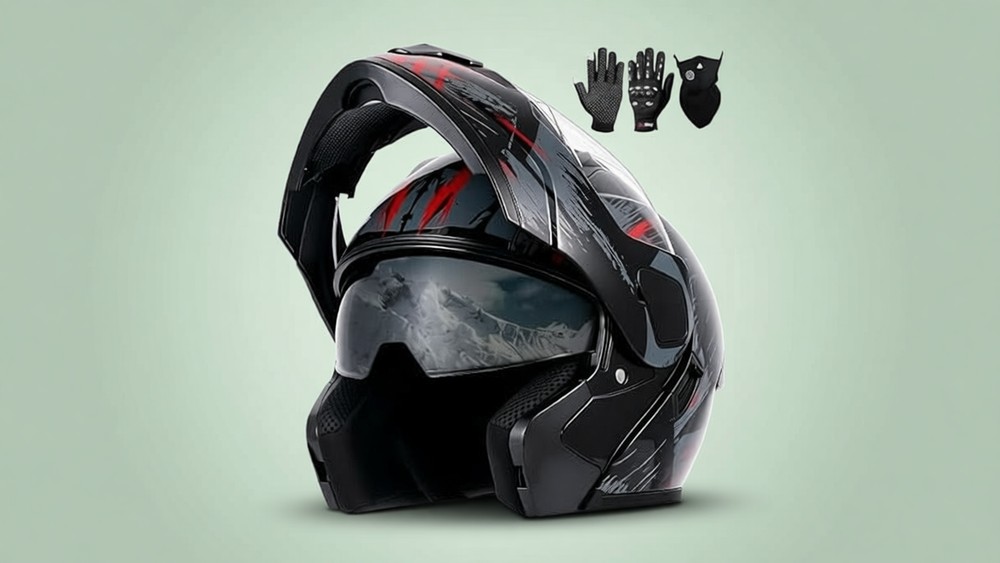
A new modular listing with two records: the badged one and the unbadged one
The XINGSILUC modular flip-up helmet sells for 75.99 with only 6 left in stock at check time, which puts it close to the middle of the 257 helmets we track by price. Our helmet table shows where that sits against the rest of the modular field, because the price is the one part of this listing that doesn't need decoding.
The rating record is young: 4.3 stars across 47 ratings, with 72 percent five-star and an unusually high 10 percent sitting at two stars. A record this small and this new can't carry the weight a long one can, so the written texts matter more than the average does.
Five of the ten most recent texts carry no confirmed-purchase badge, and the badged half is where the usable information lives, mostly arguing with the listing about sizing. That split runs through everything below.
Five texts without a purchase badge, and what the badged owners say instead
Start with the unbadged half, because it sets the tone. One text offers a lot of practical utility right out of the box, another calls the helmet super versatile for daily rides, and a third mentions included gloves and a mask. A fourth is the cautious sort, calling it a good pick for someone just getting into riding who doesn't want to spend much.
Three of those four read like listing copy wearing a reviewer's name, and none of the four carries the confirmed-purchase badge.
The badged texts are plainer, and they don't fully agree with each other. Two badged owners say the helmet runs big, and one of them measured their head before saying it. Another calls the sizing proper and standard across industry regulations, a strange thing for a helmet owner to say, and it puts them against the other badged sizing reports. One more promises the vents are strong plastic that won't break on you from first use, answering a doubt nobody had printed.
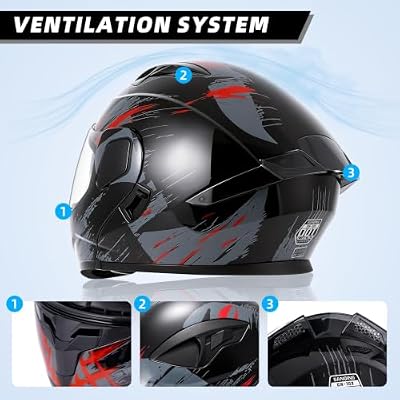
The rest of the badged record is the useful part: one owner reports a lot of wind noise and whistling at speed over 300 miles, and another describes a helmet that kept falling forward over their eyes, with a seller that responded well.
The point isn't that anyone did anything wrong. It's that a 4.3 average built partly on unverifiable praise is a weaker signal than the same average with badged complaints, and these complaints are specific enough to plan around.
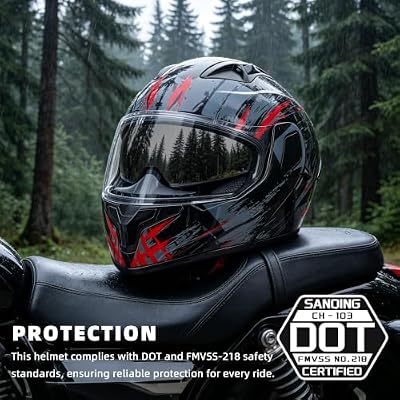
One standard named twice, and what a flip-up chin bar actually certifies
The first bullet claims the helmet complies with and exceeds both DOT and FMVSS-218. Those are one standard with two names, so the sentence promises two certifications where one exists. FMVSS 218 is also certified by the manufacturer rather than tested by an agency before sale, which makes the DOT mark a legal claim rather than a test report.
The flip-up design is the real purchase here, and the category carries a caution the listing doesn't mention. A modular helmet bears a chin bar like a full face when closed, and many are designed to be worn only in the closed position while riding: the open bar adds wind drag, and riding open may pose increased neck injury risk in a crash.
No wide scientific studies have measured how protective pivoting chin bars are, though unofficial testing suggests protection beyond an open face helmet.
The listing sells easy one-motion switching between full-face and open-face as a feature, which is exactly the use the category caution is about. Treat the flip-up as a fuel-stop convenience rather than a riding position.
Construction is an ABS shell at 4.39 pounds in an oval shape, with the spec row meeting FMVSS 218 and a 30-day return window standing where a warranty would.
The size chart says size up, and the badged owners mostly point the other way
The size chart prints head circumference in inches, S at 21.65-22.05 through XL at 24.02-24.41, and it tells fuller-faced riders to size up. Most badged sizing reports point the other way: three describe a helmet that runs big or should be sized down, against one that calls the sizing proper and standard.
One badged owner measured their head and found the helmet ran too big. Another calls it a little big. A third wears a medium, found the small fit perfectly, and recommends sizing down one, adding that there's plenty of room for glasses and the inner sun shield clears them.
The most detailed fit account is a failure the seller worked to fix. That owner reports the helmet kept falling forward over their eyes even with a smaller lining insert the seller sent to try, and credits customer service with being responsive throughout. The helmet still didn't fit, and the service was still good.
Helmet size is head circumference measured with a tape just above the eyebrows and ears, not hat size, and shell shape decides fit as much as circumference does. Start one size down from the chart here, and treat the 30-day return window as part of the purchase price.
Two long rides in the record, and the questions nobody has answered
Two badged accounts carry real distance. The most-voted text describes a multi-state trip through Texas, Colorado and Oklahoma with full days in the saddle, reporting no pressure points or hot spots, a modular mechanism that works smoothly, and both visors performing well through changing light. That owner also customized and painted their helmet.
The 300-mile account lists price, modular features, the tinted inner visor, fit and the buckle system as pros, against a lot of wind noise and whistling at speed and vents that could be better.
Neither text reports a crash, and nobody reports the flip-up latch working or failing, which is the mechanism this design exists for. Nobody reports winter or snowmobile use despite the bullet list naming them. The highlight field promises gloves and a mask, one unbadged text mentions them, and the box contents row lists exactly one helmet.
For the price band, the badged record supports the visors and the mechanism, with sizing and wind noise as the two things to plan around. The helmet table keeps that price honest against the rest of the category.
Frequently Asked Questions
Does the XINGSILUC modular run true to size?
The chart and the badged record mostly disagree. The listing tells fuller-faced riders to size up, while one owner measured their head and found it ran too big, another calls it a little big, and a third sized down from medium to small and reports the fit right. Measure your head circumference above the eyebrows, start one size down, and keep the return window in mind.
Can you ride with the chin bar flipped up?
The listing markets the switch, and the category caution runs the other way. Modular helmets are often designed to be ridden closed, because the open chin bar adds wind drag and may pose increased neck injury risk in a crash, and no wide studies have measured how protective pivoting bars are. Treat the flip-up as a stop convenience.
Does it come with gloves and a mask?
The listing's highlight field says so, and one text without a purchase badge mentions them, but the Included Components row lists exactly one helmet. Order expecting the helmet alone, and check the box contents against the return window if the accessories were part of the appeal.