Budget helmet audio has split into two kinds of listing, and the difference is easy to miss in a comparison table.
One kind connects riders to each other. The other is a Bluetooth speaker and microphone set that lives in a helmet and talks to your phone. The Wisdagaly Q08 is the second kind, sold at 32.39, and our comparison table currently prices it as the first, because a data feed sorted it under two riders who never appear in the listing.
That mismatch is the reason to review it here rather than skip it. A rider scanning the intercom comparison table for a cheap way to talk to a pillion will find this row, and the listing won't do what the row implies.
The Y10 we covered last month had the honesty to print its own limit in capital letters in bullet one. The Q08 does something quieter: it simply never mentions another rider at all.
We pulled the full page and its complete written record signed in, matched every claim against what owners describe, and ran the battery math the listing leaves implied.
The verdict up front. The Q08 is a well-specced phone-audio headset with a two-year warranty, a real jet-rated water claim, and a record too thin to bet a purchase on.
As a music and calls unit it's got a case. As an intercom it has none, and the table row should say so.
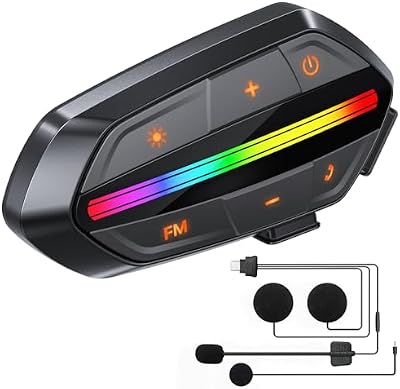
A page that never mentions another rider
Read the five bullets and the details table end to end and count the riders: there aren't any.
The bullets promise noise cancellation, IPX6, a 1000mAh battery, connection to two phones at once, an FM radio button, a voice assistant, and two microphone styles. The details rows add Bluetooth 5.3, a 40mm driver, Type-C charging, and a Bluetooth Range row of 32 feet, which is a phone-link figure. Rider-to-rider talk, group size, and helmet-to-helmet range appear nowhere on the page.
The owner record agrees with the listing rather than with our table. Every purchase-badged text describes music, calls, GPS prompts, or install. One owner bought two, and the text describes music and call quality on each, with no sign the two units ever talked to each other.
Nothing in the record, the bullets, or the spec sheet claims the function our row prices.
What the page does claim, it claims concretely. The Q08 pairs with two phones at once, which is genuinely useful for a rider who runs music on one device and navigation on another, and it keeps an FM tuner on top of the phone link.
What 32.39 actually buys
The spec sheet reads a class above the price. A 40mm driver at 16 ohms, dual microphones with both a boom and a button style in the box, Type-C charging, and a soft earmuff mounting set. The battery rows are the strongest part: 1000mAh, a 2.5-hour charge, 18 hours of talk, 25 hours of playback, and 270 hours of standby.
Those four battery figures pass the check that catches most budget listings. Eighteen hours of talk from a 1000mAh cell implies an average draw near 55 milliamps, which is normal for a single driver.
Standby across 270 hours implies an idle draw under 4 milliamps. Refilling 1000mAh in 2.5 hours needs an average current above 400 milliamps, which Type-C charging delivers easily. Nobody faked a number here so far as the math can tell.
It weighs 3.17 ounces and sits number 23 in Powersports Bluetooth Headsets, a strong slot for a listing this cheap. The title also promises RGB lighting, which the details table never mentions and one owner text confirms exists as a light strip.
A record with an empty middle
Thirty-five ratings at 4.6 stars looks healthy until you look at the shape. Eighty-one percent are five-star and twelve percent four-star, then the middle vanishes: no three-star ratings, no two-star ratings, and seven percent one-star. Buyers either liked it enough to leave five stars or found it useless, and nobody landed between.
The written record splits by date in a way worth knowing. Every purchase-badged text is from October 2026, and most are one line about install, fit, or price. The three detailed texts, the ones that praise battery life through long rides and describe the light strip, are all unbadged and all from March 2026.
One of them tells readers to grab one while the 119.99 price holds. The listing has never been at that price in our data, and 32.39 is what it costs today. A detailed review naming a price three times the real one, in a cluster of same-month template texts, is the classic shape of seeded praise.
That leaves the honest evidence base at about eight short purchase-badged texts from a two-week window in October, which is thin enough that the four-point-six average doesn't mean much either way.
A single badged owner has criticized the sound in substance: the speakers come across as very high-pitched, with no bass or midrange, and the owner concluded you get what you pay for. Against the four one-line endorsements of sound quality, that's the only critical account in the record, and it names exactly the thinness a 40mm driver at this price can carry.
One badged owner has also admitted they hadn't tried the headset while riding yet and were unsure whether it would be loud enough at speed. Between the two, the record supports "good enough for music around town" and says nothing defensible about highway volume.
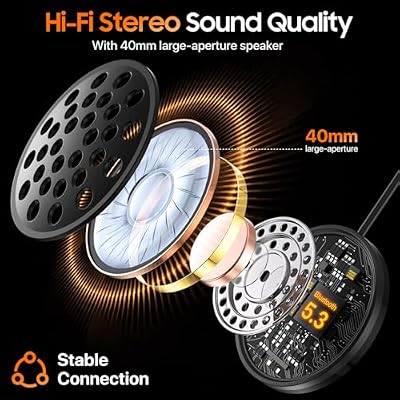
Rain, warranty, and the small print
The water claim is the most credible number on the page. IPX6 means the enclosure survives powerful water jets, 100 liters per minute at set pressure from any direction for at least three minutes.
The IP ratings are not cumulative above this level: a device that survives immersion doesn't necessarily survive jets, so a jet rating on a 32-dollar headset is a specific, testable promise rather than a generic waterproof badge. One unbadged text describes riding through heavy rain with the headset unaffected, which matches the rating, though that text carries the same template smell as its March siblings.
The warranty is the other standout: two years from the manufacturer, where the M1S Pro family we covered prints one. A two-year clock on a listing this cheap is worth something real. The Bluetooth 5.3 radio is the current generation of the standard, which buys stable phone links and multipoint pairing, though version alone says nothing about range.
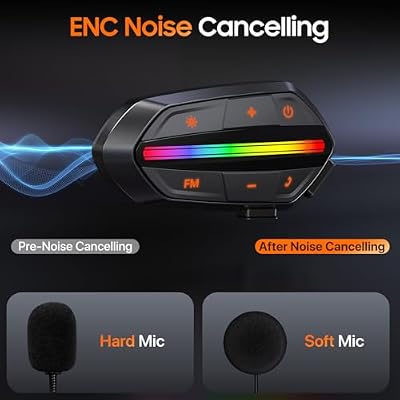
Who should spend differently
Buy the Q08 if you want helmet audio for music, calls, and navigation, you ride in real weather, and you want a two-year clock on a listing this cheap. Treat it as what it is: a phone headset with no rider-to-rider link, cross-shopped against the Y10 at half the price and the X2 if you decide you actually need to talk to a passenger.
Skip it if the two-rider row on our table is what drew you. Nothing on the page or in the owner record supports that use, and the money is better spent on a listing that claims the function you need. Until the data feed stops sorting phone speakers under two riders, the read you do before buying is the difference between the two.
Frequently Asked Questions
Can two Q08 units talk to each other?
Nothing on the listing or in the owner record says they can. The bullets, the details table, and every purchase-badged review describe phone audio only. Our table row currently prices it as a two-rider intercom, and that row's wrong about this listing until the data says otherwise.
Is it actually waterproof?
The IPX6 rating is specific and demanding: the enclosure must survive powerful water jets from any direction for at least three minutes. That's a stronger rain claim than the generic waterproof badges nearby carry, and stronger than an immersion-only rating in the wet-ride case that matters.
How long does the battery last?
The page prints 18 hours of talk, 25 of playback, and 270 of standby from a 1000mAh cell charged in 2.5 hours. The math holds together, and the two purchase-badged texts that mention battery describe no problems.
Why does the rating look so high?
Thirty-five ratings at 4.6 with no three- or two-star ratings and a March cluster of detailed unbadged texts, one naming a price the Q08 has never carried. The purchase-badged record is short and recent, so treat the average as unproven rather than as evidence.