Most 52V packs force a choice between a downtube brick and a rear rack, and this one refuses both. The VISET LI bolts into the bottle cage bosses, claims 780 watt-hours there, and adds a 30A BMS, a USB port and a key lock. The whole buyer record is one 4-star rating backed by four words, "Was great. Exactly what i wanted." The format is genuinely rare at this voltage and the arithmetic holds together, but nothing in that record proves anything yet.
At the current 209.99 price that works out to about 27 cents per watt-hour, mid pack among the 301 packs we track and well clear of the cheap band. That's a fair trade only if the bottle position matters to your build, because the money buys the form factor rather than savings. It's also a thin record to hang a recommendation on, so this sits in wait-and-see territory until more owners report in.
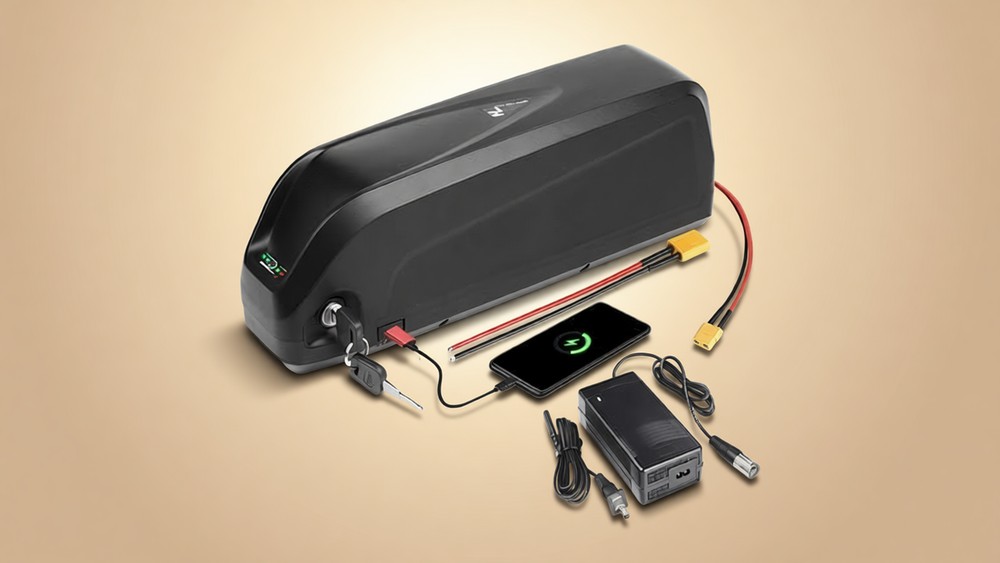
The bottle format is the whole point, and it has a real cost
Bottle cage mounts solve two problems at once, which is why the format keeps a following despite small capacity ceilings. The weight sits low and central in the frame triangle where a water bottle would be, so handling stays neutral in a way rear-rack packs never manage, and the frame keeps its clean lines because nothing clamps around the downtube. You screw the bracket into the standard bosses, slide the pack down, lock it with the key, and the whole thing comes off in seconds when you want to charge it at a desk instead of in a garage.
The cost is volume. A bottle cage space holds roughly six by eight inches of anything, so a 780Wh pack squeezed into that footprint is working at the edge of what the format allows. That's likely why most bottle-style packs on the market stop at 36V or 48V, and why a 52V one turns up about as often as a quiet intercom.
The listing also skips the two numbers that would tell you whether the pack actually fits that space comfortably, because no weight and no dimensions appear anywhere on the page. The pack could weigh nine pounds or fourteen and the page would look identical, so check a question-and-answer entry or the box label before you bet a carbon frame on it.
The extras round out the commuter case. A USB port tops off a phone from the pack, the key lock stops a walk-off thief in a coffee shop, an on/off switch saves standby drain, and an LED gauge gives a coarse charge read. None of that is exotic. All of it is useful on a bike that gets parked in public.
The price invites a comparison with big Hailong bricks that carry the same watt-hours for less. The comparison table shows where the bottle premium sits, and the honest framing is that you're paying for mounting hardware and frame integration, not for a cheaper watt-hour.

The numbers that check out
The charger specification decodes cleanly, which is the first thing I check on listings that lead with voltage. A 58.8V charger means 14 series groups at 4.2V each, exactly what a 52V nominal lithium-ion pack should carry, so the title and the hardware agree. The 30A BMS at 52V nominal works out to a 1560W continuous ceiling, which covers the claimed 200W to 1200W motor range with room to spare, and 30A into 15Ah is a 2C continuous rate, ordinary load territory that decent cells handle without drama.
Charge times follow from the same numbers. The 2A charger into a 15Ah pack needs about seven and a half hours from empty, and closer to five hours from the roughly 30 percent charge these packs usually ship with. That's an overnight charge by any definition, so plan around it, because the listing offers no faster charger option and third-party 58.8V chargers exist but deserve a separate caution about trusting an unnamed BMS with off-brand hardware.
Range needs denominators before it means anything, so here they are. At a careful pedal-assist draw of about 20 watt-hours per mile, 780Wh carries you roughly 39 miles. At a heavy-throttle, hilly 35 watt-hours per mile, the same pack manages about 22. Anyone promising more than that from 780Wh is quoting the first number while implying the second, and the old version of this coverage did exactly that with a vague 20-to-35 band that never said which riding style bought which figure.

Three claims that need a skeptical read
The cycle-life claim is the boldest number on the page. VISET LI says the pack exceeds 1000 cycles and holds at least 80 percent capacity after 800, while Battery University's longevity reference notes that manufacturers conservatively specify 300 to 500 cycles for most consumer lithium-ion. The claim isn't impossible, because good cells treated gently can beat the conservative band, but the listing names no cell brand at all, just "automotive grade cells" repeated twice in two bullets that are otherwise identical. Unnamed cells get no benefit of the doubt, and a 1-year warranty that expires long before cycle 500 doesn't back the promise.
Pure nickel interconnects are real metallurgy, to be fair. Nickel-plated steel is the cheap fake, higher resistance at the spot welds, more heat under load, and a pack pulling 30A continuous benefits from the genuine article. The problem is that every budget listing has learned to say "pure nickel" because buyers now search for it, and there's no way to verify the strip in the pack without cutting the wrap. Treat it as a claim that costs the seller nothing to make.
Waterproofing gets the shortest treatment because there's almost nothing to test. The word appears in the listing with no IP code attached, and an IP rating is the only convention that means anything here. The old version of this coverage described rubber seals around the connectors, hardware detail that appears nowhere on the page and that I can't verify. Assume splash resistance at best, keep the key lock and USB port out of sustained rain, and don't pressure-wash the pack.

One review is not a record
The complete buyer record fits in a sentence, because that's literally what it is. One rating, 4 stars, May 2026, purchase confirmed, four words long, zero helpful votes. It supports exactly one conclusion: the pack arrived and did what the buyer wanted. It says nothing about longevity, nothing about whether the BMS holds 30A on a hot climb, nothing about the USB port, and nothing about how the seller handles a dead-on-arrival unit.
One entry from the earlier version of this coverage deserves a flag because it matters for trust. That text attributed opinions to this buyer, praise for the USB port, approval of the lock, satisfaction about fitment, that the buyer never wrote. The actual review contains none of it. That's the failure mode thin-record listings create, the temptation to pad four words into a paragraph, and it's why the spec-sheet work above stands on the listing alone rather than on borrowed quotes.
The scarcity banner is doing its own persuasion. "Only 15 left in stock" creates urgency, and urgency is not a signal of quality, it's a signal of slow sales or a small import batch, most likely both on a listing with one review. Let it go. If the pack is good it'll be restocked, and if it isn't, you don't want it anyway.
Frequently Asked Questions
Will it fit my frame?
Any frame with standard bottle cage bosses should take the bracket, since the mounting uses the same two screws as a cage. Check the spacing and the clearance first: suspension linkages, compact geometry, and frame bags can leave the pack rubbing the front tire or the shock. Steel and aluminum hardtails with conventional bottle positions are the safe case.
Can I run it on a 48V bike?
Only if the controller is rated for it. A 52V pack charges to 58.8V, and a 48V-only controller risks damage at that input, so verify the controller's voltage window before ordering. Riders on genuine 52V systems get the full benefit, and riders between systems should read the voltage label on the controller, not the marketing on the kit box.
How long does charging take?
About seven and a half hours from empty on the included 2A charger, or roughly five hours from a typical shipping charge. There's no fast charger in the box and none advertised, and while third-party 58.8V chargers exist, an off-brand charger feeding an unnamed BMS is exactly the combination that starts fires. Keep the included charger unless you have a specific reason not to.
Is it waterproof?
Unknown, and the listing doesn't help. No IP code appears anywhere on the page, which means the only honest answer is splash-resistant at best. The IP code convention exists so buyers don't have to guess, and a seller who skips it usually has a reason. Ride through puddles, not weather.
What warranty comes with it?
The listing states a 1-year warranty, and the details section names zhonghai as the manufacturer. A year is the category norm, and it covers the window where cell defects show up, but it won't outlast the 1000-cycle promise, so the claim and the coverage don't match.
The honest summary is that the VISET LI offers a rare format with coherent arithmetic and no evidence. If the bottle position is the deciding factor for your build, the 48V sibling from the same brand carries a longer buyer record worth comparing, and the full comparison table shows every 52V alternative side by side. Check the current price on Amazon before deciding, because it has already dropped since our last data pull.