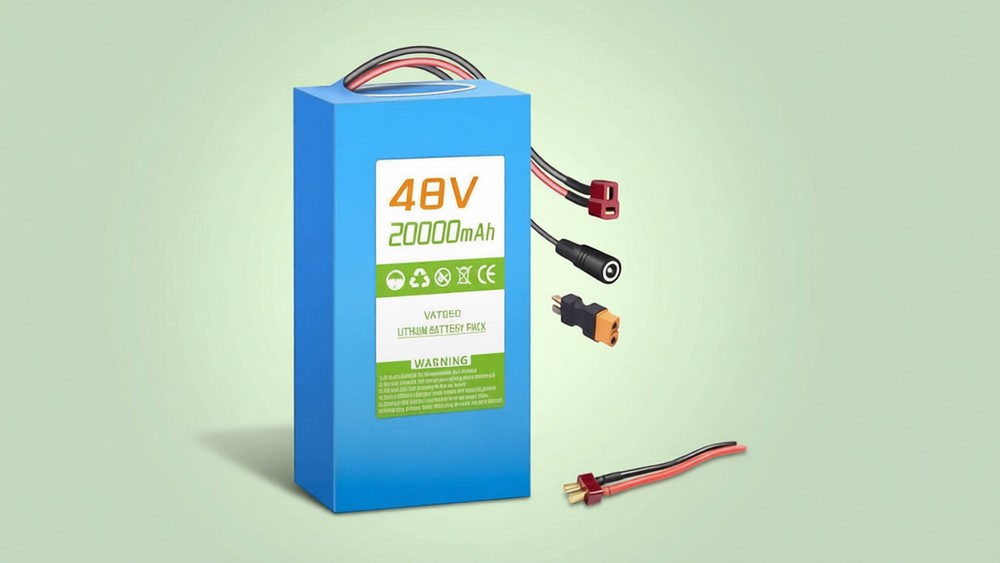
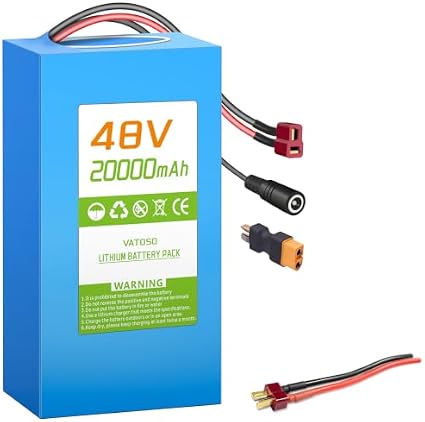
This VATOSO pack puts 960Wh in a downtube-style case that fits many standard mounts, priced in the cheapest fifth of our 48V table, with a 30A BMS that covers most stock and mid-power controllers. The trade stack: IP54 splash resistance rather than the IP67 sealing of better-protected rivals, a plastic shell, and the usual unverified cell provenance. Riders whose bikes take a generic downtube pack and who ride fair weather get the best deal here. Storm riders and high-power builds should spend differently.
Range math, and what the label promises versus what cells deliver
Start with the pack: 48 volts times 20 amp-hours is 960 watt-hours nominal. Depth-of-discharge limits put usable energy at roughly 770 to 820 watt-hours before the BMS cuts off to protect the cells.
Consumption next. Pedal-assist riding at 15 to 20 watt-hours per mile gives you roughly 39 to 55 miles. Throttle-only at 25 to 30 watt-hours per mile lands between 26 and 33 miles. Plan routes around the low end until you know your own consumption, because the math is only as good as the cells behind it.
Generic packs sometimes deliver less than the label, and the first full ride is the real test. The early warning is voltage sag: if the lights dim or the power stutters on a climb, the cells are struggling to meet demand, and the usable capacity is lower than the math suggests. That is a return-window observation, not something to discover six months in, which is exactly why the first week with any generic pack should include your longest regular route rather than a spin around the block.
The downtube case measures 10 by 4.25 by 2.75 inches, which fits many standard mounts and racks. Branded trays vary model to model, so measure before buying. A plastic shell keeps weight down and costs thermal mass, and a tight fit stresses the connectors every time the pack comes out to charge.
IP54 explained: what splash resistance actually covers
IP54 handles light rain and road spray. It does not handle submersion, pressure washing, or a car-wash jet, and the practical habits follow from that: park under cover when a storm turns serious, wipe the charge port dry before plugging in, and keep the hose away from the pack entirely.
The comparison point matters at this price. Rival packs with IP67 sealing cost similar per watt-hour and survive immersion-grade exposure that this one cannot. If your riding includes deep puddles, stream crossings, or a bike that lives outside, the better-sealed alternatives are worth the look. If your bike lives in a garage and rides in normal weather, IP54 covers it honestly.
The plastic shell has one more consequence worth stating: it dents less gracefully than metal when rocks or drops hit it. Rough-trail riders should bag the pack or shield it in the mount, because a cracked case turns a splash-proof pack into an open one.
Charging location completes the weather picture. IP54 covers the pack in use, but the charge port is the vulnerability that matters most over a pack's life, since moisture trapped in the port during charging has nowhere to go. Charging indoors or under cover, with the port wiped and dry, is the habit that separates packs that last from packs that corrode. It costs nothing, and no listing's IP rating substitutes for it.
The 30A BMS, and matching it to your controller
A 30A ceiling at 48V supports about 1440 watts of draw, which covers nearly every stock ebike controller and most mid-power conversions. For the typical 500W to 750W rider, this BMS is invisible in the best way: it never clips, never cuts, and never becomes part of the ride.
The gap appears on 1500W builds, where peak draw can exceed 30 amps and the BMS cuts power on exactly the climbs where you need it. That is not a defect, it is the spec doing its job, and the fix is a pack with a 40A BMS rather than a complaint about this one.
The buying logic is matching, not maximizing. A controller that never draws more than 25 amps gains nothing from a 40A pack, and paying for headroom you will not use is the same mistake as starving a controller with a pack that clips. Check your controller's peak draw, buy the pack that covers it with a small margin, and stop there.
One more fitment note specific to downtube packs: connector orientation matters as much as case size. The pack's discharge connector position must line up with where your controller's input cable sits, or every installation becomes an adapter exercise. Measure the case, then trace the cable path with your hand before ordering, because a pack that fits the tray but cannot reach the connector is a return waiting to happen.
Who should buy it, and who should spend differently
Buy it if your bike takes a generic downtube pack, you want big capacity at the cheap end of the table, and your controller draws under 30 amps. The price per watt-hour is the argument, and the downtube fit is what makes it practical rather than a DIY-only proposition.
Spend differently if you ride in storms or wash the bike with a hose, because IP67 rivals at similar prices keep water out where this one only splashes back. Spend differently if you run a 1500W build, because the 30A BMS will clip your climbs. And spend differently if you want certified cells or documented provenance, because DYMOZYNE's 20Ah packs claim a UL certificate at a similar price, and the battery table shows the full comparison.
Frequently Asked Questions
How far will this battery go?
Roughly 39 to 55 miles on pedal assist and 26 to 33 on throttle alone, from about 770 to 820 watt-hours of usable energy.
Can I ride it in the rain?
Yes. IP54 covers rain and road spray, but not pressure washing or submersion. Wipe the charge port dry before plugging in.
Will it fit my bike's mount?
The pack measures 10 by 4.25 by 2.75 inches in a downtube style. Standard mounts usually accept it, branded trays vary, so measure first.
Is a 30A BMS enough for my build?
It covers stock and mid-power controllers. A 1500W build at peak can exceed 30 amps, and those builds want a 40A pack.
Is the capacity label trustworthy?
Generic packs sometimes underdeliver. The first full ride is the real test, and voltage sag on climbs is the early warning.