A 1440Wh pack at a price that lands in the cheaper third of everything we track is a rare sentence to write about a 48V battery, and it's the reason the Varstrom 48V 30Ah earns a close look. The listing promises LED power indication, a theft-proof lock, a USB port for charging a phone, and enough current for motors up to 1500W.
Varstrom is a generic-brand storefront, and the listing behaves like one. The manufacturer field spells the brand Vastrom, the included components claim a headlight no bullet mentions, and the cell line reads L*/G5000mah, which names no cell vendor you can check.
The review record is better than the listing deserves. Forty-three ratings at 4.3 stars back twelve verified texts, and they include the most useful kind of report, a buyer who rode the pack hard for months and came back to raise the score.
The record also contains the two things a buyer needs to hear before ordering. The listing can't keep its own BMS rating straight, and one owner describes a sleep mode that won't release the pack until you plug in a charger.
The short version: the Varstrom 48V 30Ah is a big, cheap pack with a genuinely helpful seller behind it, and two caveats you can plan around if you know them in advance.
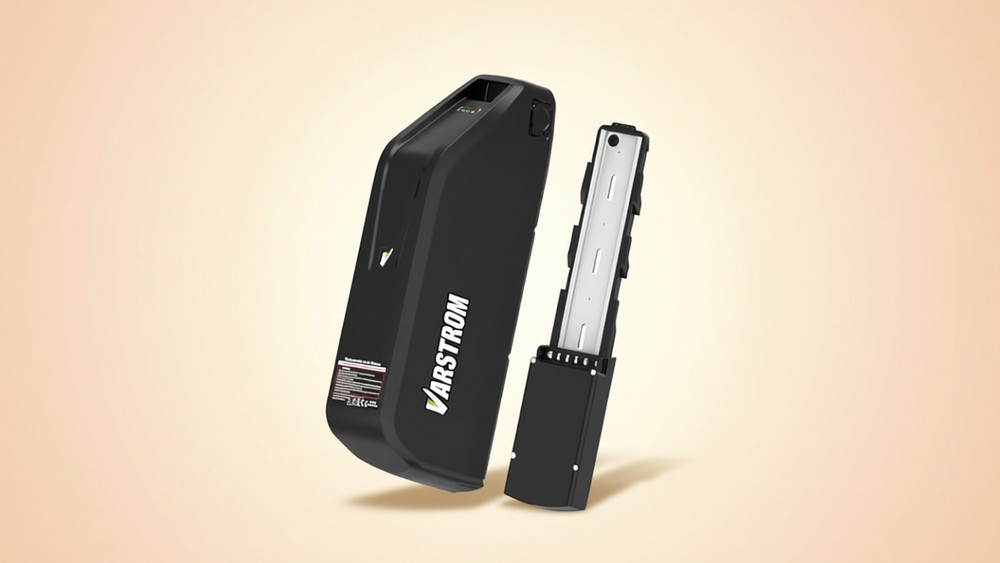
A 1440Wh pack with one number it cannot keep straight
The core spec is easy to state. Thirty amp-hours at 48 volts is 1440 watt-hours, which is capacity territory that most hub-motor builds never approach, and the listing measures the shell at 395 by 95 by 156 millimetres.
The BMS rating is where the listing argues with itself. The bullets state an intelligent 40A BMS protection board, and the spec table says 20A. Both numbers can't be true, and nothing else on the page settles which one is.
Treat 20A as the working figure until the seller says otherwise. A battery management system exists to keep the cells inside their safe operating area, so it disconnects the pack when the draw exceeds what it allows, and the conservative number is the one you can build on.
That limit decides who this pack fits. A 1500W motor at 48V wants roughly 30 amps of continuous current, so if the real limit is 20A, the pack will protect itself exactly when you need it most, on a steep climb at full throttle. Owners of 750W and 1000W setups sit comfortably inside either number.
The listing also claims suitability for 0 to 1500W motors across scooters and conversion kits, which is the sort of range statement that costs nothing to print. The buyer who matches the amp figure to their controller first is the one who avoids the cutout surprise.
One more spec worth naming: the suggested charge voltage is 54.6V, which is correct for a 13-series 48V pack and tells you the included charger follows the normal rule. Compare the pack against the rest of the field in our battery comparison table.
What 43 buyers report, including 150 trail miles
The strongest text in the record comes from a BBSHD owner who reports about 150 miles on the pack, 83 of them on hard mountain trails with rocks, roots and sand, ridden throttle-only so the battery never rests. They edited their review upward from four stars to five after those months, and three people found the report helpful.
A commuter comparison backs the capacity story from the other side. The same commute that left a cheaper pack at 32 percent left this one at 98 percent, which is the kind of before-and-after a spec sheet can never give you.
A third owner reports the gauge barely moving on rides of 30 minutes to an hour, hills included, and calls it worth the price. A fourth replaced the stock pack in an Amyet S8 after unexplained power dips and reports the dips gone, plus enough current for a dual-drive Keteles.
Set against that, the record's one specific criticism lands hard. A 2-star report says the range isn't there, calls the charger horrible, and estimates the pack behaves more like 20Ah than 30. Nobody in the record has published a measured amp-hour test, so the capacity question stays a claim against a claim, with 4.3 stars and 76 percent five-star ratings on the positive side.
The support record is genuinely good. One buyer reports quick, helpful responses from the seller, and another describes being contacted proactively about a compatibility detail before it became a problem. Stock stood at 9 units when we checked, which matters if you're planning a build around this pack.

The sleep mode trap and the UART question
The most-endorsed critical text in the record, with four helpful votes, describes a failure mode the listing never mentions. Switch the pack off while out riding, and it won't wake until charger power touches it, which strands you a good distance from home with a dead-looking battery.
That behavior is consistent with how protection circuits behave, since the control board stays latched until charger power resets it. The practical rule costs nothing: leave the pack switched on for the ride, and save the off switch for storage and transport.
The second compatibility lesson comes from a repeat buyer. The seller reached out to confirm the pack speaks UART rather than CAN, which is exactly the detail that decides whether a pack talks to a bike's electronics. A pack with an external data bus is a smart battery pack, and its protocol has to match what the bike and charger speak, per Wikipedia's battery management system page.
The same reviewer describes their pack as a Varstrom 52V 20Ah, a different variant from this listing, so the storefront runs several packs and the review record mixes them. Read the reviews with that in mind, and confirm voltage and capacity against the listing you're actually buying.
Waterproofing, cell naming and other listing noise
One owner puts the physical limits plainly: the pack isn't waterproof, and mounting it upside down lets water pool in the shell. The listing states no IP rating anywhere, so a wet-climate buyer should plan a covered mount and treat the shell as splash-exposed at best.
The cell line is the other thing to discount. L*/G5000mah names no cell vendor, and the one owner estimate in the record says the honest number may be closer to 20Ah than 30. Inflated capacity claims are the most common defect in this category, and the only defense is a measured ride at a known draw inside the return window.
The listing noise is worth naming because it shapes how much trust the spec table earns. Included Components claims a headlight that no bullet mentions. The manufacturer field reads Vastrom while the brand reads Varstrom.
None of this proves anything about the cells inside, but it tells you the spec table is a template, not a test. The buyers who report good outcomes describe the physical pack as well built and well packed, and the seller as responsive when something needs checking.

Who should buy it and who should keep looking
The value case is real. Among the 301 packs we track by price per watt-hour, this one sits in the cheaper third, and the battery comparison table shows exactly where it lands today against every alternative we measure.
Buy it if three things hold. Your motor draws comfortably under 20A continuous, or you have confirmed the higher rating with the seller. Your bike and charger speak UART, or use no data protocol at all. And you can mount the pack upright, under cover, where pooled water cannot reach it.
Keep looking if you need a guaranteed amp limit for a 1500W build, because a 20A working figure caps you at roughly 960W of honest continuous draw at 48V. Keep looking if your bike speaks CAN. And keep looking if you need a measured capacity guarantee, because nobody in this record has published one.
The warranty is one year, which is the category norm, and the seller's track record in the reviews, quick replies and a proactive UART heads-up, is better than most generic storefronts manage.
FAQ: the two BMS figures the listing cannot pick between, the switch you leave alone on the road and the capacity the record leaves unproven
Is the BMS 40A or 20A?
The listing says both. The bullets state a 40A BMS protection board and the spec table says 20A, so treat 20A as the working number until the seller confirms otherwise. A 20A limit comfortably feeds motors up to about 1000W, and it decides whether a 1500W build will cut out on climbs. Ask the seller in writing before you order if the higher figure matters to your build.
What happens if I turn the pack off during a ride?
On this record, the pack stays off until charger power touches it. One owner describes turning the battery off while out, then finding it wouldn't wake without a charger, which left them stranded a good distance from home. Leave the switch on while riding and use it only for storage.
Is it waterproof?
The listing states no IP rating, and one owner states plainly that it isn't waterproof. The same owner warns against mounting it upside down, because water can catch and pool in the shell. Plan a covered, upright mount if you ride in rain.
What charger voltage does it use?
The listing's suggested charge voltage is 54.6V, which is the normal full-charge voltage for a 13-series 48V pack, since lithium-ion cells charge to 4.2V maximum and 13 times 4.2 is 54.6, as Wikipedia's lithium-ion battery page documents. A charger at that voltage is following the standard rule for this chemistry.
Is the 4.3 rating trustworthy?
It's a small but clean record: 43 ratings, 76 percent five-star, and twelve verified texts with no unverified padding. The strongest positive is detailed and specific, and the strongest criticism, the more-like-20Ah estimate, is specific too and unresolved. No owner has published a measured amp-hour test, so treat the capacity as promising but unproven, and test your own range inside the return window.