Dual motorcycle cameras used to mean a main box, two lenses, a pile of cables, and a shopping list that didn't stop there. You bought the cameras, then discovered the memory card, the mount, and the wiring were separate purchases. The Upriding arrives against that habit, with both cameras, a 32GB card, and a wired controller in one box for 59.99 at check time.
The catch isn't in the box. It's in the record behind it.
The rating stands at a perfect 5.0, and that score rests on exactly 2 ratings, neither text carries a purchase badge, and neither has drawn a single helpful vote. There's almost nothing under the score, and this article reads the little there is with care.
The short version before the detail. The Upriding 1080P dual dash cam records 1080p front and rear, claims IP67 waterproofing, and includes the parts most kits leave out: the card, a wired remote, and a handlebar clamp for the screen. It leaves out GPS, WiFi, and any long-term account that it survives a season of weather.

A perfect score carried by two texts
Start with what the rating actually stands on, because it changes how you read everything else. Two ratings, two texts, both five stars.
Neither text wears a purchase badge, and neither has a single helpful vote, so there is no ranked center to lean on. A 5.0 score with 2 ratings under it is not evidence of quality. It's evidence of a young listing.
One of the two texts makes that youngness worse. The July text praises the crisp footage, the confidence the IP67 rating gives, and the night vision performing better than expected in almost the same words the bullets use.
When a review restates the listing back at you, it is not an owner account. It reads like promotion copy, and we count it out of the evidence.
That leaves one substantive text, and it happens to be useful. The September owner reports an easy install, praises the handlebar clamp for the monitor, and confirms the wired remote works as a power and function switch. The same text carries the two practical catches you will read about below, and it ends by calling the price reasonable for the quality.
So the honest reading is this: one real account, one suspect one, and a perfect score that should carry no weight in either direction. If that record shape bothers you, our dash cam comparison table sorts the alternatives by price so you can see what a bit more money buys in company.
The wired remote and the kit the title leaves out
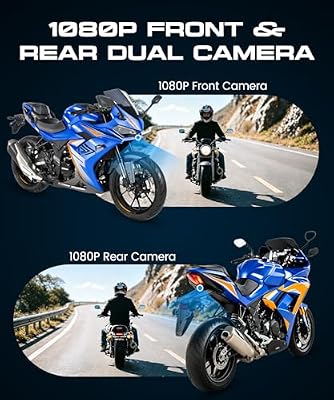
The parts list is the strongest fact about this listing. The box holds the main unit, front and rear cameras, a power cable, an extension cable, a wired controller, mounting brackets, installation accessories, the 32GB card, and a manual. Most budget dual kits we track make you buy the card separately, and plenty skip a remote entirely.
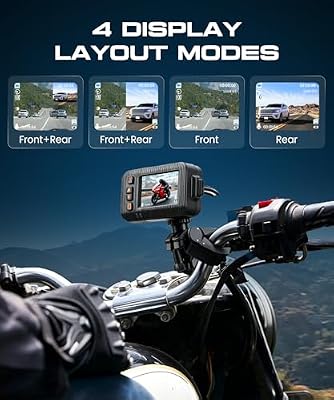
The wired remote deserves its own sentence, because the title never mentions it. A button on the handlebar that powers the camera and switches functions means no reaching for a touchscreen mid-ride with gloves on, and it is the kind of inclusion that separates a thought-through kit from a parts bin. The one real owner text calls the install easy and singles out that handlebar clamp for praise.
Mounting is handlebar-based for the display, with brackets and fitting bits for the cameras. Nothing in the record describes the rear camera cable run, which on most bikes is the fiddly half of a dual-camera install. Plan an afternoon for the wiring rather than trusting the word easy.
The SD card slot and the screen are the two catches
The one substantive owner text carries two complaints, and neither appears anywhere in the listing.
First, the card slot. The owner describes a deep slot that makes the card hard to seat, a feeling of pressing too far, and a need for a tool to push the card in deep enough to lock. That's a small thing until you're roadside with numb fingers, and it is worth knowing before the card goes in the first time.
Second, the screen. The 2-inch display drew a wish from the same owner that it were two to three times larger.
A 2-inch panel is normal at this price, and the spec sheet's own numbers, about 3.15 inches wide, tell you the screen is a window rather than a monitor. If you want to review footage on the bike instead of a computer, this is the spec to weigh.
Notice what the record does not say. Nothing covers night footage in practice, rain performance behind the IP67 claim, or how it holds up after months of shaking. Those gaps are normal for a two-text record, and they are exactly why the price is doing the work in this decision.
What the specs say and what they leave out
The resolution story is genuine. Both cameras record at 1080p, the resolution that is standard for dash cameras, so the rear lens does not quietly drop to 720p the way some budget dual units do. Loop recording overwrites the oldest footage as the 32GB card fills, and the G-sensor locks files on impact so a bump does not record itself over.
The field of view is where the sheet gets interesting. The listing claims 120 degrees per camera, and front cameras in this category typically cover roughly 130 to 170 degrees.
A 120-degree window is narrower than the norm. It trades edge coverage for a less fisheye image.
You'll catch what's ahead of you. Whether you catch the car in the next lane is a fair question.
The connection row lists USB and nothing else. No GPS means no speed or location stamping on footage. No WiFi means every file transfer runs through a cable and a computer.
Neither omission is unusual at this price, but both are the reasons two cameras can share a resolution figure and still not be alike.
The IP67 waterproof claim and the Night Vision headline both stand untested. Nobody in the record has ridden through a storm, and the listing offers no detail on how its night vision works beyond the two words. Treat both as claims to verify in your first wet and dark week, with the receipt kept.
A cheaper-third price with a thin record behind it
In our own tracking of 82 dash cams by price, this one sits in the cheaper third of everything we follow, and the comparison table renders its live price and spot so you can verify that yourself. Among dual-camera units specifically, a price this low with the card included is uncommon, which is what makes the listing worth reading at all.
The honest frame is that the price and the parts list are the strongest facts here, and the record is the weakest. You are not paying for a proven ability to last, because no text describes a season of use. You are paying for a complete kit and accepting that the record stops at two texts from one summer.
If the thin record argues you out of it, the alternatives we have read in depth are one band up. Our Zomolither dual dash cam review covers a polarized 21-rating record with IP67 for less, and the Paipaicam DM01 review covers a unit whose bundled memory card is worth about what the camera costs.
Frequently asked questions
Does the Upriding dash cam come with a memory card?
Yes, a 32GB card is in the box, alongside both cameras, the power and extension cables, the wired controller, mounting brackets, installation accessories, and a manual. That is the complete-parts-list story, and it is the clearest difference between this listing and most budget dual kits we track.
How hard is the SD card to install?
Harder than it should be, going by the one owner who describes it. The card sits in a deep slot, feels like it is being pressed too far, and needed a tool to push it in deep enough to lock. Seat it once at home over a table rather than fighting it on the bike.
Is the night vision any good?
Nobody can tell you yet. The July text praises it in listing language and does not count as evidence, and no other text describes night footage at all.
The listing itself offers no detail beyond the two-word claim. Treat night performance as unknown rather than proven.
Does it have GPS or WiFi?
No. The connection row lists USB only, so footage transfer runs over a cable to a computer, and there is no speed or location stamping on recordings. If tagged footage matters to you, this is not the camera for it, and the comparison table shows which options carry GPS.
Is it waterproof enough for heavy rain?
The IP67 rating is a claim on the spec sheet, and the record contains no rain test in either direction. The rating, if it holds, means the cameras are sealed against jets and rain, not submersion. Check the seals and cable runs after your first wet ride and keep the receipt nearby.