Everyone will tell you to buy a dual camera. The PAIPAICAM DM01 makes a decent case for one good camera instead. It is the lowest-priced unit on our table, and its 1080p Starlight sensor handles night footage better than most budget cams fake it. If your evidence needs are front-facing, that's all you need.
There have been 7 reviews written regarding this product, averaging 3.6 stars, thus qualifying it as a “niche” product, and the niche is very specific: people who need front evidence and do not require additional features. You can check Amazon pricing for this unit.
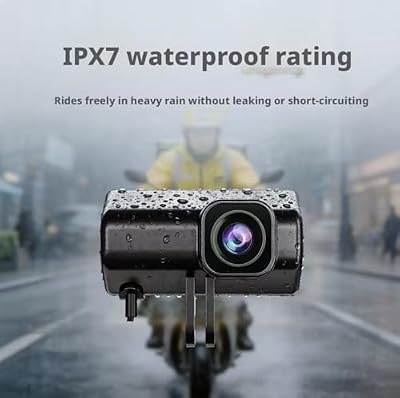
Specs and What You Get
- One 1080p Camera with Starlight Rated Sensor (marketing terms for sensors designed to pull usable details from scenes illuminated by streetlights)
- Loops Recording
- Simple Mounting System
- Power Draw is sufficient for Bike battery Packs as well as Motorcycle Installations
As stated in the listing, the 200W rating for the sensor is simply sensor marketing math. In reality, this unit delivers 1080p video quality at a level that is far superior to competing products in its price class due to the fact that it has a significantly better sensor than its competitors.
With an overall average rating of 3.6 stars based upon only 7 reviews, this indicates a relatively small sample size. Furthermore, with 5-star reviews alongside 1-star reviews within the same group of reviewers, there is an obvious indication of the expected variability found in budget-priced items -- namely the variability among individual units and the variability of buyer expectations.
Installation and Daily Use
Installation for this unit was undoubtedly the simplest installation procedure we have encountered within the entire category: One camera = One cable run = One power tap. An estimated time frame of approximately thirty minutes to complete the installation for most users. For bicycle usage, installing a standard USB battery pack into a handle bar bag allows you to provide continuous power to the unit throughout the duration of your ride. When installed onto a motorcycle, simply connect the unit to a switched tap to enable ignition-based operation.
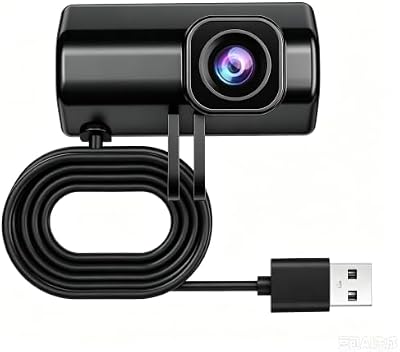
Usage of the paipaicam DM01 is equally as simple as the installation process. In order for the unit to begin recording, simply turn-on the power supply. Once the internal memory becomes full, the unit automatically begins looping previous recordings. Although we did experience some issues with daytime recording performance compared to other units, the "starlight" sensor performed exceptionally well during nighttime hours, particularly on poorly lit streets. We would highly recommend this unit for anyone looking to obtain evidence from the forward area of their vehicle at an affordable price-point.
What Amazon Reviewers Are Saying
Amazon reviewer comments have been mixed in regards to their overall satisfaction with this unit. While several reviewers praised the excellent night-time performance of the "starlight" sensor at this price-point, others were disappointed with the resolution provided by this unit compared to their expectations. Consistent threads in reviews praising the night-vision capabilities and criticizing resolution performance clearly indicate that reviewers are expecting higher resolutions from cameras than they are currently receiving. To date, none of the reviewers reported any catastrophic failures of build components in their review posts. Additionally, given the simplicity of the single-camera design, there are less potential areas where mechanical components may fail.
Who Is This For
Bicycle commuters, scooter riders and motorcycle owners who focus primarily on obtaining evidence from their vehicles’ frontsides (approximately 80 percent of all relevant incidents occur in this area), at the lowest possible price-point on our table. Secondarily, this could also be considered a suitable secondary camera option for riders who are currently running a rear-facing camera and wish to upgrade their front-side coverage. If you absolutely need both sides documented in case of an accident, options above us on the chart offer better quality channels.
Review all our other dashcam comparisons and reviews to see all aspects of this decision. Learn more about dash cams in general from this dash cam guide.
Sizing It Against the Alternatives
The economic realities of providing a single-channel solution dictate this unit's niche. Thus, we compare it against both ends of the dual-camera spectrum. Against budget dual-cams, we look at sensor quality per channel. Here, we're comparing one high-quality starlight-rated sensor to two inferior sensors, which will matter if you are exposed to a lot of front-side collisions. Against premium singles, we consider price: Evidence capture at the bottom of our table at a price that is competitive with other singles.
The key factor that differentiates this unit from its competition is its starlight-rated sensor. Budget-rated sensors render unlit urban roads as gray mush. Usable night footage generally does not exist until at least two price points above us. However, this unit’s starlight sensor provides genuinely usable low-light capture at a price that renders usable low-light capture feasible, and for night-commuters that is worth more than a second rear-angle camera.
This unit offers a unique feature that sets it apart from other units in terms of bicycle compatibility. Many dashcams are built with motorcycle electrical systems in mind, leaving bicycle riders scrambling to find creative ways to power these devices using battery packs that void their warranty. The low-power consumption of this device enables it to operate all day using a standard USB battery pack that can fit inside a handlebar-mounted bag on a bicycle, making it one of only a handful of dashcams that can meet the needs of both bicycle riders and motorcyclists.
Long-Term Ownership Notes
Long-term advantages include simplification of both the camera system itself and installation: one camera equals one cable equal one power tap = reduced number of potentially failing modules. The relatively small review history (only seven reviews) shows little-to-no clustering of failures, which aligns perfectly with this architecture.
As for how long term sensor performance degrades, it follows standard image-sensor physics. Performance remains stable for years before eventually degrading, not via total failure, but via increased noise in darker scenes. Users who observe decreased night visibility over years are observing real-world degradation of their starlight-rated sensor, and replacing it with another unit will address the issue at a lower price point than before.
In addition to long-term degradation, users operating battery-powered bicycle configurations should take note of an important limitation: Lithium batteries age much quicker when subjected to extreme temperatures in a closed environment such as a black handlebar bag. Riders who shield their bags from direct sunlight and refrain from charging their packs completely during hot weather cycles report normal battery life. Conversely, those riders who consistently expose their packs to full sun charges every month replace their packs every six months. Regardless, neither configuration will outlive the camera.
The Verdict
This is our entry-level price point offering and, in conjunction with being a "night-specialist," it represents an honest evidence capture solution at an entry-level price. Depending on whether you identify yourself as a bicycle commuter, scooter user or motorcycle owner focused primarily on capturing evidence from your vehicle's forward area, this product presents an easy and straightforward selection.
Bicycle Setup Specifics
Installing a dashcam on a bicycle introduces new physical challenges relative to motorcycles since vibrations from paved roads transfer energy through thinner tubing without engine mass to dampen said vibrations. Therefore, when attaching a dashcam to a bicycle mount, positioning the densest portion of the mounting platform towards your headstock (typically referred to as your "stem") rather than midway along your handlebars results in noticeably improved stabilization on video footage captured during your ride.
As previously mentioned, validating night-time performance involves conducting a separate ride-specific test since the benefits exhibited by the "starlight" sensor are specifically applicable to lit urban environments, whereas night-time trail riding does not necessarily benefit from this technology. Commuting riders who encounter mixtures of lit/unlit roadway sections should validate their equipment by viewing recorded footage from both scenarios prior to drawing conclusions regarding its performance, since although the "starlight" sensor produces usable night-time detail under street light illumination, it adheres strictly to physics principles governing light levels on dark trails.
Frequently Asked Questions
Is One Camera Enough?
Generally yes for documenting frontside collisions used for fault purposes, since rear-end collision faults almost always fall on the offending vehicle behind you anyway. For cases like hit-and-runs while parked or multi-vehicle accidents, having two angles creates a stronger narrative.
How Good Is the Night Vision Really?
It performs surprisingly well for streetlight-lit urban scenes at a far better rate than most products within its price-range, however poor lighting conditions found on rural roads limit its ability to provide clear detail regardless of how good its sensor may be.
Can a Bicycle Power It?
Yes, utilizing a standard USB battery pack placed within a handlebar-mounted bag provides adequate power to operate this unit throughout your entire ride. As such, it is one of the only true options available that can function properly as both a motorcycle-mounted and bicycle-mounted solution.
Is It Waterproof?
While capable of withstanding minor amounts of rain/spray associated with regular riding conditions, ensure that you store your battery pack/recorder in protected locations as needed.
What Resolution Should I Realistically Expect?
Daytime, Honest 1080p video quality. Nighttime, Usable detail for its sensor price. Close-up, Capturing license plates within urban areas (not at highway distances).
Why Choose This Over a Cheap Dual Cam?
Simplistic reliability + Better quality per channel = One high-quality camera > Two poorer quality cameras for many riders' actual requirements. You can check price on Amazon for this unit.
Compare every option on the motorcycle dash cam table, and browse more reviews and guides.