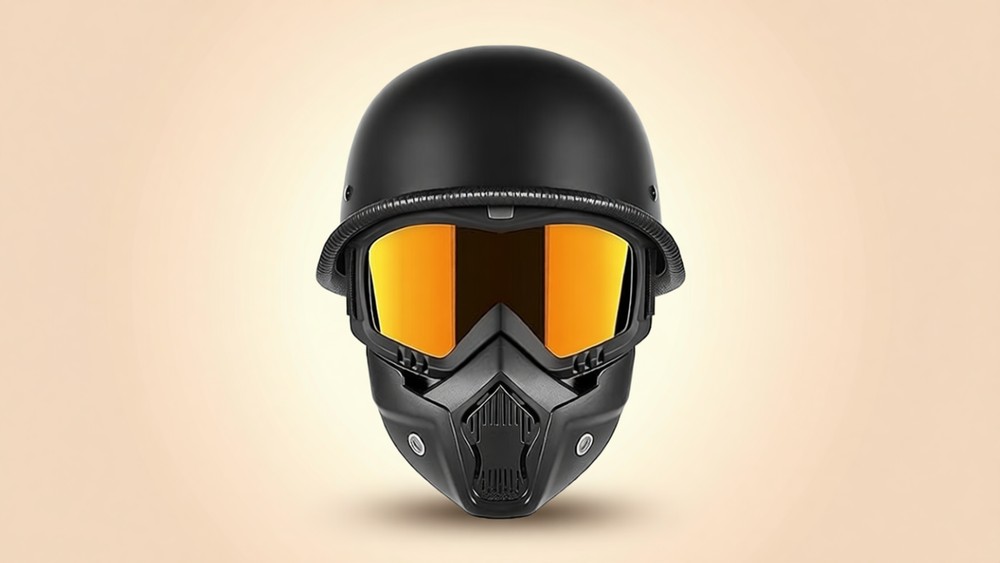
The TRUSTERTHEE half helmet sells the oldest look in motorcycling for one of the smallest prices in the aisle.
German-style skullcap, face shield, removable goggles, and a checked price of 44.95. At that price the question is never style. What matters is what the shell is made of and whether the DOT claim on the box survives contact with the helmet itself.
That claim is everywhere on this listing. The title bullet says the lid is certified to DOT FMVSS NO.218, and the details table lists Certificate Type: DOT and Specification Met: DOT.
But DOT is a self-certification regime, which means the maker asserts compliance and the proof a buyer can hold is the stitched label on the shell. Two of the thirteen people who left written reviews say theirs arrived with no such label anywhere on the helmet.
This review walks through what the paperwork does and doesn't prove, what the other eleven buyers report about comfort and the shield, and the checks worth running on the box before the return window closes.
The TRUSTERTHEE half helmet is a German-style half shell with an ABS build, a listed weight of 2.31 pounds, and a price that sits in the cheapest fifth of the 257 helmets we track.
The specs box on the helmet comparison table renders exactly where it sits. The written record is small but clean on purchasing: all thirteen reviews are confirmed purchases, and eleven of them rate the lid four or five stars.
The DOT claim, and the proof a buyer can hold
The paperwork on this listing is complete, on its face. The title bullet says the helmet is DOT FMVSS NO.218 certified, and the details table lists Certificate Type: DOT alongside Specification Met: DOT. Nothing on the page contradicts the claim.
What the page cannot do is test the helmet. FMVSS 218, the US federal standard behind the DOT mark, is self-certified: the maker asserts that the lid meets the rules, and a compliant helmet carries the DOT symbol on its outer surface, as covered in Wikipedia's motorcycle helmet article.
The stitched label on the back of the shell is the fastest field check a buyer has, because it is the one piece of proof that travels with the helmet rather than with the listing.
Two owners have reported that this one didn't. The October 2026 text says the helmet arrived with no DOT approval marking on it, and the August 2026 text reports no manufacturer label present at all.
A claim repeated in three places on a page is still a claim until a shell in your hands carries the label. That gap between paperwork and product is the whole story of this helmet, and it is checkable in ten seconds at the door.
The two one-stars that name the same worry
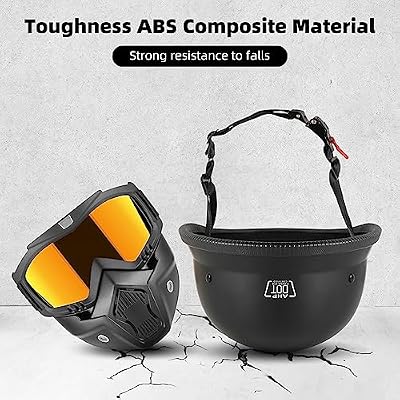
Two buyers have worried about the build rather than how the gear feels. One person noted the quality was very poor and that no DOT marking was present on the lid when they opened the box. Another reviewer has found the shell too thin, and reported far too much flex for a helmet.
That second complaint matters because of what an uncertified or under-built shell usually lacks. Novelty lids carry little or no energy-absorbing foam, so there is no liner doing the impact work, and the shell bends because nothing inside resists it. The same Wikipedia article describes how a confiscated novelty helmet can be bent by hand for exactly that reason.
Flex by itself doesn't prove a helmet is uncertified, but flex plus a missing stitched label points one direction.
You can run the arrival checks in under a minute. Look for the stitched DOT symbol on the back of the shell.
Press the shell between your hands and feel whether it flexes. Open the comfort padding and look for the dense EPS liner underneath a hard ABS shell. If the label is missing and the shell folds like a plastic bowl, send it back inside the return window and let the seller explain the paperwork.
What the eleven warm texts actually agree on
Eleven of the thirteen written reviews are four or five stars, and every text in the record is a confirmed purchase, which is a cleaner record of real buying than most listings in this price bracket can show. The buyers write in more than one language, with Spanish texts among them, and the overlap across languages is broad.
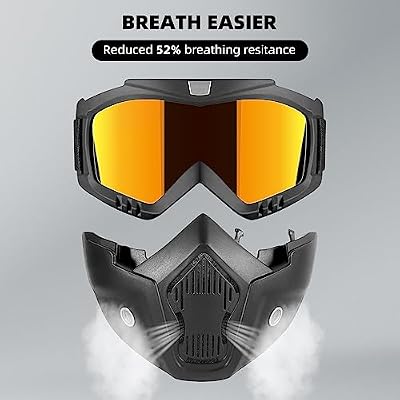
Owners agree the helmet is comfortable and fits true to size, including with the face mask on. One detailed text says the shield shows very little fogging compared with other face masks the buyer has worn, and credits the padding around the eyes for it. Another owner has removed both the goggles and the face mask, which tells you the mounting comes apart by hand.
The quick-release tab comes up too, by the most-endorsed reviewer in the record, who says it works even with gloves on.
One buyer reports the look drawing compliments, which won't surprise anyone shopping this category. Nobody in the record reports a crash, a return fight, or a wind-noise problem at speed, and no report on how it holds up over months exists yet. The record is young, and it is warm where it speaks.
The top-voted claim this review won't repeat as fact
The most-endorsed review, from February 2025 with ten helpful votes behind it, says this helmet gives most of the protection of a full-face lid and that the buyer has full confidence in it. That's a real view from a real purchase, and I won't tell you the buyer is wrong about their own comfort.
What I can do is put the category facts beside the claim. A half helmet leaves the chin and jaw uncovered by design, and the DOT standard doesn't test a chin bar, because half helmets don't have one to test.
The same article cited above puts the numbers for helmets as a class: about a 69 percent lower risk of head injury and about a 42 percent lower risk of death, figures that come from a 2008 systematic review of riders wearing helmets that meet the standards. Those numbers describe the class, not this shell, and they land harder on a listing where the label question is live.
So read the top review as what it is: a comfort-first verdict from a happy buyer. The safety claim inside it is a belief no half helmet can honor, because the chin and jaw sit outside the lid.
Cheap shell, messy paperwork
On price, this sits in the cheapest fifth of the 257 helmets we track, and the specs box on the helmet comparison table renders exactly where this one sits. At 44.95 with a face shield, goggles and a removable mask included, you get a lot of hardware for the money.
The listed weight is 2.31 pounds, which sits oddly beside the bullet copy stressing how lightweight the lid is. The page never states a target weight for the class, so treat the recorded figure as the load your neck gets, and note that the two one-star texts describe a shell at the thin end rather than the thick one.
The paperwork noise is worth walking in knowing. The warranty line in the spec table is just the number 90, with no unit stated, so nobody can tell from the page whether that means days or anything else. Included Components reads NO, which is hard to square with a listing that ships a face mask and goggles.
The model name is TRE-01 while the model number is WLT-307, and the details-table ASIN row reads B0C88VNZVX rather than this listing's B0C88STCZ1, a sign the page can shuffle between versions of the same helmet family. Confirm the warranty unit and the certificate with the seller in writing, before the return window matters and not after.
Frequently Asked Questions
Is the TRUSTERTHEE helmet DOT certified?
The listing says it is: the title bullet claims DOT FMVSS NO.218, and the details table lists Certificate Type: DOT and Specification Met: DOT.
But DOT is self-certified, meaning the maker asserts compliance rather than submitting to a government test. Two owners in the record report their helmets arrived with no stitched label on the shell. Check for the label before the return window closes.
Does the shield fog?
One detailed buyer text reports very little fogging compared with other face masks, and credits the padding around the eyes. That's the only fogging report in the record, so treat it as one voice rather than a settled verdict.
What sizes does it fit?
The texts that mention fit say it fits perfectly and runs true to size, including with the face mask on. No buyer in the record reports a sizing problem.
What is the warranty?
The spec table lists the number 90 with no unit attached. The page never says whether that means days, weeks or something else. Ask the seller in writing and keep the answer with your order confirmation.
Is a half helmet enough protection?
A half helmet covers the crown and sides and leaves the chin and jaw open, and the DOT standard has no chin-bar test for helmets without one.
Helmets as a class cut head-injury risk by about 69 percent and death risk by about 42 percent, per the same review, when they meet the standard and fit snugly. If you want jaw coverage, the helmet comparison table lists the full-face options with their live prices.