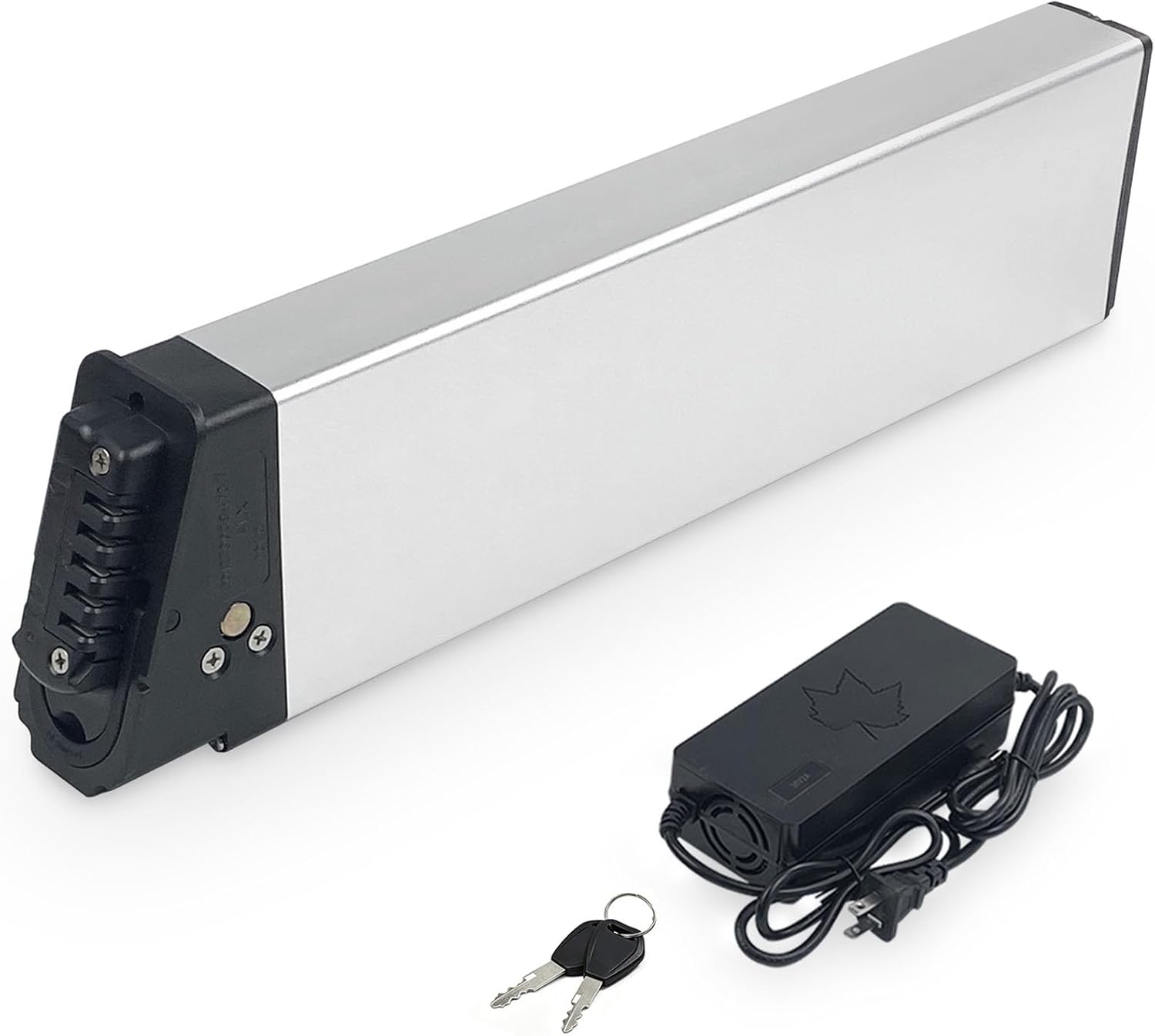
Folding e-bikes with a built-in battery are the hardest category to replace a pack for, because the battery lives inside the frame and the shell, the connector and the mount all have to match the original exactly. The DCH-006 shell is the most common built-in form factor in that market, and ShunTongDa sells a 48V 14Ah rung of it.
The ShunTongDa DCH-006 48V 14Ah battery sells at 255.89, which works out to about 38 cents per watt-hour. That is among the most expensive positions in our comparison table, and the live figure renders in the specs box below, so you can see exactly where it lands against every pack we track.
What the price buys is a real owner record, which is rare at this end of the folding market. Nine people have rated it, six of them wrote texts, every text is purchase-badged, and not one rating falls below four stars. This article walks those six accounts, checks the listing's numbers against each other, and starts with the owner story that matters most.
A clean record, and the questions it can't answer
The histogram has no sub-four-star band at all. Fifty-five percent five stars, forty-five percent four stars, and nothing below. We counted the six written texts and every one is purchase-badged, which is an unusually clean shape for a battery listing in this class, where unverified five-star template praise is the default.
Two of the six texts carry real content. One is a controller discovery that saved its writer from a mistake, and one is a replacement story that ends in a second purchase. The other four are short: a fit report, a one-time glitch, a paragraph of general praise and a single sentence.
The record is honest but thin, and the oldest text is only 14 months old, so how long these packs last is still a question nobody can answer.
Nobody names a listed model either. The bullet names fourteen bikes, from the Lectric XP Step Over 1.0 and 2.0 to the FIIDO M2 and the BEZIOR X500, and it ends with "please compare carefully".
Not one owner text names a bike from that list. The two bikes that appear in the record are a FreeGo folding model and a five-year-old e-bike, and neither is on the bullet's list. The fitment claim is a claim, and the record neither confirms nor breaks it.
The controller check that saved one buyer
The September 2026 text is the one every DCH-006 shopper should read. Its writer inherited an old folding FreeGo, felt anxious about putting serious money into an old bike, and installed this battery successfully. Then they opened the controller bay hoping for more power and found the problem: the bike's controller is 36V 15A, despite the hub motor being labeled 48V.
The battery works, and they say they are happy with it after a day. But they are now shopping for a controller too, because a 36V controller cannot use what a 48V pack offers.
The motor's label told them nothing. The controller told them everything.
That is the lesson the bullet's "please compare carefully" is really about. A replacement battery cannot raise a bike's power past what its controller allows, and on built-in folding bikes the controller often hides under the battery tray where nobody looks. Before you order any DCH-006 shell, open the bay or find the controller's rating and read its voltage and amp rating.
The five minutes it takes is the difference between a working upgrade and a pack your bike treats as a foreign object.
The hot original, and the strongest trust signal in the record
The August 2025 text is the oldest one, and it is the reason this listing's record carries weight. Its writer replaced a five-year-old original 10.4Ah pack that got extremely hot on its last charge, and they refused to put it back on the bike. The ShunTongDa gave them more power and more distance than the original, and they liked the performance enough to buy a second one as a spare.
A buyer who buys the same pack twice on their own is the strongest signal a thin record can carry, and it is the kind of detail a template review never produces. The same text ends honestly: they don't know about longevity yet, they just like what they have so far. That is the right amount of confidence for a 14-month-old record.
The replacement story also explains who this rung is for. The original pack on that bike was 10.4Ah, which is the other capacity in the DCH-006 family, and the covered ShunTongDa 48V 12.8Ah review covers that rung at a lower price. Moving from a 10.4Ah original to this 14Ah rung adds about a third more capacity in the same shell, which is exactly the upgrade this buyer made.
The numbers argue with themselves in three places
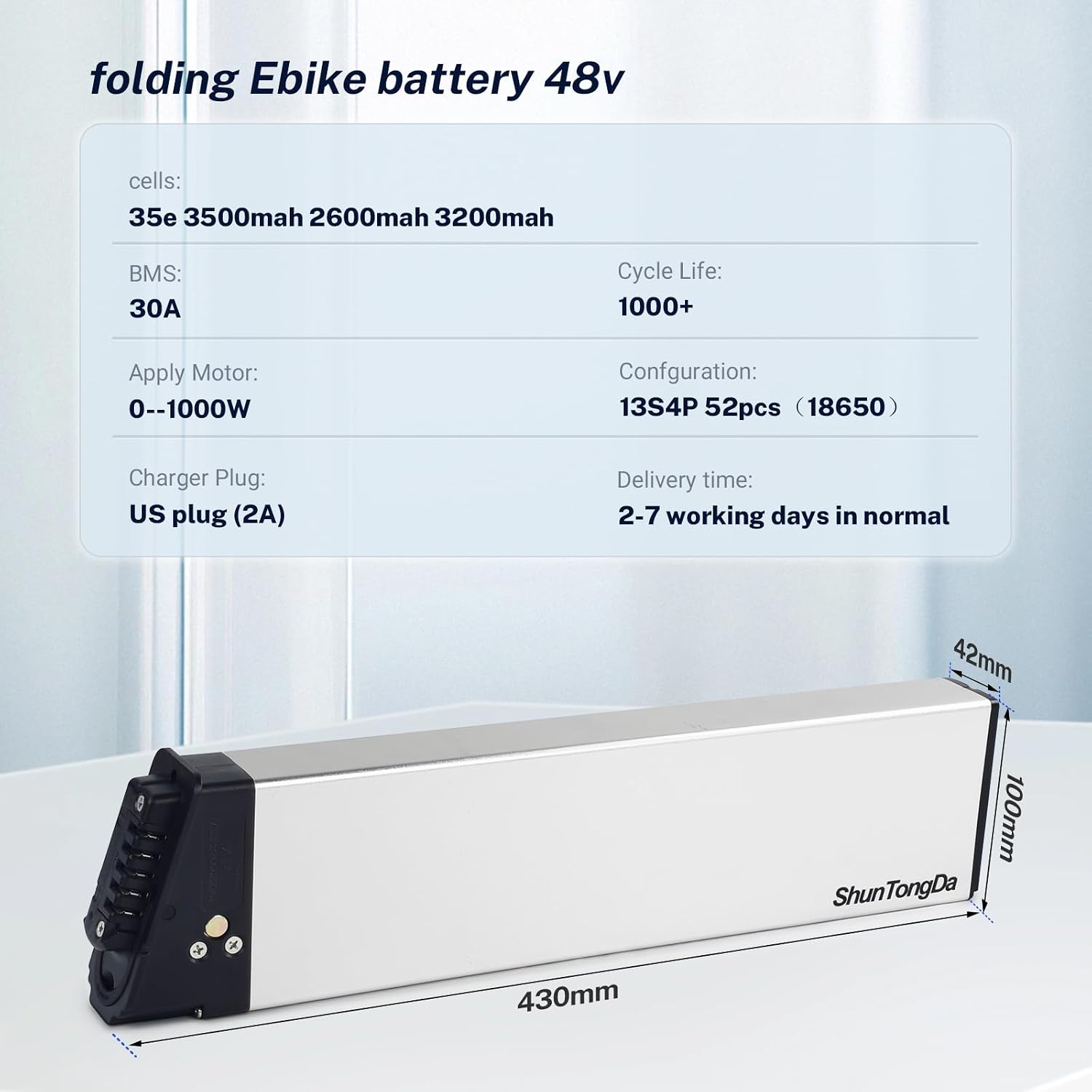
The details table prints a battery capacity of 10400 milliamp-hours on a listing titled and carded as 14Ah. One of those numbers is wrong, and the page never says which. This row-wart fault shows up across this market, and it is one more reason the measure-and-meter routine matters.
The parameter card makes it worse in an interesting way. It lists three cell ratings under one 13S4P layout: 3500, 3200 and 2600 milliamp-hours.
A 4P string of 3500mAh cells is 14Ah, which matches the title. A 4P string of 2600mAh cells is 10.4Ah, which matches the capacity row instead. The real capacity depends on which cell the factory used the week your pack was built, and the listing gives you no way to know which one shipped.
The charger question splits the same way. The card lists a US-plug 2A charger plug, but the Included Components row names two keys and the battery and no charger at all.
Fourteen amp-hours at 2 amps is about seven hours to full, and whether the charger ships in the box is a question the listing answers differently in two places. Ask the seller before you order rather than after.
The arithmetic that does hold is the honest kind. Thirty amps at 48 volts is a 1440-watt ceiling against a 0-1000W motor claim, so the board has headroom the title never uses.
The printed 4.09 kilograms against 672 watt-hours is about 0.16 kilowatt-hours per kilogram, and mass-produced 18650 cells store roughly 0.16 to 0.30 kilowatt-hours per kilogram before any case, BMS or wiring, so the weight leaves room for the hardware instead of demanding impossible cells.
And the details row's 3.93 by 1.69 by 16.92 inches converts to a 430-millimetre length, which matches the model row's L430mm tag exactly. On this listing, the measure-first purchase works.
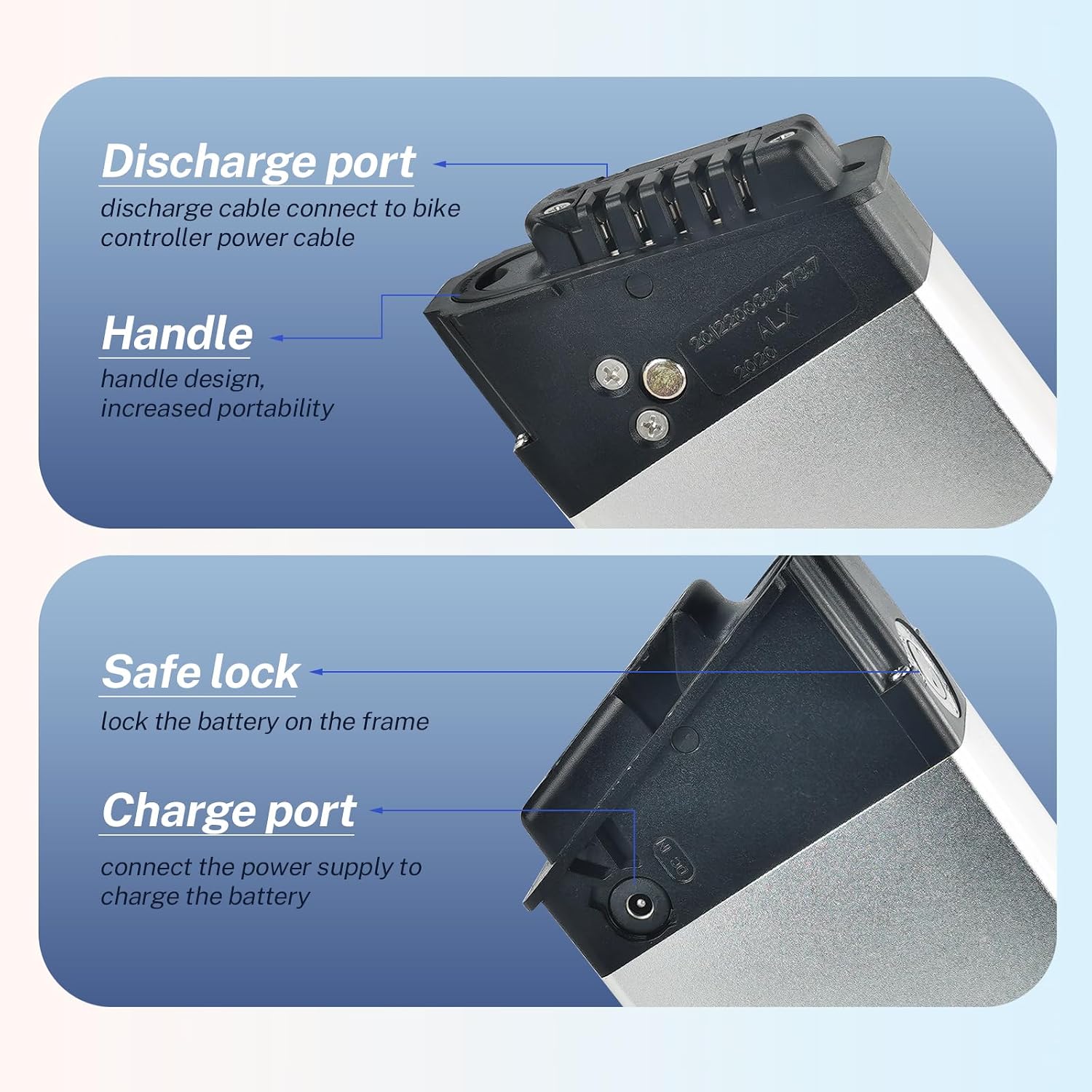
Two claims come with no paperwork. Bullet three says the pack has passed UL testing and names no certifying body or document, and the cycle claim of 1000-plus sits at the top of the 400 to 1,200 cycle band that lithium-ion chemistry generally delivers. Treat both as the listing's word.
The price is where this rung pays for its record. At about 38 cents per watt-hour it costs more than roughly nine of every ten packs we track, and the same shell family sells cheaper: the covered 12.8Ah rung, the covered TotGuard 48V 10Ah pack from the same DCH-006 shell family, and the PowHonhinen 48V 10.4Ah DCH-006-class shell we covered recently.
If your original pack is 10.4Ah and you mainly want a working replacement, those rungs cost less per watt-hour. If you want the biggest capacity the shell offers and a record with no complaints, this is the rung that has both, and you pay for each.
Frequently asked questions
Will this fit a Lectric XP Step Over 1.0 or 2.0?
The bullet names both, and the printed 430-millimetre length matches the model row's L430mm tag. But no owner text names any listed bike, so check three things before paying: your original shell's length, the connector, and the controller's voltage rating as described above. The bullet's own advice to compare carefully is doing real work here.
Is the capacity really 14Ah?
The title, the card's headline and the 13S4P configuration at 3500mAh per cell all say 14Ah.
The details table says 10.4Ah, and the card also lists 2600mAh cells, which would make it 10.4Ah. Both numbers appear on one page. The meter-first routine settles it: charge full, ride your normal route, and compare the range against what 672 watt-hours should deliver.
Does the charger come in the box?
The card lists a US-plug 2A charger plug and the Included Components row lists keys and the battery only. The listing contradicts itself, so confirm with the seller before ordering. If no charger ships, a 48V 2A charger with the matching port is a modest extra cost, and plan on about seven hours to full either way.
Is it worth the price compared with other DCH-006 packs?
For most buyers, no. At about 38 cents per watt-hour it costs more than nearly everything we track, and the covered 12.8Ah and 10.4Ah rungs of the same shell class deliver replacements for less.
What the price buys is the largest capacity in the shell and the cleanest owner record in the folding category, with six purchase-badged owners and no rating below four stars. That trade makes sense if you need the range, and is hard to justify if you don't.