Some intercoms get bought for a motorcycle and end up somewhere else entirely. The Sena SPH10 looks like helmet gear on the box, and our own comparison table files it as a two-rider motorcycle intercom, but read what its owners actually do with it: dock a sailboat with a spouse at the bow, take riding lessons through it, run a crane, sit in a straight-piped semi.
One owner has used it daily since 2014 and ordered a second pair when the first finally went flakey.
That record raises a question the listing never answers. If a headset has survived thirteen years on the market with riders, sailors, and tree services all buying it, what are you actually buying, and does the motorcycle use case still make sense at 152 when the half-helmet version of the same family costs more than twice that? It's a fair question, and the owner record answers it better than the spec sheet does.
It's not a clean answer. The recent reviews lean hard against it, the decade-old reviews lean hard for it, and both are telling the truth about different things.
This piece walks through what the spec table really promises, what the 2026 complaints share, what thirteen years of owners learned the hard way, and where a strap-on headset beats every clamp-on unit in the category.
The honest verdict first, because this listing deserves one: the Sena SPH10 is a strap-on-the-head Bluetooth intercom, not a helmet unit, and it was old technology on the day it launched. It still does things no clamp-on intercom can do, and at its current price it costs about 40 percent of what Sena asks for the half-helmet variant.
Buy it for what the owners use it for, not for the category Amazon filed it under, and go in knowing the 2026 record carries real complaints about batteries and wind.
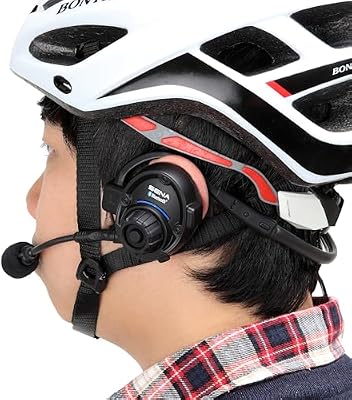
Filed everywhere except the helmet
Start with where the SPH10 actually sits. Amazon's own category tree puts it at number 1,055 in Earbud and In-Ear Headphones, nowhere near motorcycle communication.
The spec table calls it a "Helmetless Headset," and the model name SPH10-10 describes a band that runs over the top of your head with pads sitting on the ears. Nothing clamps to a helmet. There is no boom mount to bolt on and no ear pocket to slide a speaker into.
That changes who should be reading this page. Our intercom comparison table sorts motorcycle units by price per rider, and the SPH10 sits in that table because riders do buy it, but its own record says the customer base is wider.
A sailboat couple docked their boat through a pair like this, and sailors have their own phrase for the job, "marriage savers," quoting one 2019 buyer's description.
A riding student who is partially hearing impaired has taken coaching through a pair since 2014. A boating family ran a full 2026 season on theirs, 60 feet apart with two floors between them at one point. A tree-service owner, a long-haul trucker in a straight-piped truck, and a buyer who figures the band for crane work all show up in the written record.
The listing itself contributes a few oddities worth knowing. Bluetooth 3.0, four-way intercom, a claimed 900-meter range, and 10 hours of talk time are the real numbers. Around them sit rows copied from headphones: 2200 ohms of impedance, a "Video Game" theme, a noise-cancellation row, and a DOT certification line, which is strange for a product with no helmet involved.
The bullet points even end with an earbud-tip sizing note pasted in from a different product. None of that changes what the hardware is, but it tells you how much attention the listing gets from its maker in 2026.
The bullet that volunteers a limitation
One bullet deserves its own paragraph because almost no listing does this. Sena states plainly that the SPH10 "does not have and will not have" the software to work with the Harley-Davidson Boom Box.
A 2024 Harley owner confirms the shape of that: the headset connects to the phone only, never to the bike, so the handlebar call controls, the on-board intercom, and the CB all stay out of reach. That owner still rates the setup highly for calls at 60 mph with no wind noise, but if your bike integration matters, this is the wrong device and the listing tells you so itself.
What the 2026 record says
The recent texts are the weakest part of the SPH10's case. An August 2026 buyer used it with a half helmet on a motorcycle and reports that wind noise prevented others from hearing them, that the battery disappointed, and that the charge plug sits loose enough to need fiddling.
A July 2026 owner got about fifteen uses across three years before one unit stopped holding a charge, and notes they always stored it charged. An April 2026 buyer who runs a tree service says they power down equipment to take calls, which is a direct contradiction of the Advanced Noise Control bullet.
Two positives from the same period balance the picture. A September 2026 boater reports a season of secure fit, quick pairing, and clean communication across 60 feet and two floors, with wind interference only at certain angles. A January 2026 rider confirms the half-helmet wind problem from the other direction: hearing other riders works great, being heard is the hard part, and they call that expected on an open face.
So the 2026 shape is this. Range and pairing hold up. Voice transmission into wind on a half helmet does not, which matches everything we know about open-face microphones.
And battery longevity is the newest complaint, one that the older record did not carry.
What thirteen years of owners learned
The helpful-sort page for this listing reads like an archive. The top texts date to 2013 through 2019, which makes this the oldest record we have covered on this site, and the long texts carry maintenance knowledge the listing will never give you.
The most detailed account starts in 2014 and updates through 2019. Its owner wore the headset nearly every day in Florida and Texas heat, found one unit going flakey after four years, and ordered two more anyway.
Along the way they confirm the headset's one famous weak point: the plastic on the shank just above each earpiece is thin, because Sena narrowed it deliberately so the band would clear a helmet and the side of the head without pressure points.
The trade is durability for clearance. This owner snapped one by peeling it off their head with one hand and says the two-handed removal, lifting each side off the ear as designed, has kept the rest alive for years.
A 2015 text describes the same crack at the wire-routing section and adds the warranty outcome: Sena replaced the headset, and the owner was gentle with the replacement. Between those two accounts the rule writes itself. This is a device that lasts if you lift it off with two hands and breaks if you peel it off with one.
Fit reports split in the same way. A 2025 buyer calls the band non-adjustable, says the earpiece hurts after a while, and compares it unfavorably to the build of their other Sena gear.
The 2014 owner calls it among the most comfortable headsets worn. Both are describing the same fixed-size band, so sizing is the variable, and a buyer with a larger head should think hard before ordering.

The 900-meter question
The spec table claims a 900-meter intercom range over Bluetooth 3.0, and that number needs decoding before you plan anything around it. Bluetooth in its common phone mode reaches about 10 meters, up to 100 at higher power classes, per the standard's own documentation. A 900-meter claim describes a unit-to-unit link between two matched Sena headsets, which is a different thing from phone range entirely.
The owner record backs generous unit-to-unit range without quite confirming the full claim. The 2026 boating report covers 60 feet through two floors.
A 2013 owner describes whole-house reach from a laptop transmitter, though that setup used a higher-power Class 1 dongle rather than the headset's own radio. Nobody in the captured record claims a measured half-kilometer. Treat 900 meters as the design ceiling for two units in open air and plan on much less whenever buildings, terrain, or engine bays sit between you.
Bluetooth 3.0 itself dates to 2009, and one 2026 owner calls the technology "old" and the music playback drab. They're right about the age. Whether it matters depends on the use: for voice communication the record shows the link holding fine, and for music the honest answer is that radio-grade audio on ear pads was never the pitch.
SPH10 or SPH10H-FM
Sena still sells the half-helmet variant, the SPH10H-FM-01, and we reviewed that clamp-on unit separately. That unit clamps to an open-face helmet, adds an FM tuner, and costs 375 at the time we checked, against 152 for the band version. The band version is the original design, works with or without any helmet, and shares the same four-way intercom core.
The choice is really about the microphone. If you wear a half helmet and want the mic positioned at your mouth with a clamp, the H-FM is the purpose-built tool, wind record and all.
If you want one headset that moves between a bike, a boat, and a job site, or if you sometimes ride with no helmet at all in the states that allow it, the band version is the only tool in the family that does that. The half-helmet wind complaints appear on both units, so neither one escapes the physics.
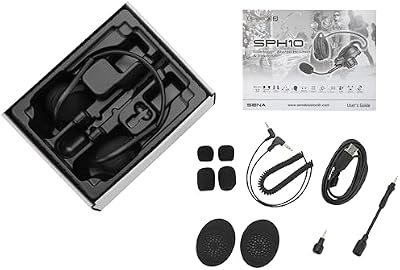
FAQ: what the thirteen-year record settles
Does the SPH10 work with Harley-Davidson bikes?
Not with the Boom Box system. Sena's own bullet states the required software will never exist, and a 2024 owner confirms the headset pairs to the phone only, with no access to handlebar controls, the on-board intercom, or the CB.
Is the 900-meter range real?
It's a unit-to-unit intercom claim, not phone range. Owners report solid links across 60 feet with floors between them, and nobody in the written record claims a measured half-kilometer, so plan for strong short-range links rather than the ceiling figure.
How long does the battery last?
The listing claims 10 hours of talk and seven days of standby, and the older record supports full-day use. The newer complaints are about longevity rather than daily runtime, with one unit failing to hold a charge in its third year after light use.
Can it connect to other brands?
It's a Bluetooth 3.0 device, and one owner reports it intercom-connects with their Sena 10S units without trouble. The trucker owner also reports connecting it to third-party two-way radios, which they count as a feature premium trucker headsets lack. Cross-brand motorcycle intercoms are a different story, and the record here covers Sena-to-Sena links.
Who should skip it?
Half-helmet riders who need to be heard at highway speed, buyers who want bike-integrated controls, and anyone uncomfortable with a fixed-size band. The record is unusually clear on all three.