Some intercoms sell because they are new. The SMH10-10 sells because it has been around long enough that nobody has to guess what it is.
Sena has kept this design in production for well over a decade, and it still sits near the top of the helmet-communication category at a mid price. That is a strange position for old hardware, and it deserves a closer look than the star rating gives it.
The choice is harder than it looks because old does not automatically mean bad here. A rating base of this size is a kind of evidence no new unit can match. But an old design shows its age in specific places, and this one shows it in the Bluetooth version on the spec table and in the way owners describe pairing.
This article walks through what purchase-backed owners report, where the listing argues with itself about range, and what the record never settles. All of it comes from the listing as it stands now and ten owner texts with purchase markers.
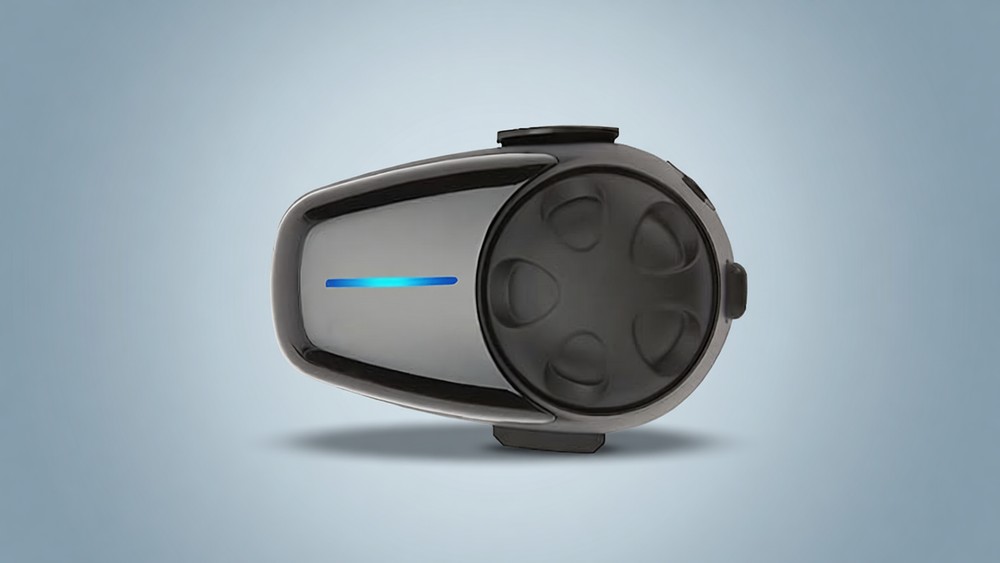
The Sena SMH10-10 is a design from another era of this category that still carries 4.5 stars from 1,644 ratings and a top-twenty category rank.
The record behind those numbers splits on one axis: most owners rate it four or five stars and ride, and two owners describe pairing failures so complete their headsets became shelf decorations. On our price-per-rider table, this one sits in the pricier third of everything we track, so you are paying mid money for a frozen feature set.
Pairing is where the record splits
Three of the ten owner texts describe connecting without drama. One has found it pairs with a phone and other Sena units within seconds. Another calls pairing easy and reports solid microphone and speaker performance at 80+ mph.
The rest of the positive texts are one-liners about quality, which at least contain no complaint about pairing.
The two failure texts are longer and far more detailed. One buyer reports this as the fifth Sena product they have tried to purchase, and not one of the five units would connect. Their account describes support as no help and ends with the buyer stuck with two helmets they now call useless, because the units in them are integrated.
That text is also the only one in the record with a recorded helpfulness vote, and the vote agrees with it.
The second failure text describes static and popping when their headset connected to a Sena 50S, wind noise the owner calls unusable over 30 mph, and a firmware update that would not complete after two cables, a driver reload, and a second computer. The 50S detail matters more than it looks.
The listing promises universal intercom with headsets not powered by Sena, and the one cross-unit attempt in this record was against a same-brand unit from a later generation, which failed anyway.

So the record does not average out to a mild recommendation. It splits into owners who got a working unit in seconds and owners who got nothing at all, with very little in between.
Two range figures and the math underneath
The listing argues with itself about range. The spec table says Bluetooth 3.0 hardware and 900 meters. The listing bullets say Bluetooth 4.1 and 1.6 km, described as open-terrain distance.
Two Bluetooth versions and two range figures sit on one product page, which is worth knowing before you plan a ride around either number.
The raw Bluetooth numbers are smaller than either claim. In its most common mode, Bluetooth transmits at 2.5 milliwatts with a range of up to 10 meters, reaching about 100 meters at best, and the extended modes introduced with Bluetooth 5.0 manage 40 to 400 meters (Wikipedia).
An intercom figure like 900 meters rides on the vendor's own radio implementation and intercom protocol layered on top of Bluetooth, and the listing hedges its own figure with the words within optimal conditions.
What the record actually supports is more modest than either figure. One owner reports the connection holding solid at 80+ mph, which is the only concrete use report at speed in the ten texts.
Nobody describes riding a kilometer apart, and nobody describes the range failing in trees or traffic. Plan around the report at speed, not around the kilometer figure.
The Bluetooth 3.0 in the spec table also dates the design. That version shipped in 2009, and the 4.1 claim in the bullets is not much newer. This is hardware from before mesh existed as a category feature, which is exactly what the frozen feature set means in practice.
Loud enough, until the bike gets loud
The loudness reports form a line rather than a split. One owner says the speakers are loud enough but carry no bass. A second owner, writing in May, says they are not quite blowing-eardrums loud, would probably not suit a Harley, and names a Honda as a bike they might work on.
A third reports solid mic and speaker performance at 80+ mph, and nothing in that text suggests the bike was unusually loud.
Put the three together and the pattern is clear. On ordinary bikes at ordinary speeds, the volume holds. On loud bikes, the record suggests you will want more than these speakers give.
The audio is tuned for voice, and the missing bass is the same trade from the other side.
One more audio note from the record: the owner who reported crystal-clear sound also mentioned the battery lasting a long time. That is the only battery sentence in all ten texts, and it is an impression rather than a measurement.
What the record never touches
Some gaps in this record matter more than others. No text mentions rain or water resistance, so there is no owner evidence either way on weather. No crash or impact report exists anywhere in the record.
Nothing describes the 4-rider claim in actual use, and battery life gets the single sentence above.
That leaves the arrival checklist as the practical takeaway. Pair the SMH10-10 with every device and rider you plan to use it with, inside the return window, because pairing is exactly where this record fails when it fails.
Run the firmware update at home before a ride, because that is the step one owner could not complete, and a headset that will not take an update is one you want to return, not troubleshoot on the road.
The spec table carries a 2-year manufacturer warranty wording. Nobody in the record describes using it, so the record cannot say how that promise holds up.
The choice: proven and frozen, or newer for less
The decision this headset forces is unusual, because you are paying mid-band money for a design whose feature set stopped moving years ago. What you buy with that money is certainty of a specific kind: a rating base of 1,644, a category rank near the top, and a record where most of the ratings sit at four or five stars.
You should skip it if you want mesh, app-era features, or the best price per rider on the table, because the design offers none of those, and the full comparison shows newer units below this price. You should also think hard if you ride a loud bike, because the loudness reports bend exactly where the bikes get loud.
And if you ride with a mixed group, note that the one cross-generation attempt in this record produced static against a Sena 50S. Universal intercom is the listing's promise, not the record's finding. Test your exact combination inside the return window, whatever you buy.
Check the latest price on Amazon.
Frequently asked questions
Does the SMH10-10 work with non-Sena headsets?
The listing promises universal intercom with Bluetooth headsets not powered by Sena. The record cannot confirm it, because the only cross-unit report in the ten texts is a failed pairing against a same-brand 50S. The feature exists on paper, but nobody in this record has demonstrated it, so test your combination inside the return window.
What is the real range?
The listing carries two figures, 900 meters in the spec table and 1.6 km in the bullets, both described as open-terrain or optimal-conditions numbers.
Raw Bluetooth manages about 10 meters typically and about 100 at best. The only concrete report in the record is a solid connection at 80+ mph, with no distance attached. Nobody in the record has measured the range.
How long does the battery last?
The listing claims 13 hours of talk time and a 3-hour charge. One owner says the battery lasts a long time, and that is the only battery sentence in the record. There is no measured figure from any owner.
Is it loud enough for a loud bike?
Two owners suggest not. One says the speakers carry no bass, and another says they would probably not suit a Harley while naming a Honda as a bike they might work on.
A third reports solid performance at 80+ mph, which suggests ordinary bikes are fine. The record points to adequate on standard bikes and marginal on loud ones.
What warranty applies?
The spec table carries 2-year manufacturer warranty wording. Nobody in the record describes a warranty claim, so there is no owner evidence about how Sena handles one on the SMH10-10.