Sena's 60-series ladder has quietly become three products wearing one name. The 60S that opened the line carries Harman Kardon tuning. Its EVO successor swapped that for Bose audio and a newer radio, and the 60X pushed the same Bose hardware further along.
All six rungs sit inside one Amazon variant list, and their prices spread more than a hundred dollars apart, so a buyer hunting a two-headset box has to read the ladder before any price tag makes sense.
Pack pricing adds its own wrinkle. Two-unit boxes across this season have landed anywhere from 18 percent under two singles to 13.6 percent over them, and where a pack sits in that band tells you which rung the maker wants to move. The EVO dual sits in the modest-discount half, about 4 percent under two singles, and it carries the Bose hardware neither 60S pack offers.
Sena's own listing argues about how many headsets you get. Its contents row describes one kit while its count rows and title insist on two, and the gallery shows mounting cards but no spec table at all. Below: what the page commits to, what the 24-rating record settles and leaves open, and how the rung math lands against the covered singles.
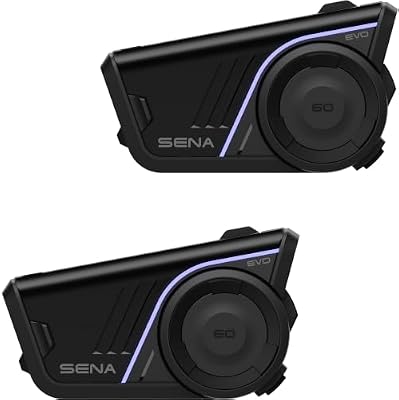
The Sena 60S EVO dual pack is the two-headset box of the Bose-generation unit, and it's the rung to buy when the audio upgrade is the point of the purchase. The 60S EVO single builds the same pair for 39.00 more across two orders, and the 60S dual pack is the Harman Kardon route at 113.85 less.
Where every unit we track lands per rider, the intercom comparison table sorts the whole field.
The pair math, and the ladder that sets it
Two 60S EVO singles at the live 459.00 run 918.00, so the pack at 879.00 saves 39.00, about 4.2 percent, at 439.50 per helmet. Pair discounts measured across this season ran from about 2.5 percent to 18, which puts this rung in the honest-but-modest middle of the band. It's a real discount, not the priced-off-the-typical-single premium structure the BiKom and 60S boxes carried.
The comparison that matters is one ladder over. The 60S dual pack probed at 765.15 In Stock on the same day, so the Bose generation costs 113.85 more per pair. That gap buys the newer radio and the different speaker tuning, and the covered 60S EVO single review already walks the single-rung version of that choice.
Nothing on this page argues the gap down: the two records are close in average, and the EVO's is far thinner.
One more rung deserves a line. The 60X single and dual probed at 459.00 Only-1-left and 778.06 In Stock respectively on the same day, both showing a 3.6-from-23 pooled record, and neither rung is covered yet. The 60X dual would save 139.94 against two 60X singles, about 15 percent, but the single's stock counter says the cheap-half route into that math may close at any time.
For now the EVO dual is the discounted Bose pack, and the 60X is the speculative one.
The contents row sells one kit, the count rows sell two
The listing can't settle what's in the box. The Built-In Media row reads main unit, three faceplates, two helmet clamps, mounting plate, adhesive, speaker pads and velcro, which is the inventory of a single-kit page. Against that, the title says Dual Pack, Number of Items reads 2, Unit Count reads 2 Count, and Number of Packs reads 2.
Bullet three then manages both stories in one sentence: it names dual clamp kits and immediately describes using them to swap one 60S EVO between helmets.
The likely truth is mundane: two full headsets with two clamp kits each, and a copywriter pasting single-kit text into a pack page. But a buyer shouldn't have to guess, and on an 879.00 order the same-day unboxing check the 50R pack buyers learned to run applies here too.
The rest of the spec table is thinner than the price implies. Item Weight reads 2.4 ounces, which is a junk row on a box that ships two headsets, mounts and speakers. The Color row reads White, Silver, Chrome, Black, which describes the four interchangeable faceplate sets bullet five sells, not the headset's color.
The Model Name row reads just 60S, dropping the EVO that every other row and the title carry. Warranty Description reads lifetime warranty, the strongest warranty wording on any Sena page we've covered, and worth a screenshot at purchase time in case the claim ever needs the exact words.
What 24 ratings and ten texts can settle
The record is young and small: 4.6 from 24 global ratings, with the histogram printed as 79 percent five-star, 8 four, 11 three, 0 two and 2 one. There is no two-star text in the pool at all, and the whole captured set runs from mid-July to early October 2026.
Nine of the ten unique texts carry Amazon's purchase badge. The long July 31 upgrade account doesn't, and it reads like a genuine user history rather than a listing recital, but the badge distinction belongs in the open.
The substantive criticism is one owner's three-star account from October 3. That owner reports a feedback loop with a pillion: the intercom loops back an echo of what the other rider has said, tinny and robotic, and the fix they found is crude, both parties toggling the intercom off and on.
The same text reports Bluetooth intercom to the pillion doesn't always pick up, while phone call quality comes through clearly enough that callers don't realize the owner is riding. That's one account, but pillion use is the most common two-unit scenario, so it belongs in the decision rather than the footnotes.
Price is the other criticism, and it's gentle. A four-star owner calls it the best system on the market, reports clear communication at highway speeds their old 10S never managed, and still thinks the price should sit 200 to 300 lower.
The praise side is more specific than most young records manage. One owner who ran the original 60S, including a Sena replacement unit, says no one could hear them above 40 mph and calls this the 60S Sena should have released first.
Another moved up from a 50S after six years and reports the EVO runs noticeably louder at half volume than the 50S did at maximum, with a large battery-life gain.
Two more owners report highway-speed clarity on group rides, one of them riding with a son, and one calls the EVO almost too loud. None of the ten texts reports a failed headset, which on 24 ratings is a fair early sign and no more than that.
The waterproof row holds, the noise rows need extra hardware
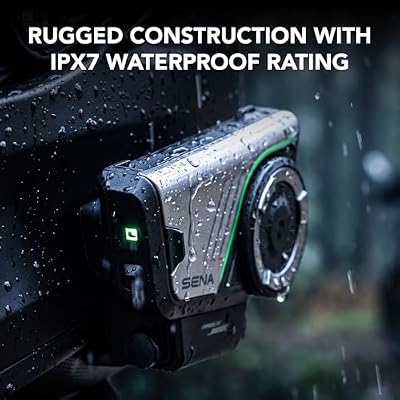
The IPX7 claim is the one spec that checks out against its own standard. The bullet promises submersion in up to a meter of water for 30 minutes, which is exactly what IPX7 means under the IEC 60529 scale, dust-tight plus one-meter immersion for half an hour (Wikipedia). The gallery carries a rugged-construction card repeating the rating, and no owner text contradicts it.
The noise-cancellation rows deserve a harder look. Noise Control reads Active Noise Cancellation and Noise Control Features reads Wind Noise Reduction, but bullet four explains the catch: the ANC support works with earbuds that are sold separately. The rows describe a capability you buy your way into with extra hardware, not something in the box, and the highlight row's voice-command-and-noise-cancellation string compresses the same fine print away.
Two figures never appear. There's no range row anywhere, so the mesh and Wave intercom claims in the highlight row carry no number on this page, and no battery-life figure prints either, though two owners volunteer that the battery lasts far longer than the 50S generation. Bluetooth 5 handles the phone link at its usual short radius of about ten meters, while the mesh side does the rider-to-rider work (Wikipedia).
Buy the pack, mix the ladder, or wait on the 60X
The decision this box forces is which generation you want, and only secondarily whether to buy it as a pack. If Bose audio is the point, the dual pack is the cheaper route into it, 39.00 under two singles with one order and one return window. If the Harman Kardon generation is fine, the 60S dual at 765.15 does the same job for 113.85 less and carries a 571-rating record behind it.
Anyone who already owns one 60S EVO and wants a partner unit should price the single at 459.00 and accept the 39.00 premium for skipping it.
Waiting is the one strategy this page argues against. The 60X dual's 15 percent discount is the biggest in the family, but its 3.6 pooled record is the weakest we've seen on a Sena ladder, its single rung sat at Only-1-left when probed, and no covered article exists to check either 60X rung against.
Buy the EVO dual if you want the proven-adjacent choice today, and let the 60X accumulate a record worth reading.
Common questions before buying the 60S EVO dual pack
How much does the pack actually save?
Two EVO singles at 459.00 run 918.00, so the 879.00 pack saves 39.00, about 4.2 percent. That's inside the season's pair band but far from its deepest entry, and it's a genuine discount rather than a premium.
Is the EVO worth 113.85 more than the 60S dual pack?
The gap buys the newer radio and the Bose speaker tuning, and the record gives the EVO the stronger mic verdict: one owner who owned both generations reports the 60S was inaudible above 40 mph and the EVO isn't. Riders who found the 60S adequate at their typical speeds have a cheaper box waiting.
What is the echo problem one owner describes?
A pillion-intercom feedback loop: the owner reports the system looping back a tinny echo of the other rider's words until both parties toggle the intercom off and on, plus intermittent Bluetooth pickup to the pillion. It's one text out of ten, but it targets exactly the two-helmet use case this box exists for.
Is it really waterproof?
The listing claims IPX7, which under the IEC scale means one-meter submersion for 30 minutes, and the bullet's wording matches the standard. No owner text in the record tests it either way.
What's actually in the box?
The count rows say two headsets with two clamp kits each, and the contents row describes one kit. Plan on a same-day unboxing check, the same habit pack buyers on this ladder have needed before.