A helmet intercom is one of those purchases that follows the group, not the bike. Ride with a mixed crowd of brands and the radio in your helmet has to talk to the people you actually ride with, or it is just expensive earplugs with music. That requirement decides whether a premium unit earns its price more than speakers or battery life ever do.
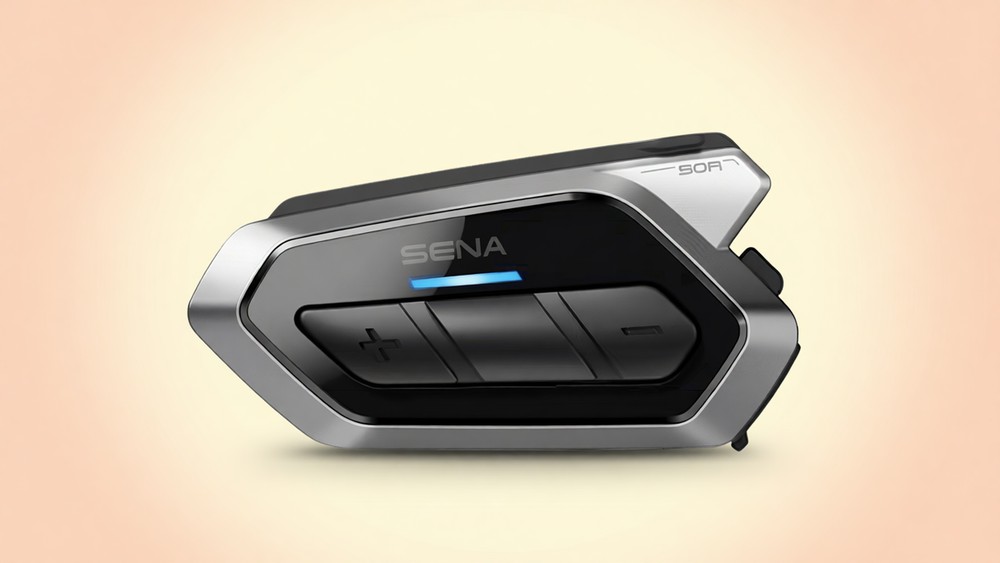
The Sena 50R sits at the top of the price band for exactly this reason. It is a single headset built around Sena's mesh system, tuned with Harman Kardon speakers, and it costs more than most complete dual packs. Mesh is what you are paying for, and mesh promises come with fine print about who else can join the conversation.
What follows walks through the listing's claims, ten recent buyer reports, every one of them purchase-verified, and the gap between what the spec table promises and what owners have actually put numbers on.
The Sena 50R is a single headset at a checked price of 375.00, and on price per rider it sits among the most expensive of the 192 intercoms we track. That is not a bargain position, and you can check it against the field on the intercom comparison table - though the 50R dual pack changes the math for two helmets, and our review of that rung explains why.
The spec list is premium Sena: Mesh Intercom with nine Open Mesh channels, Bluetooth 5, Sound by Harman Kardon speakers and microphone, a 13-hour battery with a 2-hour charge, both a boom and a wired microphone in the box, three physical buttons instead of a jog dial, and a 2 year warranty.
The record reads 4.3 from 476 ratings, with 71 percent five-star texts against 11 percent one-star, and the listing ranks 18th in Powersports Helmet Communication. Every one of the ten recent written reviews is purchase-verified, and the two that carry the most helpful votes are both accounts of things that went wrong after the sale.
Ten verified texts, and the two with the most helpful votes are both failures
Every one of the ten recent reviews carries a purchase badge, which is rare enough at any price and means nobody in this record is padding a listing they never bought.
The failures cluster after the sale, and they cluster in two places: fulfillment and support. One owner who bought three units for a trip reports one died permanently and a third has to be re-programmed every time it powers on. Another ordered twice, once as a replacement, and both shipments arrived as a lower grade single unit instead of the dual pack, with two returns filed and no refund activity to show for either.
The third account is the one that should worry an owner most. Support was helpful right up until the representative decided the problem needed an RMA, and then the ticket went dark, with no answer to follow-up messages and a new ticket needed just to ask about the old one.
The one-star block isn't one story, either. One of its texts complains only about shipping speed while calling the headset itself perfect, which tells you the hardware survived the ride even if the delivery didn't.
Because the hardware failures and the process failures both exist here, the honest summary is that the equipment has support in the record, and the company's back office does not. At this price, a stalled refund or an unanswered RMA costs more than the same failure would on a budget unit.
What owners actually report the hardware doing
The strongest positive in the record comes from an owner who left. They rode a Cardo Freecom 4X first, tried to get help from Cardo, and got nothing but firmware updates and reset instructions. The Sena units, in their words, worked night and day better and carried a much better range than the Cardo equipment they replaced.
Cold-weather use shows up once, and it's a useful data point. A snowmobile rider in Alaska reports about ten hours of battery in the cold and would recommend the headset. That's the only battery figure any owner has put in writing, and it sits under the 13-hour claim without embarrassing it.
The same rider who praises the pairing reports buttons that are sometimes difficult to sequence, and stays well satisfied all the same. That's the honest texture of the record: small friction, no deal.
The cross-model report is the one Sena owners will care about. One reviewer paired their 50R with a brother's 50S, a jog-dial unit rather than a button unit, and it connected quickly and easily. The same text documents a VOX asymmetry inside that pair: the reviewer's voice command worked flawlessly while the brother had to run his functions by hand. Add some sound quality complaints and wind noise on skid lid helmets, noise that showed up even at a standstill, and you have a record that likes the hardware and reports its edges without mercy.

Mesh, Bluetooth, and the numbers the listing never states
The listing and the spec table state no intercom range figure anywhere. The only range statement in the whole record is the Cardo switcher's "much better range", with no number attached, so the strongest range evidence on the page is comparative, not measured.
Some category background explains what the mesh claim is actually doing here. Standard Bluetooth was built for short-range point-to-point links, and a master device can talk to at most seven slaves in a piconet, which is why plain-Bluetooth group rides have always been small and slow to set up. Mesh intercoms instead rebroadcast each transmission through every unit, so a group stays connected without pairing each member to each other member by hand.
The record exercises both halves of that promise, and they come out differently. Cross-model mesh works: the 50R paired with a 50S quickly and easily. Cross-brand mesh does not: one owner expected it to bridge to other brands' equipment, couldn't make it happen, and called the headset a fancy radio without it. Mesh is an ecosystem, and this listing sells you the ecosystem along with the hardware.
The other claims sit unexercised. The 13-hour battery figure has no warm-weather test in writing, only the ten-hour Alaska cold report. The Water Resistance Level reads exactly "Water Resistant", and nobody reports rain either way. Even the Harman Kardon tuning has no audio verdict except the one owner's mention of sound quality issues, so the headline speaker claim is still waiting for someone to test it.
The decision: pay the premium only if your group already rides Sena
If your riding group mixes brands, this headset doesn't bridge, and one owner says so outright after trying. That failure is exactly what the price doesn't protect you from, because 375.00 buys the ecosystem, and the ecosystem stops at Sena's edge.
If your group already rides Sena mesh, the record supports the buy. Cross-model pairing is quick in the one account that tests it, and the strongest positive in the record is a Cardo owner who switched and says these work better. You're paying a premium for hardware the record likes, with a support desk that two of the most-helpful texts describe abandoning them: one RMA went dark, one refund stalled. The 2 year warranty is on the spec table, but a warranty is only as good as the ticket system behind it, and that part of the record is the weakest.
On value, say it plainly: this is among the most expensive headsets per rider of the 192 units we track, and you can compare it against everything else on the intercom comparison table. If you mainly want the cheapest pair that works, the table's budget band is where that search starts, and the price difference funds a lot of firmware updates on whatever you buy.
Frequently asked questions
Does the Sena 50R connect to other brands?
Not in the record. One verified owner expected mesh to bridge to other brands' equipment, couldn't connect, and called the headset worthless for a mixed group. The one cross-model success in the record is Sena to Sena, a 50R pairing with a 50S.
Does it work with other Sena mesh models?
The record says yes at least once. A 50R owner paired with a brother's 50S, a jog-dial unit, and it connected quickly and easily. The same text reports the brother's VOX didn't work while the reviewer's voice commands did, so expect some variation in voice control between models.
How long does the battery last?
The spec table says 13 hours with a 2-hour charge. The only owner figure in writing is about ten hours, from a snowmobile rider in Alaska cold, which sits under the claim without disproving it. Nobody has reported a warm-weather test.
How far does the mesh reach?
The listing and spec table state no range figure at all. The only range statement in the record is an owner who switched from a Cardo Freecom 4X and reports much better range than the units they left, with no distance attached. Check the comparison table for the units that do publish a figure.
Is it waterproof?
The spec table's Water Resistance Level reads "Water Resistant" and nothing stronger. No owner in the record reports riding in rain, so there's no evidence in either direction. If you ride in wet country, weigh that against units that publish a full IP rating.