The Sena 10S has been on the market long enough that its buyer record tells two stories at once. One owner has run a pair bought ten years ago that still works. Recent buyers describe units that failed within weeks.
Between those poles sits everything a buyer needs to weigh: a Bluetooth 4.1 design priced where newer mesh units now sell, a volume complaint that repeats across texts, and a spec table that disagrees with itself about what ships in the box.
This review reads the recent buyer record against the listing, because that is where the risk sits.
The 10S sells for 269.00 when I checked, a 4.0 average from 355 ratings behind it, and a price-per-rider spot among the most expensive of the 192 intercoms we track. It's a known name at a price that now buys mesh, and the recent record is the part worth reading before paying it. See the current Sena 10S price on Amazon.
What the record looks like in late 2026
The rating number hides the split. Four stars from 355 ratings sounds settled, and six in ten of those ratings are five stars.
The written record doesn't agree. Eight of the ten captured texts are 2-star or 3-star, and five of the six texts from the last 14 months are 2-star. The comfortable score rests on a longer history than the current texts describe.
The recent texts are not scattered complaints either. They cluster around two subjects, how loud the units are once you move, and whether a given unit works at all. Both clusters include long-time Sena owners, which is the part that makes them worth weighing.
One owner who has used 10S units for years with fine reliability reports the last two bought here each lasting about a month, and says they will not buy from that source again.
Nobody in the captured record confirms the 1.6 kilometer range claim. One owner calls bike-to-bike communication spotty across two units. Nobody reports the 13-hour talk time in normal use, and nobody describes riding these in rain.
Volume is the complaint that repeats
Three separate texts land on the same fault, and they come from different setups. A one-line text says simply that it is not very loud. Another owner reports music from a phone working well until speed rises, then becoming inaudible.
The most detailed account is also the most-endorsed text in the record, at 2 helpful votes, and it is negative: an owner who installed a pair on a Scorpion helmet, found the install and app simple, then moved the speakers and worked through the app settings on their phone looking for more level.
The end result, in their words, was not loud enough to hear over 20 mph. They returned the pair and bought a competitor instead.
A fourth text adds a related note from a half-helmet rider: voice-triggered intercom carried so much static and noise that it could not be turned off. None of these owners describe a fix that worked, and the one who tried the most things before giving up is the one the record endorses most.
Ten-year units, one-month units
Longevity evidence points both directions, which is unusual in one record. The positive side is striking: one owner writes in Spanish that two units bought ten years ago work perfectly and remain dependable. Whatever Sena built into that batch has lasted.
The recent accounts run the other way. A unit arrived that would not turn on and would not charge, with the owner waiting on support and expecting a return.
A tree-work crew owner compares two generations directly: their older 10S held a connection with 4 devices and sometimes 6 across a workday, while the recent one manages 3 people at most, once locked onto a crew member who was not in pairing mode, and randomly shuts down during the day.
Two long-time owners reporting early failures isn't a defect rate. It's also not the record you'd expect behind a 4-star score on a ten-year-old design, and the crew owner's account is the only one that puts old and new side by side on the same tasks.
The feature an update removed
One owner's account stands out for what it says about buying any app-updatable intercom.
When the 10S launched, it could tune FM radio stations. A firmware update disabled that function.
The same owner had planned to replace an older failing unit, researched first, and read that FM access still existed, then bought and found it gone. They felt the listing did not reflect what shipped.
That's one account, and no other text mentions FM either way. The general lesson doesn't depend on it: on a headset that updates itself, the feature list on the box describes the launch, not necessarily what the firmware carries now. Check what the current version does before buying on an older feature.
What the spec table cannot keep straight
Three rows that cannot be right
The table files this headset under some strange numbers. Sensitivity reads 20 hertz, but a sensitivity figure is a level in decibels, not a frequency, so that row is misfiled.
Impedance reads 2200 ohm, far outside the tens of ohms any consumer headphone speaker carries. And the page cannot agree what you are buying: Number of Packs reads 2 while Unit Count reads 1 Count, on a listing priced at 269.00. One of those rows is wrong, and it is worth confirming which before you order.
The noise-control rows disagree too. The table claims Active Noise Cancellation, which is microphone-based cancellation of ambient sound, while the bullets promise Advanced Noise Control, which is Sena's name for processing on intercom audio. Those are different features, and only one of them is a Sena 10S feature.
What the hardware actually is
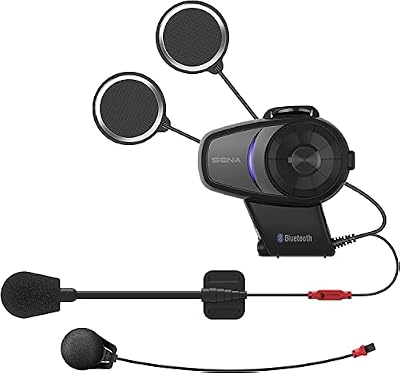
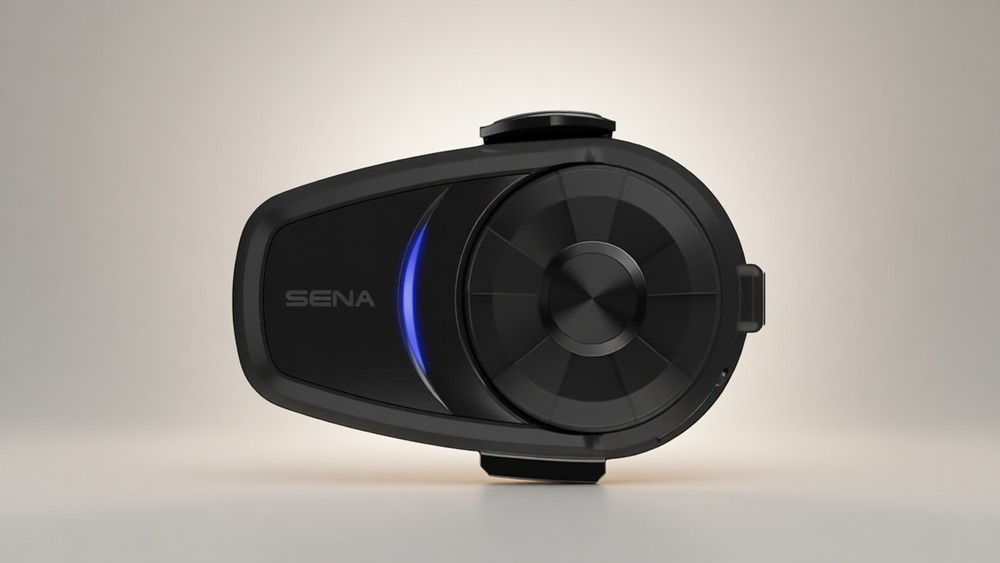
The real design is easy to describe. A circular jog dial with a center button sits on the headset, with two physical buttons beside it. Mounting is a clamp with an adhesive base option.
Two microphone types come in the box, a boom and a wired clip-on, to match different helmet types. The charging port sits under a hinged rubber flap, the table lists it as USB-C, and a full charge takes about 3 hours against 13 hours of claimed talk time. The radio is Bluetooth 4.1, a 2013-era version of the standard.
Standard Bluetooth is a short-range technology, typically under 10 meters and up to 100 meters in the best case (Wikipedia), so the 1.6 kilometer intercom figure depends on Sena's own long-range modes and open terrain between riders.

Common questions
Is the Sena 10S still worth 269.00? The honest comparison is against what that money buys now. Mesh units from several brands sell near this price, the 10S runs 2013-era Bluetooth 4.1, and it sits among the most expensive per rider of the 192 intercoms we track. The design has a decade of history behind it, but the recent buyer record carries early failures and a volume ceiling, so the price is the hardest part of this listing to defend.
Does it pair with non-Sena headsets? Universal intercom is the headline claim, and no captured text confirms it working. One text, the only unverified one in the record, reports that connecting with other devices, especially non-Sena ones, never worked for them, and that the plastic clip that holds the headset in its mount broke with no replacement available. Treat cross-brand pairing as unproven here.
Is this one unit or two? The listing contradicts itself, with a pack count of 2 against a unit count of 1 at the same price. Check the order line and the box contents before paying, because the difference is the entire value of the purchase.
What is the real range? Nobody in the record confirms the 1.6 kilometer claim, and one owner with two units calls bike-to-bike communication spotty. Open terrain and clear line of sight are the conditions those figures assume.
Who should skip it? Riders who spend most of their time above town speed and want music or navigation in the helmet have three texts saying volume fades exactly there. Riders wanting mesh group riding need newer hardware, and our Sena 60X review covers the mesh side of the same brand. A rider replacing a dead 10S who already owns a compatible charger and mount has the clearest case for staying.