Big battery listings sell range, and range is the number nobody can check in the parking lot. You hand over the money, ride home, and find out over the following weeks whether the pack is what the title said. Budget brands know this, which is why so many of them round up.
The SEENRONGYUAN 48V 25Ah pack is a cheaper-third price on 1,200 claimed watt-hours, with a key lock and a USB port thrown in. It is also a listing that disagrees with itself about capacity: the details table says 20Ah while the title says 25Ah, and one of the three people who wrote a review sided with the table.
What follows works through that disagreement, the 3-month warranty sitting under a thousands-of-cycles promise, and a rating record where the two warmest reviews carry no purchase confirmation.
The 50A BMS supports a 2000W build and the hardware list is generous, but none of that is what makes this listing interesting. What makes it interesting is the fight over its size, with a written review repeating the smaller number, and a 3-month warranty that turns the question into a deadline.
The rating record, three warm five-star texts against two silent two-stars, gets read for what it can and can't settle. The pages that follow decode both size claims, read the spec sheet against its own numbers, and end with a metering plan for the buyer who takes the gamble.
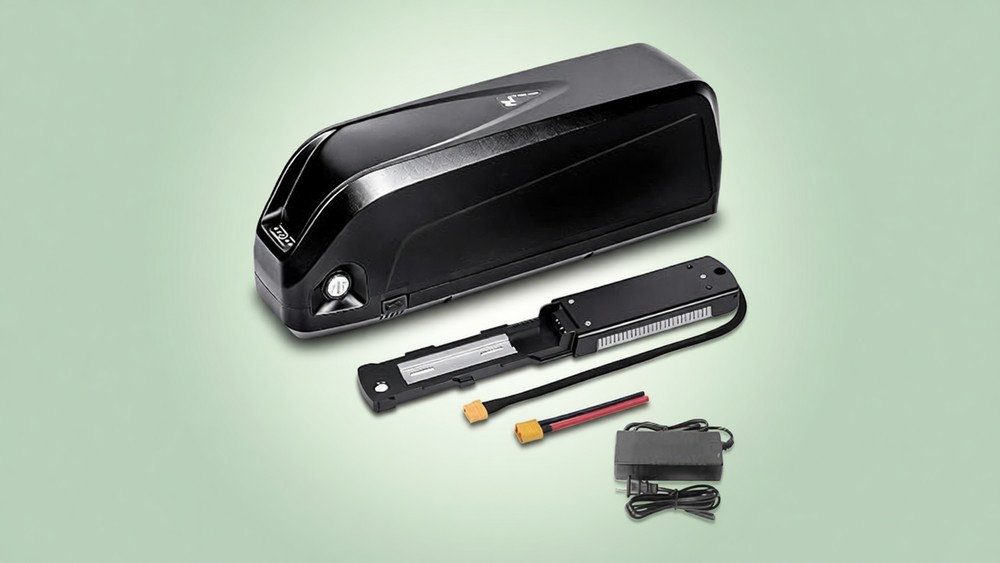
One listing, two capacities
The pack's stated size doesn't disagree in just one field, because the title, the bullets and the package list all state 25Ah while the details table alone says 20 amp-hours.
The model number, sry-hl-4825-0306, carries the 25 in it, so the seller's own naming backs the bigger figure. At 48 volts the gap isn't small: 25Ah is 1,200Wh, 20Ah is 960Wh, and the difference is a fifth of the pack you think you're buying.
One written review adds a buyer-side voice to the smaller number. The March 20 review calls it a 48V 20Ah battery, in the middle of praising the packaging and the install. That isn't a metered test, and the reviewer may have been repeating the details table rather than measuring anything.
But it means both figures now have a backer: the seller's title on one side, the seller's spec table and one owner on the other, and no public test anywhere in between.
The listing's package note tells you to verify voltage, capacity, power and dimensions before ordering, which is honest advice, and it also tells you the page won't settle the size question for you.
The practical reading: plan range on 960Wh until you meter the pack yourself, because a fifth of capacity is exactly the margin a commute plan rests on. Nothing on the page, and no review, gives you grounds to plan on the bigger number.

The spec sheet, decoded
The electrical claims hold together better than the size story. The 50A BMS is rated for 200-2000W motors with controller current at 50A or less, and 50A at 48V is about 2,400W continuous on a fresh pack, so the 2000W ceiling is supported by the listing's own BMS figure rather than invented. Whatever the amp-hour truth turns out to be, the pack can feed a serious controller.
The hardware list is generous for the price. You get a 6-pin battery base, a key lock with 2 keys, an LED level indicator, a USB port for charging a phone off the pack, a male XT60 connector, and a battery holder in the box.
Size is 14.2 x 3.54 x 5 inches, and the weight is 12.5 lb per the bullet against 13 pounds in the details table, one more small disagreement on a page already full of them.
The cells are described only as A-grade lithium-ion with high battery density. A-grade is a seller word, not a spec: cell makers grade by capacity and resistance bins, and repackaged cells rarely name the original maker. A buyer who cares about cells should look for a brand and a model number, and this listing offers neither.
Then there's the warranty: 3 months manufacture, per the spec table. Most budget packs in this class state a year, so this is a quarter of the class norm, and it sits badly under a bullet promising thousands of cycles. The battery comparison table shows what else this money buys across the field.

What 1,200Wh means on the road
Range on this pack has to be worked out twice, because the pack itself is unclear.
At the rated 1,200Wh, the 15 to 25 watt-hours per mile that moderate pedal assist commonly takes works out to roughly 48 to 80 miles between charges, and full throttle near 30 watt-hours per mile lands near 40 miles. If the details table is right and the pack is really 960Wh, every one of those bands shrinks by about a fifth, to roughly 38 to 64 miles and 32 on the throttle.
No owner has published a metered range figure, so both columns are arithmetic rather than reports. The one review that mentions range at all says it delivers the range to explore every corner of the city, which is warm words and not a number.
Charging time isn't stated on the listing either, so the practical advice is the same under either capacity: treat the smaller bands as the planning numbers until a full charge and a known loop tell you otherwise.
The 3-month warranty makes that test urgent rather than optional. Capacity complaints on budget packs show up over months, not weeks, and this seller's own faith in the thousands-of-cycles promise runs out after one season, so the cheap-return window is the same window in which you should be metering it.

Five ratings, and what they cannot say
The rating record is split down the middle with nothing in between: three five-star texts, two silent two-star ratings, and a 3.9 average. On 5 ratings, the 37 percent two-star share is 2 people who had a bad enough time to leave a score and no words, so more than a third of the record is unexplained, and the page can't explain it.
The only purchase-confirmed review is three sentences long: it works as expected, and the spare XT60 connector in the box earned specific thanks.
The two warmest reviews carry no purchase confirmation, and the more detailed of them reads like ad copy, praising sturdy packaging, excellent craftsmanship and great value in one breath. That's also the review that calls the pack 20Ah, which matters more than either compliment, because a satisfied buyer repeating the details table's number is one more voice for the smaller side.
The cycle-life claim deserves the same skepticism. The listing says lithium batteries withstand thousands of charge-discharge cycles without significant degradation, but Battery University puts the normal spec for consumer lithium-ion at 300 to 500 full cycles, with higher figures belonging to specific chemistries or shallow discharge habits.
A vague thousands claim, an unnamed cell, and a 3-month warranty don't support each other, and the warranty is the loudest of the three, because it prices the seller's own estimate of the pack's life.
Cheap per watt-hour, if the big number is true
A buyer who needs the most watt-hours per dollar and accepts an unsettled size claim has a defensible gamble here.
The price sits in the cheaper third of the batteries we track, the 50A BMS genuinely supports a 2000W build, and the hardware in the box, lock, gauge, USB port and spare connector, is real. If the pack meters at 25Ah, it's one of the better deals in the battery comparison table.
The buyer who should pass is anyone whose range plan depends on the full 1,200Wh. The seller's own details table disagrees with the title, one owner's words side with the table, and a fifth of the size is precisely the margin a commute plan rests on. Betting a daily route on the bigger number, from a listing that printed both, isn't a plan.
Whoever buys should meter it early, inside the 3-month window where a return is still cheap.
Charge it full, ride a known loop at a steady assist level, and compare the watt-hours consumed against the distance covered. If the arithmetic lands near 960Wh rather than 1,200Wh, you'll know inside the warranty period instead of finding out in month five, when the only people who can help you are the ones who wrote a 3-month guarantee into the spec table.
Frequently Asked Questions
Is it 25Ah or 20Ah?
Nobody outside the seller has metered it. The title, bullets, package list and model number all say 25Ah, while the details table says 20Ah and one written review called it a 20Ah pack. Plan range on the smaller number until you meter your own.
How far will it go on a charge?
At the rated 1,200Wh, roughly 48 to 80 miles at moderate pedal assist and near 40 miles at full throttle. If the pack is really 960Wh, those bands shrink to roughly 38 to 64 and 32. Both columns are arithmetic, because no owner has published a metered figure.
Will it run a 2000W motor?
The 50A BMS allows about 2,400W at 48V with controller current at 50A or less, so the 2000W claim is supported by the listing's own BMS figure. Check that your controller stays under the 50A limit.
Is the warranty any good?
The spec table says 3 months manufacture, a quarter of the 1-year most packs in this class state. It matters because capacity complaints on budget packs show up over months, not weeks, so the window for a cheap return is short.
What do the reviews actually establish?
One short purchase-confirmed report that the pack works and the spare connector is appreciated, two warm texts with no purchase confirmation, and two silent two-star ratings that explain nothing. That's the whole public record as of this writing.