Budget battery listings tend to compete on a single number, and this one leads with amp-hours. The SEENRONGYUAN 48V 20Ah offers 960 watt-hours in a slim downtube case with a 50-amp BMS, at a price that undercuts most of the comparison table.
The listing also makes claims it can't measure. Its cells are described as A-grade with no brand named, its case is called waterproof with no rating attached, and its motor window stretches from 100 to 1800 watts on the strength of one BMS figure.
The review record is thin. Nine ratings carry two written texts, one warm and one a defect report precise enough to check against a charge chart.
This rebuild verifies the watt-hour arithmetic, decodes that defect report against the standard 13S charge curve, and sorts what the listing proves from what it merely says.
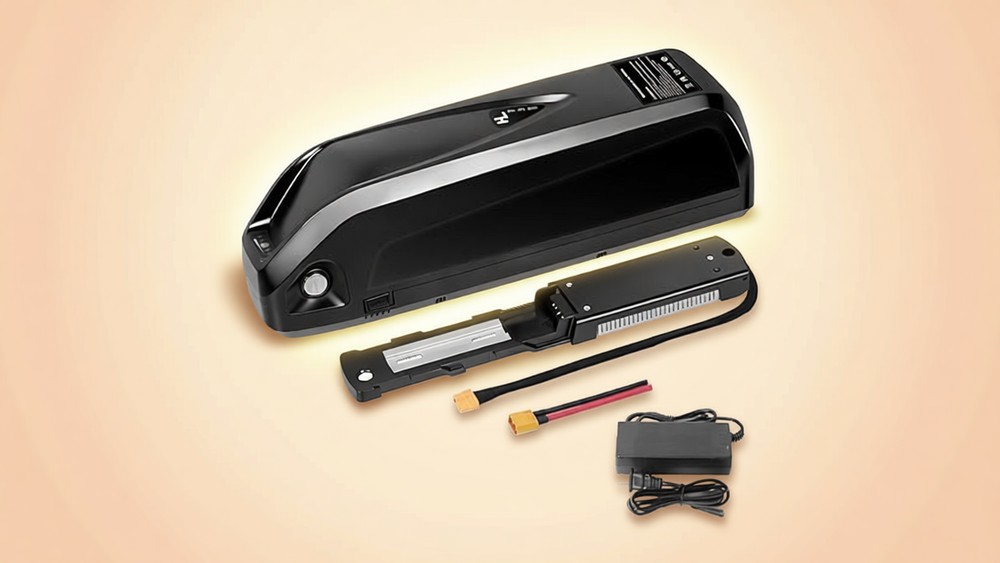
The SEENRONGYUAN 48V 20Ah multiplies out honestly: 48 volts times 20 amp-hours is 960 watt-hours, packed into a case 14.2 inches long, 3.5 inches tall, and 4.3 inches wide that weighs 8.9 pounds. The design is the Hailong downtube pattern this review's name refers to, with the 5-pin battery base the listing itself calls out, plus a key lock, an LED charge indicator, and a USB port for topping up a phone. On value it's real: per watt-hour this sits in the cheaper third of the 301 batteries we track, and the live figure renders in the specs box under this review.
The one defect report is a voltage reading worth understanding
The single negative text on this listing is short, but it's the kind of complaint you can actually check. The rider reports a pack that charges to only 51.5 volts, against an expected 54.4 volts, and calls it defective.
Here's the standard a 48V pack is judged against. A typical 48V lithium-ion battery is a 13S pack, and it reaches about 54.6V on a full charge, which is 4.2 volts per cell group. The same chart places 51.5 volts at the 80 percent mark, roughly 3.96 volts per cell. So the reported reading is consistent with a charger that terminated early, or a pack that never reached balance, rather than a mystery number. The rider's own expectation of 54.4 volts is a touch under the standard figure, which suggests they were reading a charger label rather than the chart.
Either way, the practical lesson survives. Charge the pack fully, let it rest, and read the voltage before the return window closes. A resting pack near 54.6 volts is healthy, and one parked in the mid-51s is a pack that is giving you 80 percent of what you paid for, which is exactly the defect this rider caught.
Two written reviews is not a dataset
The listing shows 4.3 stars from 9 ratings, with 72 percent at five and 14 percent at one, and nothing at all in between. Only two of those ratings carry written text, so this section is short because the evidence is.
Both texts are tied to actual orders, which removes the fake-review question we usually have to weigh on listings this small. The positive one reports decent power, good range, and a price about a hundred dollars under the rider's previous pack. The negative is the voltage defect above. There is no unverified pattern here, no cluster of suspicious praise, just one satisfied order and one failed order.
What nobody has covered is everything else that matters. No rider reports a measured range in miles, the USB port in use, a named bike the pack fit, mounting trouble, or how the 50A BMS behaves under real load. I'd add that nine ratings is a sample where a single unhappy buyer moves the star average by nearly half a point, so treat the 4.3 as provisional until the pool grows. The pool also can't assess cell quality, which is the question that decides whether a budget pack lasts three seasons or one.

What the 100-1800W window actually rests on
The title promises compatibility with motors from 100 to 1800 watts, and that number deserves unpacking, because the motor's watt rating alone cannot determine the battery a build needs. The controller limits battery current, motor phase current is a different measurement, and dividing motor watts by nominal voltage doesn't establish anything on its own.
What the pack actually brings is a 50A BMS, and the listing's own bullet asks for a controller rated at or under 50A. On a 48V nominal system, 50 amps is about 2400 watts of headroom, which is where the wide motor window comes from. Your bike's controller, not this pack, sets the real draw, so check its rating and the connector polarity before you order rather than trusting the wattage banner.
One more thing worth knowing: this listing has drifted. Our dataset recorded the pack with a 40A BMS in its title, the older version of this review was written around a 30A BMS, and the live page now says 50A. The seller may have upgraded the hardware or the copy, and there's no way to tell from outside, so confirm the spec on the live listing the day you buy.
What is in the box, and what is not
The package list is a battery, a battery holder, a male XT-60 connector, and two keys. No charger appears in that list, and that's not a small omission on a pack this size, so message the seller and confirm the charger ships separately before you order, and check its output voltage while you're at it.
The cell claim reads A-grade lithium-ion with no cell brand named anywhere, which is common at this price and worth exactly what it says. The case is described as waterproof in a way that reduces damage, with no IP code attached, so no submersion or jet-spray claim is possible from the listing's own words, and I wouldn't promise it anything beyond keeping splashes off the internals.
The warranty entry reads 3 Months Manufacture, and no cycle-life figure appears anywhere on the listing. That's a short window for a 960 watt-hour pack, and it puts the burden of catching a defect, like the one in the review record, squarely on the first weeks of ownership.

FAQ: the case you measure against the frame, the charger you buy separately and the rest voltage that reads 54.6
Will this pack fit my bike?
The case follows the Hailong downtube pattern with a 5-pin battery base, measuring 14.2 by 3.54 by 4.33 inches. Measure your frame slot or mounting rails against those dimensions and confirm your controller connector matches the XT-60 before ordering, because the listing's own note asks you to verify exactly that.
Does it come with a charger?
Not according to the package list, which names a battery, a holder, a male XT-60, and two keys. Confirm with the seller before ordering, and verify the charger's output matches a 54.6-volt full charge if you buy one separately.
What should I check on day one?
Charge the pack fully and read the voltage after it rests. A reading near 54.6 volts means a healthy 13S pack, while a reading parked around 51.5 volts is the 80 percent mark and matches the defect report on this listing. Do it inside the return window.
How does the value compare?
Per watt-hour it sits in the cheaper third of the 301 packs we track, which is a genuinely good position for a 960 watt-hour downtube case. The full battery comparison table sorts every option by that figure, and the current SEENRONGYUAN price is worth checking against it before you decide.