A dead Dorado Plus pack doesn't leave you many options. The case style is specific to a handful of bikes, the cradle and connector are fixed, and if the bike's maker wants a fortune for a replacement, a third-party listing like SDTYYP's is often the only game in town.
Here's the snag: this listing sells two capacities under one page, 13 amp hours and 17.5, and its own title can't keep them straight. It quotes 624 watt hours for one and calls the other's 840 watt hours a watt figure. One buyer's pack didn't fit, and the reviews say returns are anything but automatic.
So this review reads the record the way a careful buyer should: what the cell count says about the two variants, what buyers have actually run into, and what the price looks like once you run the math.
The SDTYYP 48V Dorado Plus replacement is a pack you buy for the shape of its case rather than for value. The review record agrees with that in an odd place: most of the useful detail in it is about getting the right size before you pay, not about how the pack performs after.
Two sizes ship under one listing, the record behind them is short but mostly happy, and the sections below walk through what the sizes change, what the eight buyers with written experience report, and where the price lands once you divide it out.
One listing, two capacities, and a title that mixes them up
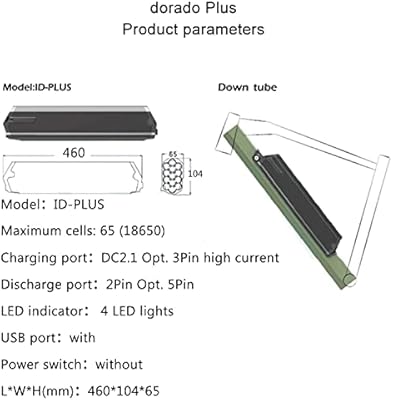
The listing sells one battery case in two sizes, and its title can't decide how to say so. It reads 48V 13Ah /17.5Ah Reention Dorado Plus, then quotes "Power 624Wh 840W", which pairs the 13Ah pack's watt-hours with the 17.5Ah pack's figure written as if it were a watt rating.
The two sizes are 624 watt hours and 840 watt hours, because 48 volts times 13 amp hours is 624 and 48 volts times 17.5 is 840. The 840W in the title isn't a power ceiling, it's the bigger pack's capacity with the wrong unit on it.
The bullets describe only the 13Ah. A buyer reviewing in September 2025 names the 17.5Ah version as their purchase, so both variants have genuinely shipped from this page.
This article has carried a 17Ah headline in the past, and the live title now says 13Ah or 17.5Ah, which is why capacity belongs on your confirm-with-the-seller list rather than in your guesses. Compare it against the rest of the field in our battery comparison table.
The return window is the real spec
The loudest lesson in this record isn't about electrons at all, it's about what happens when the pack that arrives isn't the pack you needed.
One buyer who ended up with the right pack says they had to provide every dimension first, because the purchase was non refundable. Another, writing in Spanish, has reported a wrong size, no way to exchange it, no returns accepted, and a spec sheet too unclear to check beforehand. A third gives the listing three stars with a one-line warning that online recommendations are not accurate.
The counterweights are real, and they're worth reading before you decide this seller is a risk. One buyer ordered the wrong battery and the exchange still went through, with emails from the seller every day until it was settled.
Another praises answers that were specific and correct about measurements, fit and the discharge connection. The pattern that emerges is a seller who communicates well attached to a return policy with very little slack. The safe move is to measure the old pack, the bay and the connector, then get the seller to confirm the fit in writing before you pay.
What the buyers report, and what they never mention
The rating sits at 4.4 out of 5 from 14 ratings, with 80 percent five star, 11 percent one star and a small three-star middle between them. Eight of those ratings carry written text, every one of them carries purchase confirmation, and the record runs from August 2025 to July 2026.
The most-endorsed text is the smooth-exchange account, which holds two helpful votes, the highest count in the record. One buyer has replaced a failed factory battery with this pack and reports it working well so far, and the remaining texts are short praise for the battery and the seller.
What nobody mentions matters as much on a two-variant listing as what they do. No buyer reports a range number.
Nobody has metered the capacity. Nobody describes a charge time, and exactly one buyer says which variant arrived. A pack that might hold 624 or 840 watt hours deserves a range report, and the record doesn't have one, so the math below is the best available estimate.
The cell count, the ceiling, and the junk in the spec table
The listing claims 65 automotive grade A cells, and the number survives the math. A 48V pack needs 13 cell groups in series, and 65 divides into 13 groups of 5, so five cells of 2.6 amp hours apiece make the 13Ah variant while five of 3.5 make the 17.5. One cell count supporting both sizes is a claim that holds together, which is more than many budget listings manage.
On power, the 30A BMS at 48V works out to roughly a 1440W continuous ceiling, comfortably above the 250W to 1000W motor range the bullets name.
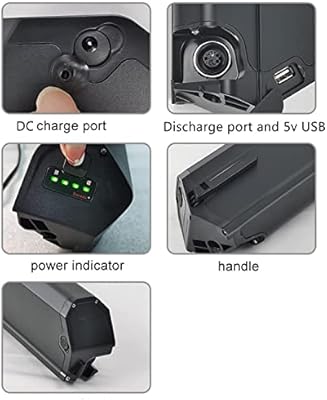
The hardware list reads sensibly too: an aluminum shell, four charge lights, a keyed lock, a spring-loaded handrail, and a USB jack for topping up a phone. Then the spec table falls apart. It lists the battery's weight as 50 grams against a 12.1 pound item weight, counts "1 A batteries required", and names the included components as, simply, Lock.
None of that affects the pack, but it tells you how much care went into the listing detail.
On lifespan, the listing says these batteries have a longer life cycle than others and attaches no number to the claim.
Battery University's BU-808 page puts the manufacturer spec for most consumer lithium-ion at 300 to 500 discharge cycles, and depth of discharge plus heat move that figure hard in either direction. The seller's own one-year warranty says the most about how long they're willing to stand behind the pack.
What it costs per watt-hour
At 265.00 the price reads very differently depending on which variant lands in the box. The 13Ah pack works out to about 42 cents per watt-hour, which places it among the most expensive of the 301 packs we track. The 17.5Ah variant lands near 32 cents, which is still inside the priciest third.
Neither number is a bargain, and the honest read is that this price buys a fit for a bike with few other options, not savings per watt-hour. You can see where cheaper 48V packs sit in our battery comparison table, and the live per-watt-hour figure for this one renders in the specs box.
Frequently Asked Questions
Which capacity ships, and which should I pick?
The listing defaults to the 13Ah, whose bullets describe 624Wh, with a 17.5Ah option titled alongside it. One buyer has confirmed receiving the 17.5Ah. Message the seller, name the capacity you want, and keep the reply, because the title alone won't tell you what's in the box.
Will it fit my bike?
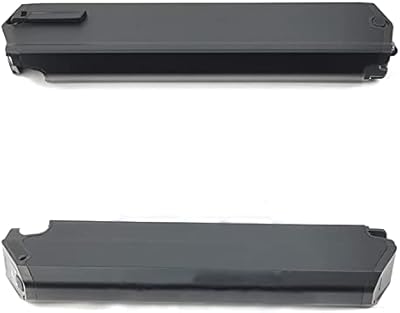
It's a Reention Dorado Plus case with a slide-in cradle and a keyed lock, so it fits bikes built for that standard. The record holds one wrong-size purchase and one buyer who measured everything first and reports a perfect fit. Measure the old pack, the bay and the connector, and remember that one buyer calls the purchase non refundable.
How far will it go?
No buyer reports a range figure, so this is math rather than experience. At a common 20 to 25 watt hours per mile, the 624Wh pack is good for roughly 25 to 31 miles and the bigger one for roughly 34 to 42, with hills, cold and heavy throttle use shaving those numbers down.
What happens if I order the wrong one?
The return path looks narrow. One buyer has reported a wrong size with no exchange possible and no returns accepted, while another ordered wrong and still completed a smooth exchange with daily seller emails. The difference between those two outcomes seems to be early contact with the seller, so message before you pay and keep the replies. If it isn't the right fit, the battery comparison table sorts every option we track.
Does the longer-life claim hold?
The listing claims a longer life cycle than other batteries without a number, which makes it marketing rather than a spec. The consumer baseline in Battery University's BU-808 is 300 to 500 cycles, and the seller backs the pack for one year, so judge the claim against that rather than against the wording.