Replacing an ebike battery is not like buying one for a new build. The bike already has a mount, a connector and a charger it expects to see, and every one of them narrows what will actually work. Get the capacity right and the voltage right, and you can still end up with a pack that doesn't click into the bracket.
The PLXNYLB is a 48V pack aimed exactly at that buyer, and its review record splits three ways on the one question that matters most. One owner reports it doesn't fit the bike Amazon recommended it for. Another needed an aftermarket kit to mount it on an Aventon Sinch. A third says it dropped straight onto the original carrier.
The listing itself is part of the problem. It gives the capacity two ways, the charger two ways, and a cycle-life figure that no independent source would print.
Here is what the listing says, what the ten owner texts cover, and how to check fit before the return postage becomes your problem.
The verdict first. This is a curved 5-pin 48V pack rated 22.4Ah, which works out to 1075.2Wh, sold by PLXNYLB at a checked price of 259 against the 279 our data held. At 259 for 1075.2Wh it costs about 24 cents per watt-hour, close to the middle of the 301 batteries we track, and the full comparison table shows where that sits against everything else.
The rating is 4.1 stars from 33 ratings with an 18 percent one-star tail, and every written review carries a confirmed order behind it. The record is short but real, and the most-endorsed text in it is a warning about fit.
The listing gives two answers to the same questions
Start with the capacity, because the listing states it twice. The title and the package bullet say 22.4Ah, while the spec bullet calls the same pack 48V23AH. The difference is under 3 percent and changes nothing practical, but it tells you how carefully the listing was put together.
The charger story is the one that matters more. The package bullet says the box includes a 3A charger, and the spec bullet in the same listing says the pack works with 2A chargers. Both can be true at once, since a 3A unit can charge a pack that tolerates 2A, but a buyer planning charge times has no single number to plan around.
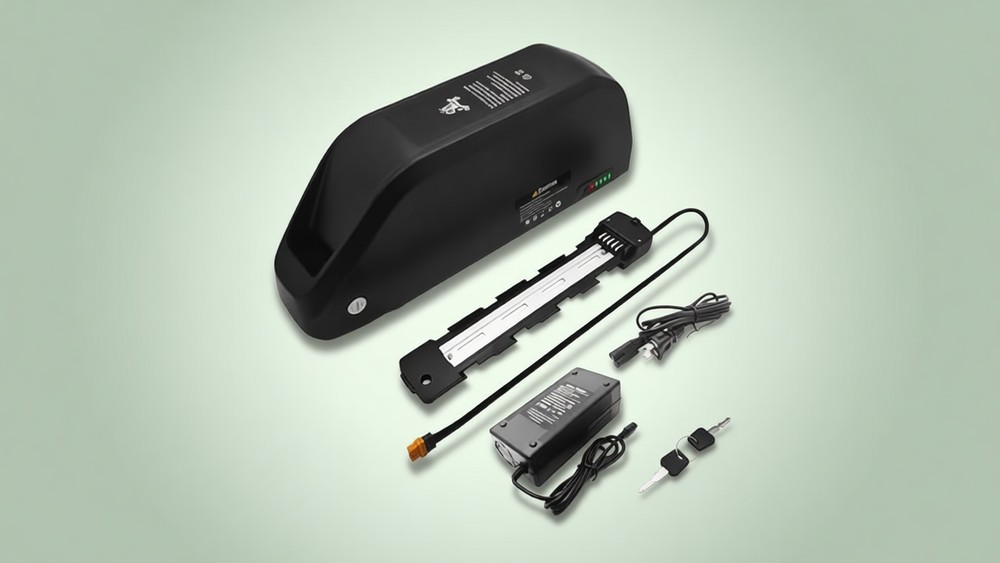
The checked price of 259 sits below the 279 in our stored data, which moves the cost per watt-hour from about 26 cents to about 24. In the box you get the pack, the 3A charger, a 5-pin battery holder mounting plate, two security lock keys and an LED charge gauge. There is no printed instruction sheet, which one owner confirms.
The fit wall: three buyers, three outcomes
The most-endorsed review on the page, at 5 helpful votes, is a 3-star one. The buyer wanted a second battery so one could charge while the other rode, ordered the pack Amazon's fit advice pointed to, and reports it simply doesn't fit the bike. It was never charged, and the return meant paying postage out of pocket on a heavy parcel the buyer describes as hazardous.
A second owner installed the pack on an Aventon Sinch with an aftermarket mounting kit and reports the quality seems good, while noting the pack has no USB port to run an accessory. A third fits it on the original carrier mount and reports every assist level lifted, with the bike topping out at 23 mph where the smaller stock pack stopped at 20.5.
So the fit record is one failure, one workaround and one clean drop-on. That isn't a pattern you can generalize from, and it's exactly why the mount and the connector need checking before you order.
What to check before ordering
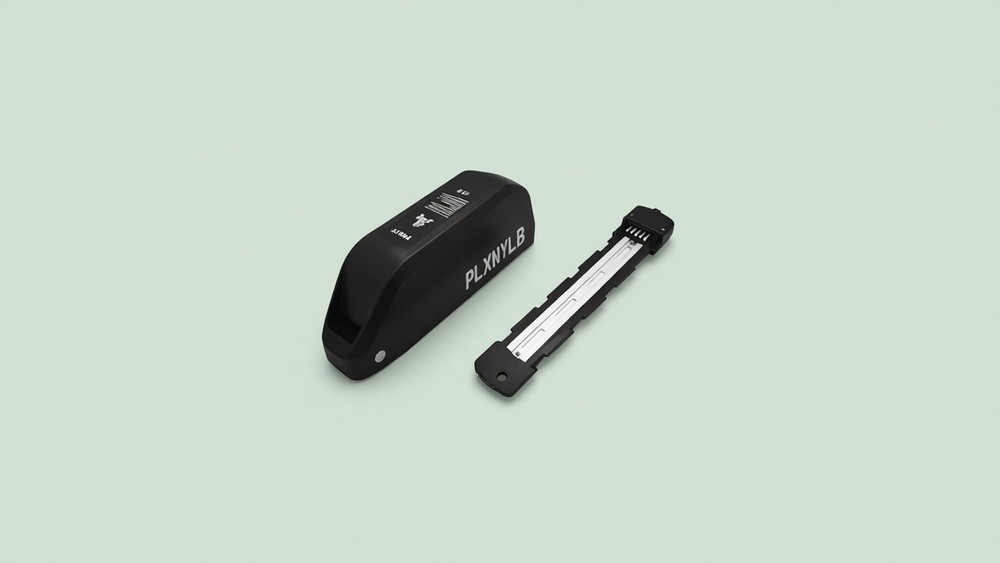
Three things decide fit. First, the mount: this pack uses a 5-pin holder plate bolted to the frame, and your bike needs the matching bracket or the willingness to fit one. Second, the dimensions: the pack measures 14.47 by 3.7 by 4.17 inches, and the curved shell needs frame clearance a flat pack would not.
Third, the discharge connector, which the listing does not name at all. Ask the seller which connector sits on the output before you buy, because that is the question the listing refuses to answer.
The 1500-cycle claim against the 300-500 norm
The spec bullet claims a service life of 1500+ cycles and 3 to 5 years of use. The warranty on the same listing is one year. Both figures can be honestly written and still tell you nothing, because the long one is a marketing number.
Consumer Li-ion is typically specified at 300 to 500 discharge and charge cycles, per Battery University, and a claim more than three times that norm needs the seller to name the cell and the test conditions. This listing names neither.
The one long-term report in the record leans the other way. One owner has found the pack fades from peak power after only a few dozen full cycles, and rated it 4 stars anyway as a fine short-term replacement. Nobody in the record has metered the capacity, so there's no number to put against the 1500 claim from either direction.
Range, charging and the weight question
Range first, with the denominator out in the open. At 20 watt-hours per mile, gentle pedal-assist riding on flat ground, 1075.2Wh carries you roughly 54 miles. At 35 watt-hours per mile, heavy throttle, hills and higher speeds, it carries you roughly 31.
The one owner who names a range figure hopes for 80 to 90 miles on an Aventon Sinch, which is a hope stated before the riding, not a result.
Which charge figure to plan around
Charging depends on which bullet you believe. The included 3A charger moves about 144W, which refills the pack in roughly 7.5 hours of bulk charging, and the slow finish at the top of the charge pushes a full one toward 8 or 9 hours. That figure is an assumption on our part, since the listing gives no charge time at all.
If the pack really is limited to a 2A charger, as the other bullet says, the refill stretches past 11 hours.
The weight is where the listing fails a smell test. The bullet says 8.95 pounds, and 1075.2Wh in 4.06 kg gives about 265 watt hours per kilogram, a claimed energy density far above the roughly 90-160 band a finished ebike pack reaches. Either the pack is lighter on capacity than advertised or heavier on the scale than the listing says. Weigh the box on arrival and meter a full charge before you ride on the rated number.
What ten texts cover and what they miss
Every written review in the record sits behind a confirmed order, so the 4.1 average rests on real purchases. Eight of the ten are 5-star texts, and they're short. The positives are mostly about fit and service: equal to the original pack, dropped onto the original carrier, a seller who chased a late FedEx delivery until it arrived, a buyer happy with a spare for a Kettle ebike.
The two texts that carry real information are the critical ones. The 3-star fit warning leads the page's helpful votes, and the 4-star cycle-life report is the only text that says anything about how the pack ages. Between them they cover the two decisions a replacement buyer actually faces: will it mount, and will it last.
One correction worth making plain, because the old version of this article got it wrong. Nothing in the captured record mentions a Windone E2, and no owner reports doubling a ride distance. Those claims are gone, and the fit evidence above is the complete record.
FAQ: the 5-pin holder the fit hangs on, the 3A charger against the 2A minimum and the cycle promise with no meter behind it
Will this pack fit my bike? Check the 5-pin holder mount, the 14.47 by 3.7 by 4.17 inch dimensions and the discharge connector, which the listing never names. The owner record holds one clean fit, one fit with a mounting kit and one outright no-fit on a bike Amazon recommended it for, so treat the fit call as a guess.
Does it come with a 3A or a 2A charger? The box includes a 3A charger. The same listing also calls the pack able to work with 2A chargers, which reads as a minimum rather than a limit. Plan charging around the 3A unit and ask the seller before substituting anything.
How long does a charge take? Roughly 7.5 hours of bulk charging at the 3A charger's about 144W, with a full charge landing near 8 or 9 hours including that slow finish. That is our arithmetic, not a listing figure, because the listing gives none.
How many cycles will it last? The listing claims 1500+ cycles and 3 to 5 years. Consumer Li-ion is normally specified at 300 to 500 cycles, and the one long-term owner report describes fading peak power after a few dozen full cycles. Nobody has metered the pack, so the claim is untested either way.
What is in the box? The battery, the 3A charger, a 5-pin battery holder mounting plate, two security lock keys and an LED charge gauge. No printed instructions, which one owner confirms took a few minutes of working out.
If your bike fought you on fit before, our look at the SDTYYP 48V 12.8Ah pack covers the same replacement-fit problem from a different pack. The battery comparison table sorts all 301 packs we track by price per watt-hour, and you can also browse 48V replacement batteries on Amazon to see the rest of this capacity class.