Product photo 1, Ssontong a16w dash cam
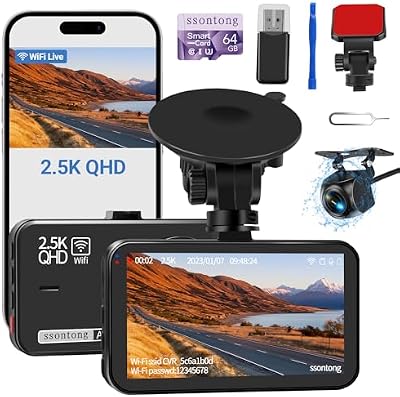
Specs
The listing claims the front camera captures video at 2.5K resolution which is 2560x1440 at thirty frames per second. This pixel density means the sensor captures more detail than a standard 1080P camera. This prevents you from struggling with blurry license plates on cars three vehicles ahead during an unexpected incident. The rear camera operates at 1080P, which is an upgrade from the common 720P sensors found on many budget units.
Both cameras utilize a six layer lens with an f-stop of f1.8. An f-stop of one point eight lets more light hit the camera sensor, resulting in fewer 'grainy' images when recorded under dimly lit streetlights, at dusk, etc. Both cameras contain high dynamic range (HDR) & wide dynamic range (wdr) which work together to adjust bright areas (highlights) & dark areas (shadows) to prevent the roads from appearing too washed out in direct sunlight.
The device contains a three-inch touch-screen display that utilizes an IPS panel. These panels generally maintain their color and contrast ratios regardless of how far to the left/right the screen is viewed. Included with the camera is a sixty-four gb microSD card. However, the microSD card slot can accommodate cards up to twenty-five-sixty gb. With additional storage capacity you can continue recording hours of footage before the loop recording deletes the earliest files.
Design and Real-World Use
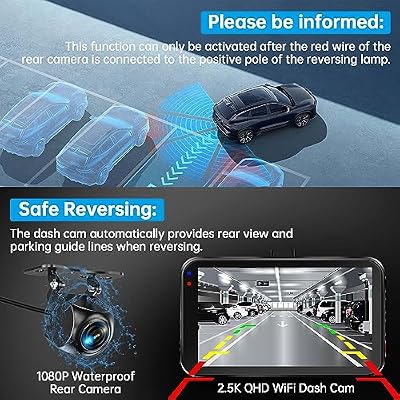
There are two suction mounts included with the camera for attaching it to a car windshield. Everyone knows these aren't ideal for motorcycle use. You will probably have to create your own method to attach this camera to a motorcycle handle bar or fairing. The camera has a nineteen-foot rear cable which is more than sufficient for reaching from the rear of a full-size SUV or van to the rear of a motorcycle. This length will give you flexibility when positioning the rear camera. The unit powers via a twelve-volt cigar charger that also includes an additional USB port for charging your cell-phone or connecting another accessory while the camera continues running.
As mentioned earlier, each camera has a very wide field-of-view. The front camera has approximately 170-degrees horizontal, while the rear has approximately 140-degrees horizontal. Each of these fields-of-view will typically cover most of the adjacent lane(s) surrounding your vehicle. Additionally, they will help you avoid missing a vehicle attempting to merge from your blind-spot.
Product photo 2, Ssontong a16w dash camera
Video Performance and Software
Video quality and app functionality
Loop recording is active by default. The camera deletes the oldest footage when the card is full. This ensures you never run out of space to record the current event. The G-sensor detects sudden movements or impacts. When it triggers, it locks the current file so it cannot be deleted by the loop recording. This is the most important feature for insurance purposes.
Settings:
What Riders Say
The unit has a rating of 4.2 out of 5 stars from 1,730 ratings. This volume of feedback suggests that most users are satisfied with the performance. Many reviewers highlight the clarity of the 2.5K front camera compared to cheaper competitors. Some users note the included 64GB card is a nice bonus. Others mention that the suction mount is sturdy on glass but needs extra help on textured surfaces.
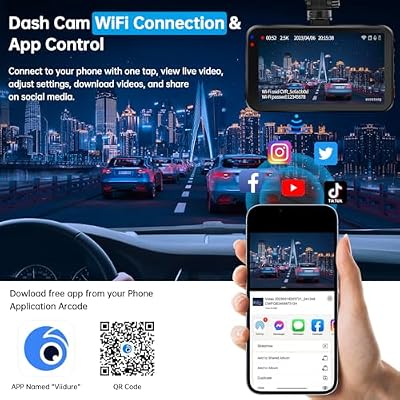
The general sentiment is that the hardware is reliable for the price it pays. People appreciate the night vision capabilities being better than expected. There are a few complaints about the app being slow to connect, but this is not a dealbreaker for most people. The 1,730 ratings provide enough data to feel confident in the long term stability of the internal components. If you are looking for a 2.5K motorcycle recorder, this unit is a strong contender.
Current pricing and availability change often, so check the live listing before you order.
Who Should Buy This
Who should purchase it
Additionally, if you desire a high-end app-experience complete with advanced video editing features. then you may find that Viidure lacks some polish relative to apps developed by competing manufacturers.
Frequently Asked Questions
How do I mount this camera on my motorcycle?
The camera uses two suction cups which are designed for car windshields. To use it on a motorcycle, you must find a flat smooth surface on your fairing or fuel tank. You might need to use a small piece of adhesive or a mounting plate to prevent the suction cup from sliding under vibration. The nineteen foot cable is long enough to run from the front to the rear of the bike. You will need to hide the wires along the frame using zip ties to keep the look clean and prevent them from snagging while you ride.
Does the camera include a memory card?
Yes, the unit comes with a 64GB microSD card included in the box. This is enough to start recording immediately without buying extra gear. The internal slot actually supports cards up to 256GB if you want to keep more footage before the loop recording overwrites it. Using a high speed class card is important to ensure the camera can handle the high bitrate of 2.5K video recording without dropping frames.
Is the night vision good for night riding?
More information on dash cams can be located on our home page titled gomotorbikes.
Can I use the app to download videos?
Unfortunately, this limited range severely restricts your ability to download or transfer clips. You must stand nearby while transferring clips rather than having the freedom to walk across the parking lot.
More camera picks and comparisons live on the gomotorbikes homepage.
More buying guides live on the blog.
One more mount note. The two supplied suction cups work on a visor-free windscreen or any smooth panel, and the three inch screen is small enough to tuck low on a fairing. Route the rear cable along the frame and give it slack at the steering head so the wire does not snag at full lock. Do that and the A16W behaves like a proper motorcycle rig despite its car-first upbringing. The WiFi link is short range by design, three to five meters, so plan on pulling clips while standing next to the bike. That is fine for a parking lot check and useless for remote pulls, which is the honest trade at this price.
The rear cable run is the one part that deserves real patience. Nineteen feet of wire sounds generous until you trace it around a fork, under the fender, and up the tail section. Zip tie every six inches, keep it clear of the exhaust, and leave a drip loop where it enters the housing so rain runs off instead of down the wire. An hour spent routing it right is the difference between a system that outlives the bike and one that rattles loose by the first big storm.