A modular helmet is the compromise purchase in motorcycling. You want the chin bar of a full face for the actual riding, and you want it gone at the fuel stop so you can talk, drink, and hand over money without unstrapping anything. Name brands charge real money for that hinge.
So a listing that promises the flip-up, two visors, and a DOT label at a price near the middle of the helmet table gets clicked on, a lot. The catch is that you're trusting a hinge and a shell you have never held, from a brand whose paperwork you can check right now.
The MXJ Gear JR-815 has 235 of those clicks behind it, and 73 percent of the buyers left five stars. That sounds settled until you read the texts, because ten of them say anything at all, and they split in a strange way: the complaints are specific and physical, the praise is short and general, and the two rows of the listing that matter most, box contents and warranty, don't agree with each other.
What follows weighs the owners' words against the paperwork, line by line, and leaves the choice where it belongs.
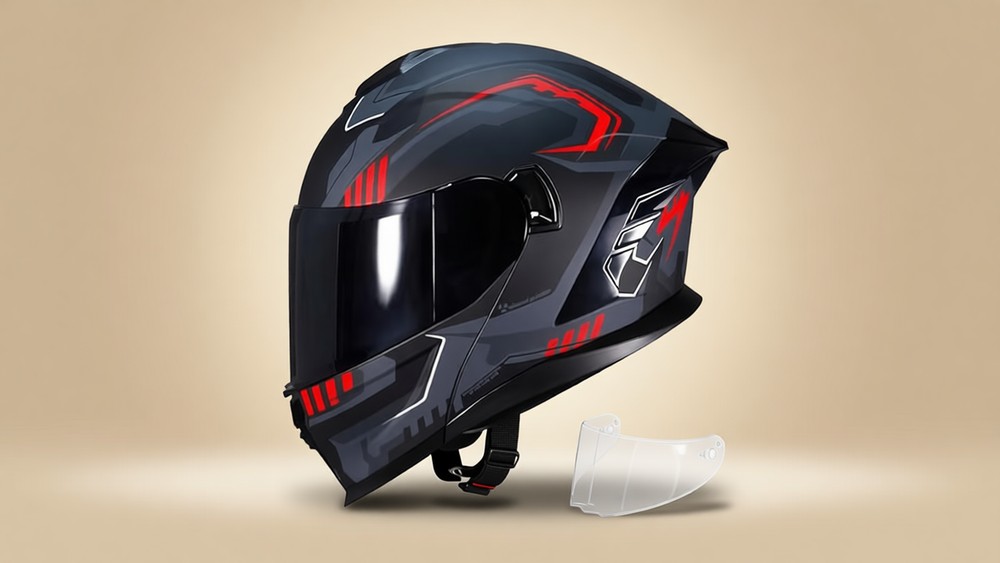
What 85.95 buys in a modular, according to the people who bought it
The MXJ Gear JR-815 modular helmet sells for 85.95 in the Matte Red Evolve M variant at check time, which puts it close to the middle of the 257 helmets we track by price.
Our helmet table shows where that sits against the rest of the modular field, because the price is the one part of this listing that needs no decoding. The rating is 4.3 stars across 235 ratings, with 73 percent of them five stars and a 12 percent tail sitting at two stars or below.
The written record is thinner than the rating count suggests. Ten texts carry any information, and one of them runs deep while the two shortest say little more than great. Neither the deep text nor the short ones contradict each other on the facts, which is worth knowing before the sections below, where the disagreements are with the listing itself.
The one owner whose helmet took a hit, and the nine short records beside it
The most detailed text is also the most useful one. That owner has worn the helmet for a couple of months, reports it tight out of the box before breaking in, and then describes a road incident no buyer plans for: a lifted truck threw out a glass bottle, the bottle popped the tire, and the rider spun out.
The helmet came through that impact intact, and the owner calls it a real-world test that the helmet passed. The same text draws the boundary the brand would rather you not read: it recommends the JR-815 for simple motorcycles or dirt bikes and points riders of higher-use bikes at bigger brands.
Around that account sit nine much shorter records, two of which offer nothing beyond the word great. Two texts are in Spanish, and they credit different things: one calls the quality excellent, the other calls the helmet good, comfortable, and practical. One more reports a great fit outright. None of the ten texts carries a single helpful vote, so there is no top-voted review to anchor the page, and the rating average is doing the work the written record cannot.
The one-star text is about the purchase, not the helmet. That buyer describes a week of shipping delay, failed cancellation attempts, and a bare "delayed" status with no explanation, then says they had already gone with a different helmet by the time this one shipped. It tells you something about fulfillment, and nothing about the shell, the liner, or the chin bar.
Where the budget shows: foam, wind, strap, and a plastic piece behind the neck
The complaints cluster on build feel, and three separate owners describe them without contradicting each other. One rider reports foam that reads as hard, wind coming through the visor near the cheeks above 45 mph, and a shell that feels short, with the jaw and chin sitting barely above the bottom edge.
The same owner describes a chin strap that runs very long with padding that runs short. Another rider has worn it long enough to report a plastic piece behind the neck that caused neck pain and a headache on longer rides, while still complimenting the graphics. A third calls the quality low budget and notes the box arrived half opened.
The counterweight comes from the same owners. The visor draws praise by name from the rider who found everything else cheap, and the tinted visor gets a kind word even from the rider with the neck complaint. Nobody reports the helmet failing at its main job, and the impact account above is the closest thing the record has to a crash test.
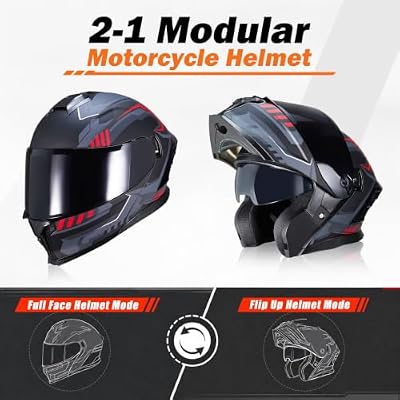
One fit note belongs here because it is about the hinge, and it comes from the same owner who called the quality low budget: the helmet won't go on, in their experience, unless the chin bar is opened fully first. That is normal for a modular at the moment of putting it on, and worth knowing before the first try feels like a defect.
Read the box contents row before you believe the highlight row
The listing's own rows disagree, and the disagreements are checkable before you spend anything. The highlight row of the listing promises two visors, a storage bag, and a washable liner.
The Included Components row lists the helmet, and nothing else. Both cannot be true, and the box contents row is the one fulfillment honors.
The warranty row reads NO, in the spec table's own word, while a bullet on the same page promises a reply within 24 hours if something goes wrong. Those can coexist, but they mean different things: the first is a legal promise, the second is customer service, and the gap between them is where a budget listing's after-sale story lives.
One owner's written doubt, "I hope it is DOT", sits in this same territory, because DOT certification under FMVSS 218 is manufacturer self-certification: the maker tests its own helmet and attests to the label, with no pre-market government testing behind it. The listing's first bullet names the standard twice, as DOT and as FMVSS 218, which are one standard with two names.
Two smaller slips point the same direction. The ventilation bullet says promote air circulation twice in one sentence, and the flip-up bullet opens on the typo SThis. None of this proves anything about the shell, but a buyer reading a safety label on a self-certified product deserves paperwork that was read before it was printed.
No fit consensus, and a sun lens nobody has described
Four owners give four different fit reports, and the listing hedges in its own way too.
One says tight at first and fine after breaking in. One says it fits great, full stop. One needed the chin bar fully opened just to get it on.
One says the shell feels short, with the jaw near the bottom edge. The size chart's own advice is to measure your head and choose by the chart, with a larger size recommended for slightly chubby cheeks. There is no direction to average here, so a buyer between sizes should assume the return window will get used and plan for it.
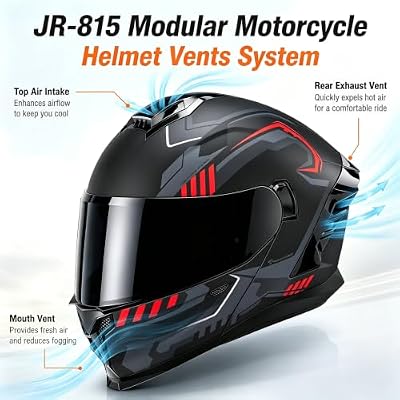
The stranger gap is the sun lens. The retractable inner lens is the listing's headline feature, the thing that separates this helmet from a plain modular, and not one of the ten texts describes flipping it down, how dark it sits, or whether it clears a pair of glasses.
The storage bag and the washable liner from the highlight row go unmentioned too. That silence has a practical use: those are exactly the parts a buyer should test in the first days, on their own head, before the return window closes.
Frequently Asked Questions
Is the MXJ Gear JR-815 really DOT certified?
The listing says it meets DOT and FMVSS 218, which are one standard with two names, and FMVSS 218 works by manufacturer self-certification, so the claim is an attestation by the maker rather than a government test result. One owner has written "I hope it is DOT" in their text, and that doubt describes the system, not this brand alone.
How does it fit?
There is no consensus to inherit. The four reports run from tight-then-fine to fits-great to needed-the-chin-bar-open to shell-runs-short, and the listing adds its own hedge about chubby cheeks and larger sizes. Measure, order by the chart, and keep the return path open.
Is it quiet?
The only noise report is wind through the visor near the cheeks above 45 mph. Nobody has praised it as quiet, and nobody has called it loud in general terms, so one specific report is the whole record.
Is it heavy?
The listing puts it at 4.8 pounds. Modulars carry extra weight over an equivalent full face because of the chin-bar pivot, and a heavier helmet loads the neck on long rides, which is a category fact worth weighing against the plastic piece behind the neck that one owner has reported.
Who should buy it, and who should spend differently?
Buy it if you want a flip-up chin bar and a tinted inner lens at a mid-band price, you ride shorter distances, and you accept hard foam, a long strap, and paperwork that needs a second read.
Spend differently if you log real highway miles or ride hard: the one owner who put this helmet through an impact says the same thing, and points higher-use riders at bigger brands. Check the helmet table before deciding, because the mid-band has other options on both sides of this price.