Pillion comms used to cost as much as a helmet. A two-pack of intercoms for under sixty dollars changes that math, and it's why listings like this one keep ending up in carts. Two units in the box, one for each helmet, and nobody has to share a single headset on alternate weekends.
The hard part isn't the price. Cheap intercoms lead with the specs least likely to survive contact with a real road, range and battery hours. Distance claims get measured in an open field, and the gap between speaking and being heard never appears on the listing at all.
This pack has five reviews. That's enough to spot a pattern, barely, and what the buyers agree on isn't what the title sells. Worth knowing before you spend sixty dollars: where the range claim falls apart, how mounting goes, and what one rider measured mid-ride.
The two way motorcycle helmet intercom 2 pack is a cheap pair that mounts easily and suits town speeds.
The measured intercom delay rules it out for fast hazard calls, and at thirty dollars per rider it's not a bargain, just a middle-of-the-road price. That is the short version. The rest of this review works through the 1600ft claim, the setup experience, the delay, the wind noise ceiling, and where the price lands.
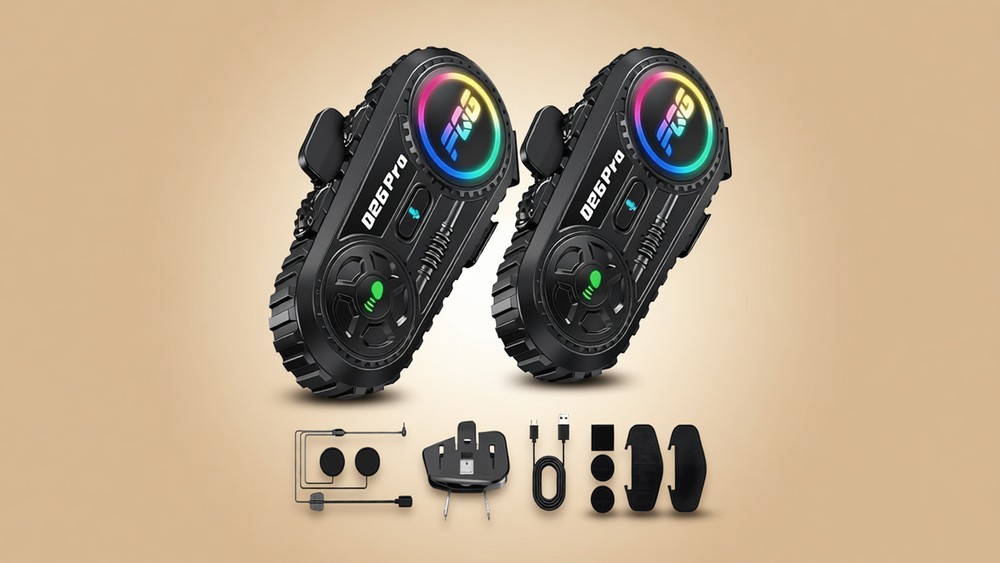
What the 1600ft claim is worth
The 1600ft claim converts to about 488 meters, which sits at the low end of what budget units usually promise. Most budget listings claim 800 meters to 2 kilometers, so the number on this box is modest by the standards of its own category. That matters less than where the number came from.
Intercom makers measure range in open-field conditions, flat terrain, no buildings, both units at head height, and a clear 2.4GHz band. Those are best-case numbers, and the listing gives no Bluetooth version, which is the spec that drives how much of the claim survives a real road.
On real roads, curves, buildings, trees, weather and the helmet shell itself can cut Bluetooth intercom range by half or more. Sources that test budget units tell riders to plan on a quarter to half the advertised figure in mixed terrain.
For this pair that means assuming something closer to 400 to 800 feet of usable link before you bet a ride on it, and scsetc explains why: the factory figure only holds with a clear line of sight and no competing traffic on the band. If you drift past that, you'll likely lose the link before the next turn.
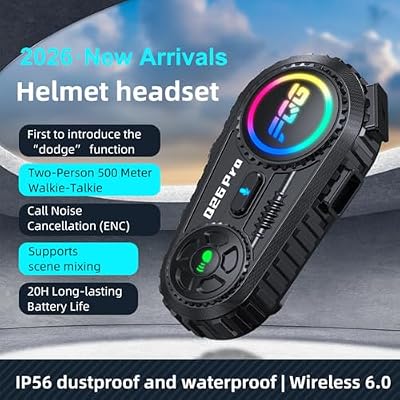
Setup is the part buyers agree on
Four of the five buyers say setup and mounting are easy, and none of the reviews describes a fight with brackets or pairing. One reviewer has noted that the units were easy to set up and mount, and another called the whole process simple enough to recommend the pair on that basis alone. For a two-pack, that agreement matters, because two units doubles every installation step.
The slim 1.2cm speakers are detachable and fit inside the helmet without taking up much space, which helps with comfort on longer rides.
What the reviews don't cover is the part a buyer most wants to know. Nobody reports how the battery holds up over time, nobody mentions the AI voice assistant the title advertises, and nobody has used these skiing or on a snowmobile despite the title marketing them for that.
Five reviews is also too small a sample to say how the units hold up past the first month. The listing claims up to 18 hours of talk time and 15 hours of intercom time from a 1000mAh battery, but no buyer has tested either figure. Compare the rest of the field in our intercom comparison table.
The delay the top-voted review measured
The only review with helpful votes, three of them, is the three-star one, and it is negative on the core function. One reviewer has measured a gap of one to three seconds between speaking and being heard in intercom mode. The listing calls this a full duplex system with simultaneous audio mixing, and a gap that wide is not full duplex conversation.
Real full duplex means both riders talk and listen at the same time, the way a phone call works, and a one to three second lag breaks that. Moman's intercom guide describes full duplex as simultaneous speaking and listening with no button presses or awkward pauses, which is exactly the experience this review contradicts.
This lag is a detail the spec pages never print, yet it matters most when you need to warn your partner about a road hazard.
At sixty miles per hour, a shout about debris in the lane arrives one to three seconds after you say it. A motorcycle covers 88 to 176 feet in that window. The buyer who measured the delay put it plainly: it doesn't sound like much until you're trying to alert your partner to a road hazard at speed.
For rider-to-rider communication on a fast ride, that is the difference between a warning and a replay.

Wind noise sets the ceiling on calls and music
One owner has found that phone calls stop sounding clear once the speed reaches about forty miles per hour, because wind drowns out the voice on the other end. Music gets hard to hear near sixty-five, for the same reason. The microphone and the slim speakers both lose the fight with air noise long before the battery or the range gives out.
The IP56 rating protects the gear from dust and rain, but it does nothing about wind.
That means the realistic use case is town riding and slower backroads, where speeds stay under the threshold where the audio falls apart. On the highway, both the phone calls and the music suffer, and there is no setting in the specs that fixes it. Riders who spend most of their time above fifty miles per hour should treat this as a town-and-pillion unit rather than a touring one.
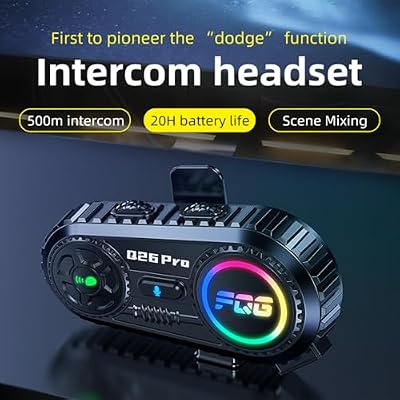
Buy the pair for town speeds, look elsewhere for fast groups
Getting two units for just under sixty dollars is a fair deal if you need rider-to-pillion talk or slow town riding, and the mounting simplicity is the strongest thing the buyers agree on. The 18-hour claimed talk time and the IP56 sealing are reasonable on paper for the money.
The measured one to three second gap makes this pair the wrong tool for hazard calls at speed.
If latency is a deal breaker, look at mesh systems, which are built to keep conversation live between riders at distance, and check that a listing states its Bluetooth version and intercom latency before you buy. Neither spec appears on this page. A unit that publishes both is a unit that has nothing to hide about the delay.
On price, the pair costs just under sixty dollars, which is thirty dollars per rider, and on our own comparison data that sits close to the middle of the 210 intercoms we track by price per rider. That's a below-average value position, and it's worth saying plainly rather than dressing it up. The exact position renders in the specs box on our comparison table, against every other unit we track.
A middle price is not a scam, but it buys less than the same money gets elsewhere. Cheaper pairs exist with similar rider counts, and for slightly more you reach units with longer track records and more reviews to read. With only fourteen ratings behind this one, the price is doing work a review record should do, and the record isn't there yet.
Frequently asked questions
Does the 1600ft range hold up in town?
No. The figure is an open-field claim, and buildings, curves and trees cut real-world Bluetooth intercom range by half or more. Plan on a fraction of the advertised distance in mixed terrain, and assume the link drops well before 1600 feet.
Can you use these while skiing, or charge them mid-ride?
Nobody has reported either. The title markets these for ski and snowmobile use and advertises an AI voice assistant, but no buyer has mentioned any of it in the five reviews. The listing does not state whether the units can be used while charging.
Is the two-pack cheaper than two singles?
The listing doesn't price a single unit, so the saving can't be computed. What is known is the pair price: just under sixty dollars for two, or thirty dollars per rider, which lands close to the middle of the 210 intercoms in our comparison data. If the pair isn't the right fit, the intercom comparison table sorts every option we track.