Two riders, one intercom, no group features. That used to be the whole budget shelf, and most of it was forgettable: thin speakers, short range, plastic that cracked in cold weather. The Moman H2Pro 2-pack sits on that shelf at 99.95 for the pair, and its spec sheet reads better than the shelf's usual fare - 40mm drivers, a 20-hour battery, a knob you can find with gloves on.
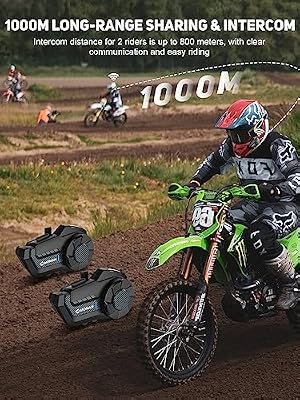
The catch is that the listing cannot settle on its own range. A bullet claims 1000 meters. Its own gallery card says 800 meters for two riders.
Down in the spec table there is no range row at all. Owners put the real number somewhere between 200 and 300 yards when a hill gets involved.
This review walks through what the record of 917 ratings actually supports: the volume complaint that keeps recurring and the helmet-liner fix one owner documented, the mic choice that changes who you can hear, the battery claims one rider compared directly against their Cardo, and where this pair lands per helmet once you rank it against everything else we track.
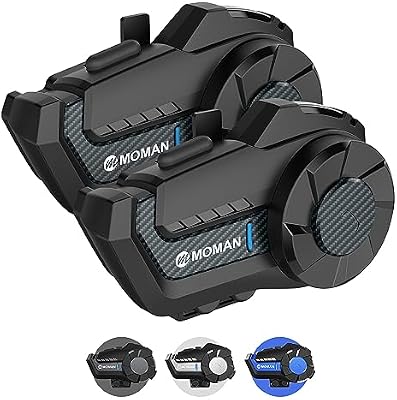
The pair price is one of the honest ones
We priced both rungs of the ladder on the same day before writing this. The H2Pro single sells at 54.95, so two separate boxes come to 109.90, and the 2-pack sells at 99.95. That saves 9.95, about 9 percent, a real discount by the standard of this season's pair rungs, which have run from about 2.5 percent to about 18 percent.
There is a second reason the pair is the safer order, and it has nothing to do with math. The single rung read only 12 left in stock at capture. A pair discount backed by a low-stock single is not a discount that will survive the season, and the per-helmet cost is the same either way if you need two.
Per helmet the pair works out to 49.98. Our intercom comparison table prices every row the same way, and that figure lands mid-pack: 146th of the 210 units we track, 59th among the two-rider units. It is not a bargain rung. It is a normal price for a spec sheet this size, which on the budget shelf is itself a statement.
The listing cannot settle on a range
Three range figures share one page. The first bullet promises a transmission range up to 1000 meters. A gallery card on the same listing reads, in its own print, "Intercom distance for 2 riders is up to 800 meters."
The spec table carries no range row at all, so the only official-looking number is the marketing one.
The owner record narrows it the rest of the way. One snowboarder put the upper range at about 200 to 300 yards. Another owner has reported cutouts past about 500 feet or over a hill.
A third, riding the carbon variant, reported solid intercom between 500 and 1000 meters. Read together, the flat-terrain figure sits under the card's 800, and the hilly figure sits far under it. Bluetooth at typical radio classes reaches 40 to 400 meters in clear line of sight (Wikipedia), so plan around the measured hundreds of yards, not the bullet.
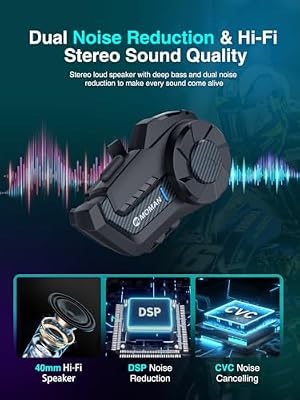
The rest of the spec table has its own noise. A Noise Control row claims active noise cancellation, which needs microphones sampling ambient sound and playing an inverted signal, while the highlight row and the bullets describe CVC and DSP call processing, which is a different, cheaper technology.
A Frequency Range row prints 2.4GHz, the radio band, where an audio response belongs. And a Control Method row says touch on a product whose own name, Standard Knob, comes from the glove-friendly knob the bullets sell. None of those rows survives a read against the page.
Quiet audio and the mic you pick
The most-voted text on the whole record is a fix, not a complaint. One owner has explained that the volume seemed low on their helmet until they disassembled the mount and found a piece of fabric from the helmet liner covering the earpiece. Removing it made the sound, in their words, extremely loud, and they wrote the text for whoever hit the same wall.
That single account reorders the record's quiet complaints. A rider who cannot hear much, a three-star from May 2026, and a four-star wishing the speaker quality were better sit in the same record as the fix.
Helmet speakers have no enclosure, so the seal between driver and ear carries the bass and the volume (Wikipedia), and anything between them costs output before the electronics get blamed. The 40mm drivers are large for this price band. Check the liner before you return the box.
Two texts back the drivers up when the path is clear. One owner who has ridden most of the name brands called the sound clarity and volume better than most. A snowboarding couple reported clear audio and music in both directions.
Both microphone styles ship in the box, a flat stick-on mic and a boom mic, and the record shows the choice matters more than any spec row.
One February text is the cleanest comparison we have captured: the owner rides a closed helmet, used the stick-on mic, and reports their brother hears them really good. The same text reports the open-face brother used the other mic and comes through crackled and quiet even with the volume turned up.
The snowboarder text lands on the same lesson from the other side. The puck mic placed right at the chinstrap buckle area made two-way conversation easy to hear and easy to talk.
Neither text says the microphone hardware failed. Both say placement and helmet type decided the result, which matches what the listing itself admits in its own bullet about swapping mics for helmet types.
Music sharing took one owner a while to figure out and worked well for another, so expect a small learning curve there. The FM radio is a one-press fallback for solo rides and nobody complains about it in either direction.
Battery praise and skip complaints
The battery rows print 900mAh, 20 hours of use and a 2-hour charge, and the strongest support in the record is comparative.
One rider compared the H2Pro directly against the Cardo on their main helmet and reported the battery lasts at least twice as long. Another called the battery life solid, lasting all day. Against the 20-hour row, nothing in the record contradicts it.
The connection side is where the complaints cluster. Two texts, one from March 2024 and one from January 2026, describe the same fault from different years: songs skipping back and forth over Bluetooth until music is unlistenable.
The 2024 text also notes cheap plastic and a broken mount, and both owners were past the return window when they wrote. Against that, the record holds 20 badged texts and the skip fault is the only connection complaint in them, with one owner reporting the Bluetooth connected to a phone and bike immediately. The fault looks real but rare, and it is the reason a test ride inside the return window matters.
The box weighs 1.21 pounds for both units, about 275 grams each, which is chunky against the featherweight premium brands and normal for a 40mm-driver budget set. The warranty row reads one year.
Order the pair while the single runs low
The decision this listing forces is a stock decision as much as a product one. The pair saves about 9 percent, carries the bigger box, and prices the same per helmet as two singles.
The single rung was down to 12 boxes at capture and shares the same pooled record, so there is no reliability reason to prefer it. If you ride with one regular partner and want the largest drivers and longest battery claims on the budget shelf, the 2-pack is the rung to order.
If you only need a single replacement unit for a helmet that already has a system, the H2Pro single is still live at this writing. Our H2S reviews cover the smaller sibling model Moman sells, and the single-pack H2S is the closest comparison for one-helmet buyers.
Common Questions
Is the Moman H2Pro good for dirt bikes and ATVs?
The listing names dirt bikes and ATVs in its own highlight row, and the newest text on the record, from September 2026, is a one-line five-star from a dirt-bike rider. That is thin evidence, but the IP65 water rating and the knob you can work with gloves fit the use.
How far apart can two riders actually be?
Plan around hundreds of yards, not the bullet's 1000 meters. One owner measured 200 to 300 yards, another lost the link past about 500 feet or over a hill, and the most favorable report put solid intercom at 500 to 1000 meters in good terrain.
Does it work with an open-face helmet?
Yes, but pick the mic to match. The closed-helmet owner in the record did well with the stick-on mic, and the snowboarding couple mounted the puck mic at the chinstrap and heard each other clearly. The one weak-transmission report came from an open-face helmet running the other mic.
Can you share music between the two units?
Yes, and it is one of the record's consistent wins, with one caveat. One owner needed a while to find the music-sharing controls, another called it easy and working well. Budget ten minutes with the manual on the first ride.