A fat-tire bike that struggles on hills looks like one part away from solved. One rear wheel with a 2000W motor inside it, a display, a throttle, about two hundred dollars, and your bike climbs. That picture is why kits like this sell, and the listing paints it well: no-load speed quoted to the mile per hour, cruise control, five assist levels, compatibility with most 20 by 4 inch wheels.
Buyers of this one tell a differently shaped story. The star record splits into two ends with nothing in the middle, and the unhappy end writes in detail: a motor that locked on its first ride, hall sensors that died inside a month, a bike it would not fit, and a return process that cost money and weeks.
The price looks low until you price the risk alongside it. Owners' own words cover the failure pattern, the gap between the claimed speed and the ridden one, the integration bill nobody quotes up front, and the return fight, and those four things decide this purchase.
The MIOUYTRT 20-inch 2000W rear hub kit sold at 209.99 when checked, which sits near the middle of the 191 conversion kits we price, and the comparison table shows its live position.
The honest summary is that the speed is real, the failures in the first month are real, and the return path costs money and patience.

A record split into two ends
The numbers first. This kit averages 2.9 stars from 12 ratings, and the histogram is all edges: 38 percent five-star, 40 percent one-star, and not a single 4-star or 2-star rating between them.
A record shaped like that usually means two different products arrived in two different boxes, or that the people in the middle returned theirs and never wrote anything down. Both can be true here, and the kit's own review count is too small to settle it.
What makes the split lopsided is how much each side wrote. The verified positive record is two sentences: "It is good time" and "Works great". The negative record is paragraphs, with part numbers, dates and prices in them.
The only long positive text is unverified, and it reads like the listing translated into a review: snow, ice and slush, plenty of power, "well worth the investment for serious winter riding". It even recommends a torque arm, which is real advice, but its voice and its missing purchase badge put it closer to the listing than to the owners.
Weigh the record accordingly: the specific complaints are the trustworthy part. Compare it against the rest of the field in our conversion kit comparison table.
What breaks, and what the bullet already admits
The most-voted text on the page is one line with four helpful votes: "Motor locked on the first ride". Behind it sits a pattern.
The hall sensors in one owner's kit went out in under a month. Another's kit "worked great for about a month" before the return fight started. In a nine-text record, three separate accounts of trouble inside the first month is not noise, it is the shape of the risk.
The listing's own controller bullet quietly agrees. It promises reliable performance "both with and without Hall effect sensor functionality", which is a manufacturer admitting in the sales copy that the sensor side can fail. Hall sensors are the small parts inside a hub motor that tell the controller where the wheel is in its rotation.
A gearless direct-drive hub like this one carries them inside the wheel, where they ride unsprung, taking every shock and bit of debris the road throws at the wheel, with no suspension between them and the pothole (Wikipedia). That is the physics behind the pattern, and it is a cost every in-wheel design carries, not a defect unique to this brand.
The 34 MPH claim and the 28 MPH owner
The listing's headline speed is a no-load 34 MPH from a 550 RPM motor. No-load means exactly that: the motor spinning with no rider, no friction, no load on it at all. Add a person, a fat tire on pavement, and whatever speed limit the controller enforces, and the number always comes down.
The speed record holds one real figure: "it only goes 28 and cant unlock". That single line carries two facts. The ridden speed lands at 28, which is still quick for a 20-inch fat bike, and the owner could not unlock more, which means the limiter is not something a settings menu gives up easily.
Nothing else in the record reports a top speed, so 28 is the number to plan around and 34 belongs to the brochure. A different owner calls the kit "fast for sure", so nobody is calling it slow. They are calling it slower than advertised and impossible to change.
What the swap costs beyond the box
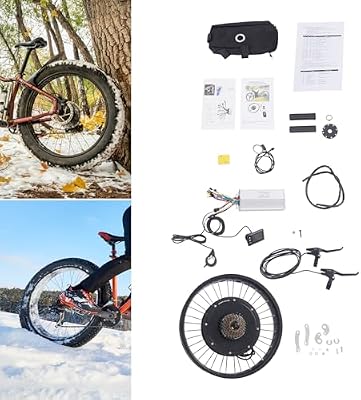
The compatibility bullet promises the kit "fits most 20x4 inch wheels on city off-road folding and tricycle e-bikes". One owner's grandson's 20-inch bike disagrees, and the return cost them money despite a Prime membership. Wheel size alone clearly does not settle fit, so measure the old rear wheel's width and the dropouts before ordering, not after.
The deeper cost came from the owner who kept the kit anyway. None of their original controls interchange with the new system: headlight, taillight, throttle, brake levers and turn signals all came off. The controller would not fit the original bay on the bike, the included controller bag fits the controller poorly, and the wiring no longer tucks away the way it did.
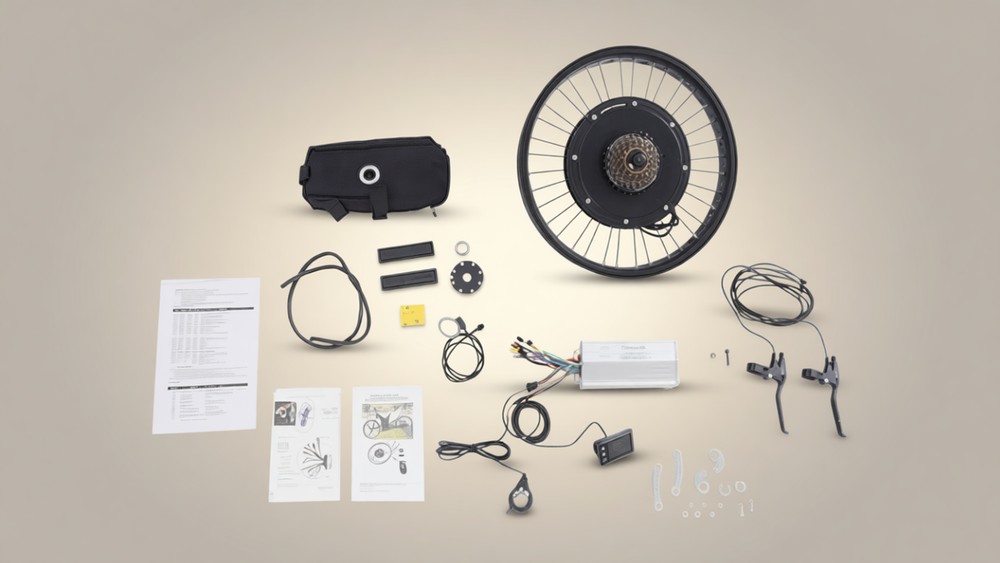
They kept it because the speed was worth it, which is a fair trade only if you know you are making it. Also know what is not in the box: the kit includes the motor wheel, controller, display, throttle, brake levers and manuals, and no battery. The 48V pack is a separate purchase, and nobody in the record says which one they used or what range they got.
Price the return before you buy
The spec table's warranty row promises two years, which sounds like the risk is covered. The return record says the risk has a price tag anyway.
One owner who paid 290 says the return netted a 23 refund, described to them as a restocking fee, and that even the 23 never showed up, on a motor whose hall sensors had died inside the first month. Another, a Prime member with free shipping on everything else, was charged to ship the return. A third spent weeks going back and forth and was still waiting on the prepaid label when they wrote.
None of that proves the two-year warranty is worthless. It proves that on this listing, a failed first month is a project: fees, shipping charges and patience, with the outcome uncertain. On a 2.9 star product, that return experience is part of the purchase price, and it is the part no bullet point mentions.
FAQ: the speed limit, the hall sensors and the thin five-star record
Does this kit include a battery?
No. The box holds the motorized rear wheel, controller, controller bag, LCD display, thumb throttle, two brake levers and assembly manuals. You supply a 48V battery, and none of the nine captured owner texts names the pack they used or the range they got, so plan that purchase and its mounting separately. Our battery comparison table sorts the options by price per watt-hour.
Why do owners say 28 when the listing says 34?
The 34 MPH figure is a no-load rating, measured with no rider and no resistance. One owner measured 28 ridden and could not unlock more, so the controller appears speed-limited beyond what a settings menu changes. Plan around 28.
What fails first in the record?
Early trouble leads the record: one owner lost hall sensors inside a month, another reports a motor locked on its first ride, and a third got one good month before the return fight. The listing's own bullet promising operation with and without hall-sensor function concedes the same weak point. The 26-inch 1500W front wheel kit from the same manufacturer has its own review now, and its one detailed owner report lands on the controller too (our 26-inch review).
Is the positive record trustworthy?
Treat it as thin. The two verified positive texts are one line each, and the only detailed positive text is unverified and reads like listing copy. There is nothing dishonest proven there, just nothing there a buyer can lean on.
What is the warranty?
The spec table's warranty row says two years. Owners report a restocking fee on a defective return, return shipping charges despite Prime, and weeks of waiting on a prepaid label, so budget for friction even inside the warranty window. If it isn't the right fit, the conversion kit comparison table sorts every option we track.