The cheapest fifth of any product category has a habit of hiding one cost in plain sight. With conversion kits, that cost is the battery, and it is rarely the number in the headline. A 109.99 rear hub kit reads like the whole project until the box shows up.
On this LTIGOAW 26-inch kit, that is not speculation. Three separate owners have written, in three different ways, that the battery does not come with it.
Two of them say the listing surprised them. One packed it straight back up. Meanwhile the fifth bullet still promises the kit includes all the accessories you need for assembly.
This review works through what the 26 owners' ratings actually say, which install accounts you can trust, what the motor's own numbers mean for range on the pack you will have to buy, and how the two-year warranty row stacks against the one durability report on record.
The LTIGOAW 26-inch 1000W rear hub kit earns its price band honestly, sitting in the cheapest fifth of the comparison table, and its best install account is genuinely encouraging: one owner turned a thrift-store bike into an ebike with it in about an hour and a half.
But the record averages 3.7 stars and about a quarter of the ratings are one-star, mostly from buyers who did not expect to shop for a battery afterwards. The motor's speed claims survive arithmetic, the install stories are mostly positive, and the 2-year warranty row is the longest promise in this price band.
Buy it as a motor wheel at a sharp price, with a 48V pack on your own shopping list.
The price is real and the box is not complete
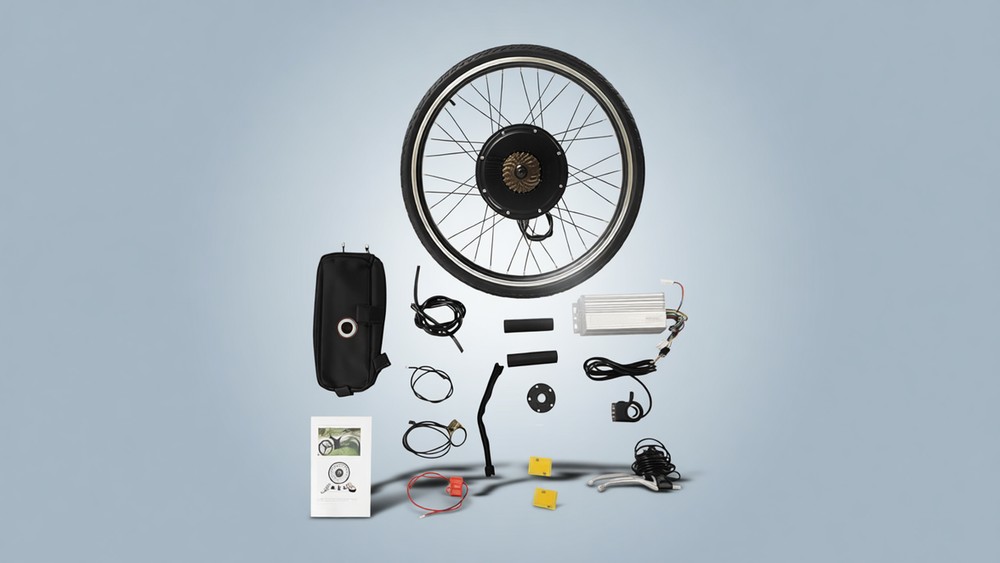
Start with what the money buys: a 26-inch rear wheel with a 48V 1000W brushless gearless motor in the hub, rated at 440rpm and 45N.m of torque, with a load capacity of 120kg. That is a serious motor for the money, and the price is the strongest fact about this kit.
In the cheapest fifth of the 191 kits we track, it costs less than most of the category, and the exact live position sits in the specs box on the comparison table.
Now the part the bullets bury. Bullet five says the kit "includes all accessories for assembly", which reads like a complete box. Three owners have written otherwise.
One says plainly that the battery was not included and calls the kit incomplete, and asks where the blue, yellow and green wires go, because the manual names the motor but leaves that connection unexplained.
Another did not realize the kit needed a battery at all and returned it without installing anything. The most detailed account spells it out as advice: be aware you have to supply your own battery, which they sourced from another seller as a 48V 20Ah pack.
That advice is the whole budget in one line. At 109.99 for the motor wheel, the pack is the biggest remaining cost of the build, and 48V is the voltage the motor expects. Price the battery before the kit, not after it arrives.
A quarter of the ratings are one-star
The kit averages 3.7 stars from 26 ratings, and the histogram is not shy about why: about a quarter of those ratings are one-star. Among the twelve written accounts, five are three stars or worse, three one-star accounts, one two-star and one three-star.
The one-star texts cluster around the missing-battery surprise, and there is one more complaint worth naming: a buyer reports the box arrived without a charging adapter or a cord. That text is from April and 2 people have found it helpful, which suggests it answered a question other buyers were carrying too.
Two things balance the picture. Eleven of the twelve written accounts are confirmed purchases, so the record is real buyers, and the single unverified text is the two-star return account, which states plainly that it was returned uninstalled and offers no performance information.
The other balance is the positive side of the same histogram: 58 percent five-star ratings, and a set of install stories that mostly went well. This is not a broken product with a perfect record attached. It is a mixed record on a very cheap kit, and the negative half has one identifiable cause.
The most-voted owner picked it for one specific reason
The most helpful text on the page, which 11 people have found useful, is an install story with a beginning most reviews skip. That owner was hunting a 26-inch rim brake wheel to replace one on a bike from the thrift store, then decided to electrify it instead, and chose this kit specifically because it was a rim brake wheel.
Installation took about 1 to 1.5 hours with no real hang ups, and the one instruction they pass on is to watch the arrow indicators on parts that have them, because they tell you which way the wheel faces.
That account settles a question the listing never addresses. Nothing in the bullets mentions rim brakes, yet a confirmed buyer has used this wheel with them, on a donor bike where that was the whole point. For anyone converting an old rim-brake hybrid or rigid mountain bike, that is the compatibility answer, and it came from the record rather than the seller.
The other install accounts point the same direction. One owner fitted it to a 7-speed Specialized, called the install relatively easy, wired it up with basic electronics experience, and reported plenty of power.
Another called it easy, simple and to the point. One counterpoint keeps the average honest: a buyer has found it hard to put together. The pattern reads like this: the mechanical work is standard hub-kit work, the wiring needs a little care, and the instructions do not hold your hand.
What 440rpm and 21A mean for range
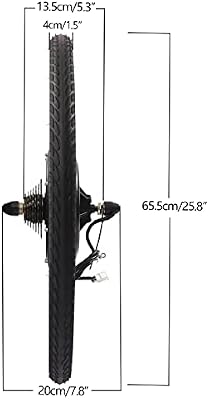
The listing claims speeds up to 53km/h from 440rpm. Check the arithmetic: a 26-inch wheel rolls about 2.1m per turn with a tire fitted, and 440 turns a minute at that circumference is about 15.4m every second, or about 55km/h with no load.
So the speed claim matches the motor's own rpm figure, and the real number lands below it once rider weight, hills and voltage sag take their share. No owner has reported a measured top speed, so treat the claim as a ceiling.
The range story is where the missing battery comes back. At 1000W from 48V, the motor draws about 21 amps at full power. A 48V 10Ah pack would be flat in under half an hour at that draw.
One September buyer has reported exactly that experience, a battery lasting about 30 minutes, though the text does not say whose pack or what size, so the honest reading is that a full-throttle 1000W motor punishes small packs. Across the category, e-bike batteries usually last 25 to 75 miles per charge depending on the power level used, per Wikipedia's e-bike overview, and the difference between those ends is mostly how hard the motor pulls.
Two smaller spec notes round out the picture. The load capacity is 120kg, which covers most riders plus a rack load, and the controller carries 3 LED lights.
What the kit does not have is an LCD display, and one owner wishes it did. If you want a screen showing speed and battery state, that is an add-on purchase alongside the battery.
One durability report, one missing charger, and a 2-year promise
The durability record contains exactly one data point. A confirmed buyer wrote in late April that the kit worked ok while it worked and is not working any longer. That is one account, not a pattern, and no later owner text reports the same thing.
But it is the only long-term report the kit has, and on a record this size, every text carries weight.
Against that single failure, the spec table promises a 2-year warranty. That is a longer promise than most kits in this price band make, and it is the lever to pull if the motor dies. One owner has hit exactly that situation, which makes the warranty row the most practically important line on the whole listing page.
Two listing oddities are worth flagging while you are there. Bullet three calls the kit a "rear suspension motor", which is template copy, because a hub motor is not suspension and this wheel has none.
And the 1000W motor sits above the 750W cap that defines the three legal e-bike classes in the United States, so it rides outside the class system, and where you can use it depends on local rules. Neither changes what the kit is. Both tell you the listing was assembled faster than it was read.
FAQ
Does the LTIGOAW 26-inch kit include a battery?
No. Three owners have confirmed the battery ships separately, one of them after returning the kit over exactly that surprise. The motor needs a 48V pack, and at a 21A full draw a 10Ah pack runs flat in under half an hour.
Is it hard to install?
The most detailed account, from the page's most helpful text, took 1 to 1.5 hours with no hang ups, watching the arrow indicators.
A 7-speed Specialized install went relatively easily with some wiring. One buyer has found it hard to put together. Expect standard hub-kit work plus careful wiring.
Does it work with rim brakes?
Yes, per the record: the most-voted owner chose this kit because it was a rim brake wheel and fitted it to a thrift-store bike. The listing itself never mentions rim brakes, so confirm with the seller if your bike is rim-brake only.
How fast does it go?
About 55km/h with no load by arithmetic, from 440rpm on a 26-inch wheel. The listing claims 53km/h. No owner has reported a measured top speed.
What happens if it stops working?
The spec table promises a 2-year warranty, and one confirmed buyer has reported a failure. The warranty row is the recourse, and it is longer than most kits at this price claim.
Why are there so many one-star ratings?
Mostly the missing battery. Buyers expected a complete kit, found a motor wheel, and rated the surprise. One report cites a missing charging adapter and cord, and one reports the kit stopped working.