A 48V pack this size normally costs well over 250. The listing behind this review sat under that line for most of its life, which is why it earned a spot in our table in the first place. The listing is gone from Amazon now.
What survives is the data we recorded in July 2026, and that data argues with itself in ways worth understanding before you buy any similar unbranded pack.
The core problem is simple. The title said one thing, the spec table said another, and nobody metered the pack in public before it vanished. That leaves a buyer with two capacities, two BMS ratings, and no way to ask the seller which ones were real.
This article walks through each disagreement, does the arithmetic both ways, and turns it into a replacement-buying plan. You get the charge times, the range bands, the honest ceiling on motor size, and a checklist for matching whatever pack you buy next.
The short version: this was a good-value pack at the price we recorded, and it stays a decent-value plan even on the pessimistic reading of its specs.
The comparison table holds 324 packs sorted by price per watt-hour, and this one sat in the cheaper third of them on the number the listing advertised. On the smaller number its own spec table printed, it lands mid-table. Both readings are fine.
The difference matters for range, so we plan on the smaller one and treat everything above it as a bonus. The pack itself is gone, but tagged search results for this class of 48V pack turn up the same shell under a dozen brand names.
Two Capacities, Two Range Bands
The row in our data says 20Ah and 960 watt-hours. The spec box recorded from the same listing says 16Ah and 768 watt-hours. Both captures date to July 2026, so this was not a silent revision between seasons.
The listing carried both numbers at once, on the same page, for the same price of 209.99.
We have seen this pattern before on a 36V pack sold as both 16Ah and 20Ah, and the rule we settled on there applies here too.
Plan on the smaller number. Sellers reach for the bigger one because it moves units, and the bigger figure is the one that survives into the title where you can see it. The smaller figure lives in the spec table, where fewer eyes go.
The value story shifts with the choice. At the full 960 watt-hours, this pack cost about 22 cents per watt-hour, which put it near the cheapest fifth of everything we track.
At 768 watt-hours it cost about 27 cents, which is ordinary mid-table territory. Neither reading is bad for a 48V pack in mid-2026. Only one of them is the bargain the title implied, and you could not tell which was real without opening the case and metering it.
Range moves with the same choice. Our anchor comes from an independent 48V 20Ah battery guide that prints 30 to 40 miles on throttle and 50 to 65 with light pedaling for a 0.96 kWh pack. This listing claimed exactly that tank size, so the anchor would apply as printed if the 20Ah reading were the real one.
On the recorded 768Wh figure, scale those bands by 0.8 and you get 24 to 32 miles on throttle and 40 to 52 with light pedaling. That is the band to plan around. If the pack you actually receive meters closer to the advertised 20Ah, the miles come back, and nothing in your planning breaks for having assumed less.

The BMS Story Changed Between Captures
The title said 40A. The recorded spec table said 30A, and so does the address of this very article, which was named before the 40A figure ever appeared. Here the disagreement matters less than it looks, because the arithmetic closes comfortably on either reading.
A 30A board on a 48V pack caps output at 1,440 watts. A 40A board caps it at 1,920 watts.
The motors the listing claimed support for top out at 900W, and a 900W motor at full draw pulls about 19A from a 48V pack. Even a 1,000W motor pulls about 21A, which sits inside both readings with a margin to spare. Whatever the truth was, the pack could run every motor it claimed to support.
The safe assumption is the lower figure. A BMS that trips early costs you nothing but a little speed on the steepest hills.
Assuming 40A and getting 30A only bites if you hang a motor bigger than 1,440 watts on it, and nothing in this listing asked you to do that. Treat it as a 30A pack and every claim it ever made still works.
Charging Math You Can Check
The recorded charger was 54.6V at 2A. The voltage closes cleanly: 13 cells in series times 4.2V per cell is 54.6V, which is exactly the standard 48V lithium-ion full charge. That part of the listing was internally consistent and matches every other 13S budget pack we have recorded.
The time math depends on the same capacity question as everything else. On 16Ah, a 2A charger needs eight hours. On 20Ah it needs ten.
The old review printed four to five hours, which fails on both readings, and we have dropped it. Charge it overnight and it is full by morning either way. That is the practical rhythm for a commuter pack at this size, and it is one more reason the difference between 16Ah and 20Ah matters less than the title wanted it to.
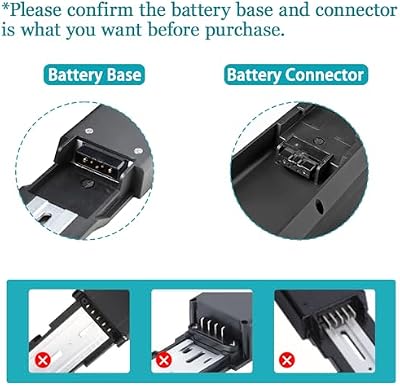
The listing also recorded a USB port on the case, alongside the 5-pin discharge base, a power indicator, a safety lock with two keys, and both XT60 and T-plug adapters in the box.
No draw figure for the USB port survived in anything we captured, so treat it as a convenience port of unknown output. The adapter spread is the useful part of that list: a pack that ships ready for both common connector types saves a soldering session.
What Nobody Can Verify Now
The listing claimed Grade-A cells with a minimum of 1,000 cycles holding 85 percent of capacity. Generic lithium-ion packs across the market manage between 400 and 1,200 cycles according to Wikipedia's lithium-ion battery page, so the claim sits inside the known band, in its upper half. It is a plausible claim that no review ever tested, because no written review text survived from this listing at all.
That last point deserves plain language. Our data holds no rating count and no star breakdown for this ASIN. The July article recorded six customer reviews, none of their written text, and no complaints worth quoting.
We have carried none of that forward as fact, because a count without its texts cannot be checked.
Two more gaps are worth naming. No IP rating was ever stated, so the ABS shell is splash-resistant at best, and the pack should live indoors between rides. No warranty terms were recorded either. No weight was ever printed for this battery in any capture we hold, so the density check we run on most packs cannot close here.
Weigh the pack when it arrives, and if a 768Wh pack lands near 4 kilograms you are in the normal range for the class. If it lands much heavier, the cells inside are not what the label claimed, and that is worth knowing before the return window closes.
Buying a Replacement Instead
The listing is gone, so the practical question is what to match. Four numbers decide it. Plan capacity around 768Wh, because any pack in that class will meet or beat it.
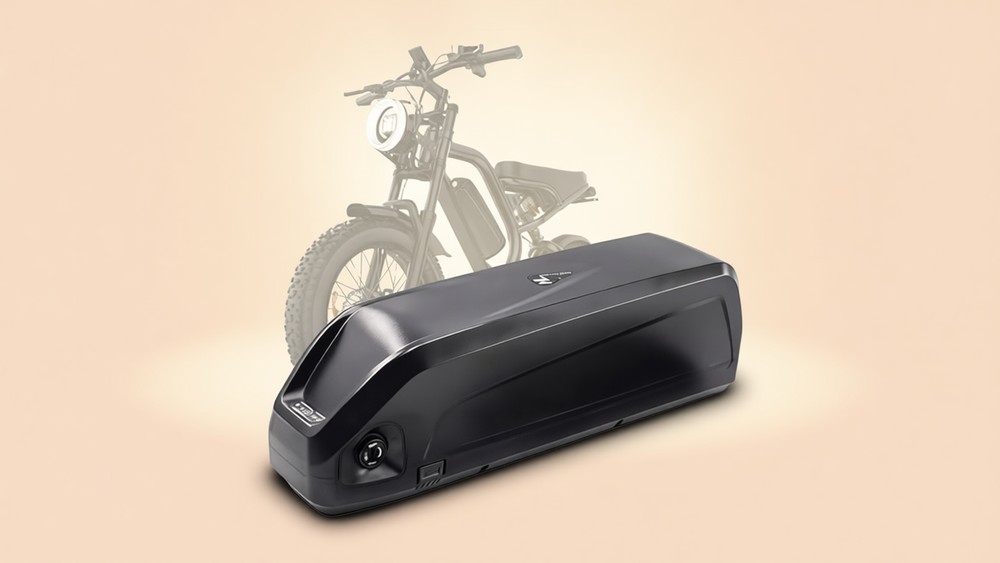
Match the connector: a 5-pin discharge base, with the included XT60 and T-plug adapters covering most controllers, but check your own plug before ordering. Match the footprint of 14.2 by 4.3 by 3.54 inches if your frame mount is tight. And keep the 54.6V charger rule: any replacement 48V pack must charge to 54.6V, because a charger tuned for a different series count will undercharge or overcook it.
Search results for this class of pack turn up the same triangle-frame shell under many names, and our full comparison table shows which of them currently price well. Buy the cheapest pack that passes the four-number checklist, meter its capacity in the first week, and you will have answered the question this listing never did.
Frequently Asked Questions
Which capacity should I plan around?
The recorded 16Ah and 768 watt-hours. The 20Ah figure is the marketing number, and the spec table's smaller pair is the one a seller has least reason to inflate. Meter your replacement pack on arrival and adjust from there.
Does a 1000W motor work on this pack?
The current draw lands near 21A, inside both the 30A and 40A readings, so yes on paper. Plan the range from 768Wh, not from the advertised tank, because a 1000W motor at full throttle empties the smaller reading in under an hour of hard riding.
How long does a full charge take?
Eight hours on the smaller capacity, ten on the larger, with the recorded 2A charger. Overnight charging covers it either way.
Is the battery waterproof?
No IP rating was ever stated for it. Treat the shell as splash-resistant and store the pack indoors.
What should I check before buying a similar pack?
The four numbers from the replacement section: capacity planned on the pessimistic reading, a BMS of at least 30A, the connector your controller actually uses, and a 54.6V charger. The 14.2 by 4.3 by 3.54 inch footprint matters only if your mount is a tight fit.