Most conversion kits make you choose between power and paperwork. This one doesn't pretend otherwise. A 2000W rear hub motor for a 20x4 fat-tire bike sits in a part of the market where the motor's rating is several times what street-legal e-bike rules allow.
The strangest thing about this kit's record is how short the reviews are. Eight owners have taken the time to back a purchase and say something, and five of them used one line, with a sixth needing two short sentences. That leaves a buyer leaning on a wire-routing warning, a controller that died at 1,000 miles, and a fit warning the listing's own bullet contradicts.
What follows is what the kit puts in the box, what its one-line record can and can't support, the fit check that decides everything, and where the price lands against the other kits we track.
The LTIGOAW 20-inch 2000W fat-tire hub kit sits close to the middle of the 191 conversion kits we track on price, and its record is eight purchase-backed texts with no unverified praise anywhere in it.
Five of those eight are a single line, and most of the rest stop at two sentences. The two longer texts carry the real information: one has found the wire routing out of the hub decides whether the wiring survives, and one reports a controller failure at 1,000 miles. This is a kit for a rider who has already measured their dropouts and knows fat-tire geometry, not one for a first conversion.
Eight verified texts, and almost all are one line
Every text in this record is purchase-backed, which is unusual and worth saying plainly: there is no unverified praise to discount here. The shape of the record is the catch.
Five texts are a single line. One says it worked like it should and made a grandson happy. One reports three easy days of ownership and an easy install. One says it works really well. And the 1-star text is a single period, so the lowest rating in the record carries no failure information at all.
A sixth adds two short sentences: motor stutter that fixed itself, and praise for the customer service. What the record can support: two owners describe an easy install or easy instructions, and two report the kit simply working. What it cannot: range, the LCD display's behavior, water exposure, noise, and whether the controller problem repeats. A 4.2 average from 10 ratings matches a mostly-working product with one durability question, and the useful reading lives in the two longest texts the record does contain.
The two texts doing the work
The most-voted text, at seven helpful votes, is a 5-star that recommends the kit as super powerful and fun, and its real contribution is the fit warning: it fits fat-tire e-bikes, not small e-bikes. The other detailed text is the wire-routing report covered below. Everything else in the record is a thumbs-up with no detail attached.
The fit claim the listing argues with
The listing's universal-rear-installation bullet claims broad compatibility with most standard bicycle frames. The title restricts the kit to 20x4 inch fat tires with a 170mm bottom bracket and a 42cm hub diameter, and the most-voted owner text says outright that it only fits fat-tire e-bikes. Two of the three sources agree, and the dissenting one is the marketing bullet.
This is the section that saves a return shipping fee. Fat-bike rear ends differ from standard frames at the dropouts, and a hub-motor wheel cannot flex to fit a narrower or wider spacing.
Measure the rear dropout spacing and the tire width before ordering, and treat the 170mm figure as the number that decides fit, because the bullet's word universal has already been contradicted by the kit's own title.
Wire routing is the one maintenance lesson in the record
The most detailed text in the record comes from an owner who had to replace the original motor because the wire bundle frayed.
The same text reports the instructions were easy to follow, the replacement worked out of the box, and the fix was in the routing: their first attempts let the wires rub, and they rearranged things a couple of times before settling on a clean path. The owner blames the routing rather than the company or the kit, and three people found the report helpful.
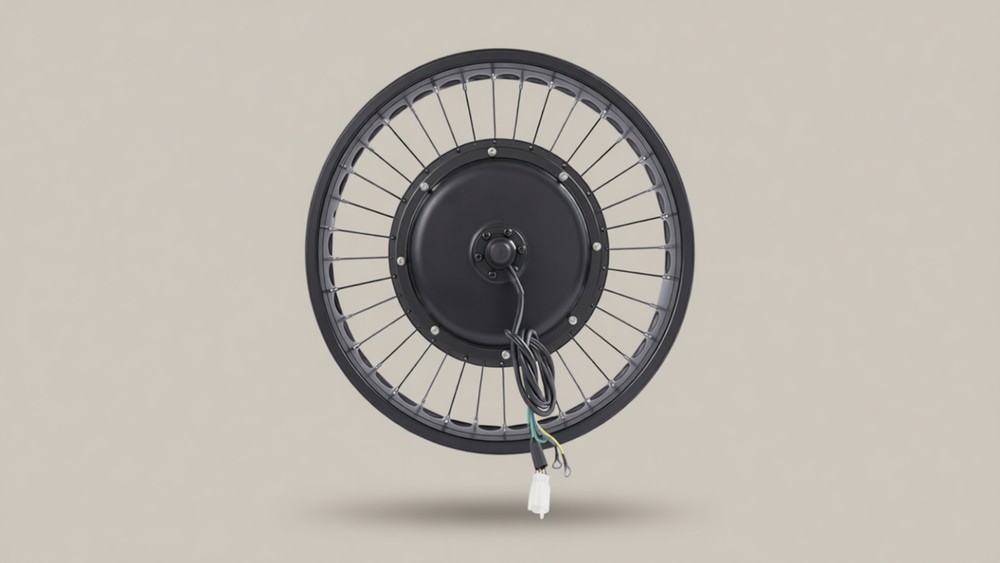
The lesson generalizes to every hub-motor conversion. The phase wires exit the axle and run to the controller, and a wire that rubs the frame or fork on every wheel revolution is a wear point you control. Check the exit path after the first ride and again after a week, and give the wires slack enough to move with the steering without touching anything that spins.
No other text in this record mentions the wires at all, which makes this the one piece of owner knowledge the listing doesn't carry.
Two durability signals, and why neither makes a pattern
The record holds two hardware events. One owner reports the controller broke at exactly 1,000 miles while still calling the kit otherwise good, and that's the single longest-horizon data point in the record.
Another owner reports motor stutter that fixed itself, and no other text mentions stutter, so there's no support for predicting whether it recurs or how common it is.
One event each isn't a trend, and the honest statement is that the record contains no failure information beyond those two lines. The spec table lists a 2-year warranty, which matters more at this price than it would on a premium kit: the controller is the most expensive electronic in the box after the motor, and a failure at 1,000 miles is exactly the kind of claim a warranty exists for. Confirm the warranty terms at purchase time rather than assuming them, and check the current LTIGOAW listing for the terms as sold today.
What 2000W means for where you can ride
The listing claims a 2000W brushless gearless motor with 65 Nm of torque at 550 rpm, a top speed up to 55 km/h or 34 mph, at least 83 percent efficiency, under 55 dB of noise, and an operating range of minus 20 to 45 degrees Celsius. It also lists the materials as aluminum alloy and steel with a baked paint finish.
I'm reporting these figures, not endorsing them: no owner text describes a top speed, noise level, or cold-weather ride, so the record offers no evidence either way.
Here's the ground those claims sit on. The US federal definition of a low-speed electric bicycle is a vehicle with operable pedals, a motor producing less than 750W, and a motor-only top speed under 20 mph with a 170 lb rider, and e-bikes above those limits can fall under motor-vehicle rules rather than bicycle rules.
Many states cap Class 1 and 2 at 20 mph and Class 3 at 28 mph with a 750W cap. A 2000W kit with a claimed 34 mph sits far outside that definition on paper, which is true of most kits in this bracket, and where you may ride one is decided state by state. Off-road and private-land riding is a different situation from street commuting.
The Wikipedia electric bicycle laws page is the source for the federal figures, and your state's vehicle code is the one that applies to you.
Frequently asked questions
What bikes does the LTIGOAW kit fit?
Bikes with 20x4 inch fat tires, a 170mm rear bottom bracket spacing, and room for a 42cm hub diameter. The most-voted owner text says fat-tire e-bikes only, and the listing's own universal-fit bullet is contradicted by its title, so measure before ordering rather than trusting the word universal.
Does the kit include a battery?
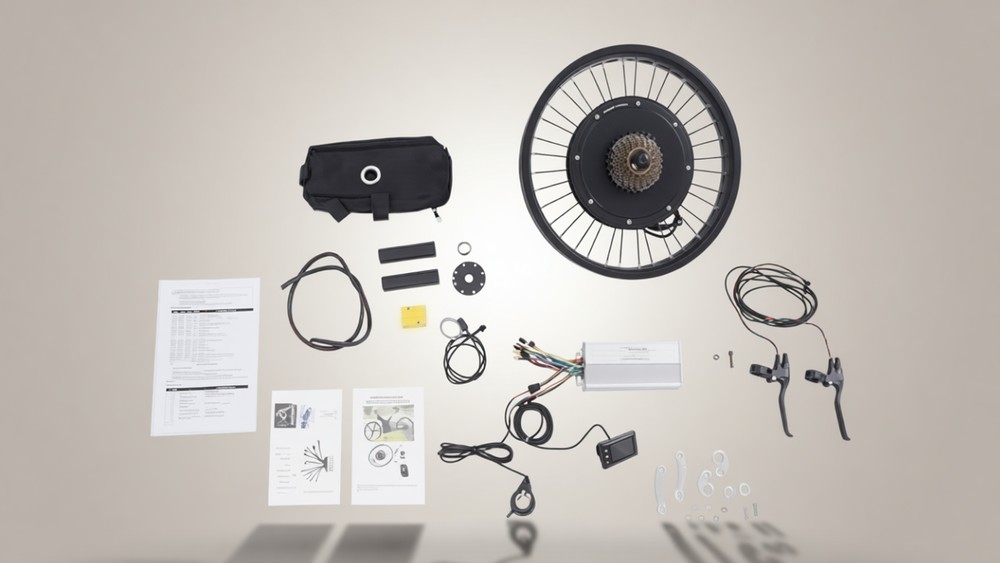
No battery appears in the parts list. The listing covers the hub motor wheel, controller, thumb throttle, two brake levers, an LCD display, and three manuals. That's the same gap most kits in this price bracket share, and the battery will be the bigger half of the build budget.
Our ebike battery comparison table sorts the field by price per watt-hour when you get to that purchase.
How fast does it go?
The listing claims up to 55 km/h or 34 mph, and no owner text in the record describes an actual top speed. Treat the figure as the seller's claim. It's also far above the 20 mph motor-only cap in the federal low-speed e-bike definition, which is worth knowing before you pick where to ride.
Is a 2000W kit street legal?
On paper it sits outside the federal low-speed e-bike definition, which covers motors under 750W and motor-only speeds under 20 mph. Above those limits an e-bike can fall under motor-vehicle rules, and state law decides where you may ride. Private land and off-road trails are a different question from bike lanes, and the state vehicle code is the one to check.
Is the LTIGOAW kit reliable?
The honest summary is that eight purchase-backed texts mostly report it working, one controller failed at 1,000 miles, one stutter resolved itself, and the 1-star carries no information at all. That's a mostly-working product with one open durability question and a 2-year warranty as the backstop.
A buyer who wants a deeper record should compare it against the 1000W LTIGOAW sibling kit and the rest of the field on our kit comparison table.