Small 36V packs are the workhorses of the budget ebike world. They power commuter conversions, kids' ride-ons, and scooters, and they get replaced far more often than the bikes they drive. LOLRKO's 10.4Ah entry is one of the cheaper packs we track, and its review record is unusually clean: every one of the twelve written reports carries a purchase confirmation.
The listing makes that record harder to trust, in small ways. Its title says 10Ah and 374.4Wh at the same time, and those are different capacities. It promises more than 1000 charge cycles, roughly double the industry's usual figure, while naming no cell chemistry. Two different weights sit in the same spec table.
None of that rules the pack out on its own. Together it tells you to read the page with a spec sheet open, and the twelve owner reports do most of the reassuring from there.
The LOLRKO 36V 10.4Ah pack is a 374.4Wh brick with a 25A BMS and a one-year warranty, aimed at 250W to 600W motors. On price per watt-hour it sits in the cheaper third of the 301 packs we track, which is a real position rather than a claim: you can check it against every other 36V pack in our comparison table. For a light 36V build that needs a replacement rather than an upgrade, the numbers on the page hold up better than the words do.
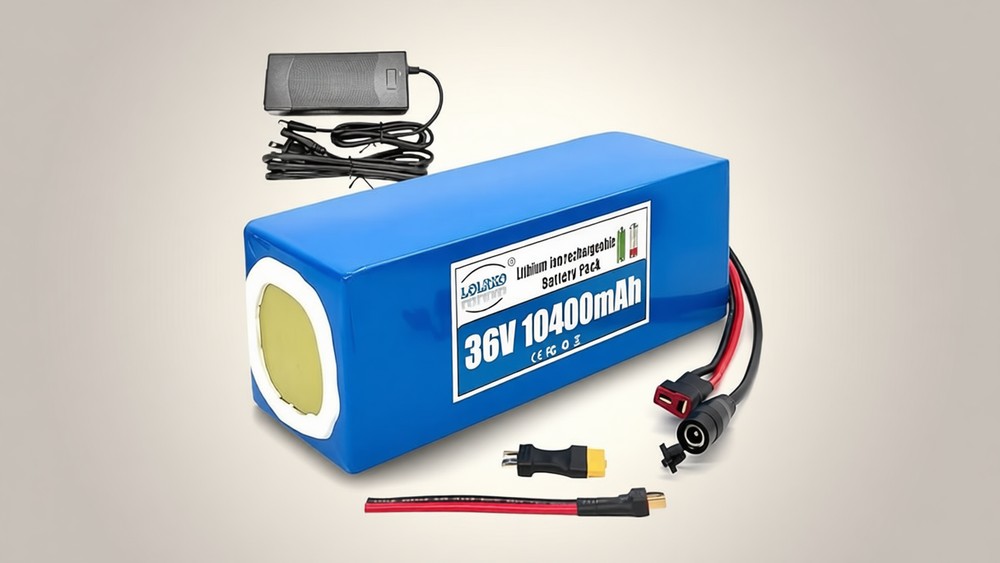
The title disagrees with its own watt-hours
Read the title closely and it says the pack is 10Ah, then says it holds 374.4Wh. Thirty-six volts times 10 amp-hours is 360Wh, so one of those figures is rounded and the other is not. The details table settles it: the battery capacity line reads 10.4Ah, and 36 times 10.4 is exactly 374.4Wh. So the honest reading is a 10.4Ah pack wearing a sloppy title, not a phantom four percent of capacity. That kind of carelessness costs the seller nothing and costs you a few minutes of math.
The spec table also gives two weights. The battery weight line reads 1.7 kg, about 3.7 lb, while a second line reads 4.84 lb. That's probably pack versus shipping weight, and the page does not say which is which.
One claim checks out cleanly, and that's worth saying at this price. The 25A BMS at 36V delivers about 900W continuous on a fresh pack, comfortably above the 250W to 600W motor band in the title. A 500W motor runs with real headroom, and even a hard climb should not trip the cutoff.
The 1000-cycle claim against the industry norm
The listing's boldest number is not a watt figure. The cell bullet promises 1000-plus cycles from Grade A lithium-ion cells with a low self-discharge rate. Battery University's reference on lithium-ion aging notes that manufacturers specify consumer packs at 300 to 500 full discharge cycles, so this listing promises roughly double the industry's standard figure while naming no cell brand and no chemistry beyond lithium-ion.
Grade A cells is a seller word rather than a spec you can check, and cycle claims at this end of the market have no independent test behind them. That doesn't make the claim false. It leaves it unproven, and the honest move is to treat the one-year warranty in the spec table as the number you can actually act on. Whatever the true cycle count turns out to be, your window to do something about it is twelve months.
Twelve purchase-confirmed reports, and what they skip
All twelve written reviews carry purchase confirmation, which is rare in this category and worth stating plainly. There's no sign of the paid-looking copy that pollutes some new listings, and the histogram splits 58 percent five-star and 17 percent one-star with nothing in between except one four-star text that is a single thumbs-up emoji.
The buyers match what the pack is for. One upgraded a kids' dirt bike from three 12V lead-acid batteries and reports it runs much longer than the old set. One fitted it to a Razor scooter and reports it now has real pace. Others describe straightforward e-bike and project installs. One reviewer has reported a charger problem that the seller resolved promptly, and another notes the pack arrives with a silicone waterproofing coat already applied and ships XT90 adapters plus a charger with a built-in fan.
What none of the twelve provide is a range figure in miles, a capacity check, or a cold-weather report. The oldest text dates to December 2025, so the longest ownership signal is about ten months. That's a real track record, just a short one.
The two one-star reports deserve their own sentence each. The December 6 buyer describes a pack that arrived not working, calls the description inaccurate, and says it could not be returned, describing the loss as nearly the full price. The March 18 buyer reports charging the pack full while the indicator still showed low. Those two written reports are the visible part of the 17 percent one-star share in the histogram.
Range on 374 watt-hours
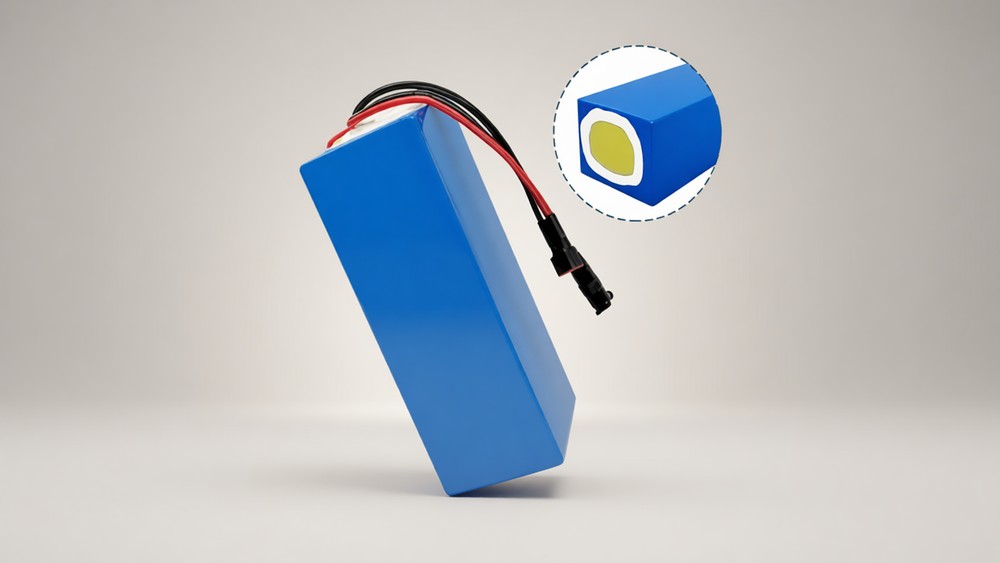
Across the category, packs deliver 25 to 75 miles per charge depending on how hard you lean on the motor, and a 374Wh pack sits at the small end of that band. Work it through at the usual rates. On moderate pedal assist at 15 to 25 watt-hours per mile, this pack gives you roughly 15 to 25 miles. On throttle alone at 30 to 40 watt-hours per mile, it gives you roughly 9 to 12 miles. That's enough for a short commute with charging at both ends, and not enough for a long leisure ride.
Charging takes a little over five hours on the class-norm 2A charger, since 10.4Ah at 2A is just over five hours before losses. The listing does not state the output of the charger in the box, so that figure assumes you are not getting something slower. One buyer's mention of a fan-cooled charger suggests a proper charger ships in the box rather than the cheapest possible brick, but the spec sheet stays silent.
A fair second pack for a light 36V bike
The right buyer already owns a 36V bike or scooter under 600W, wants a replacement or a first lithium upgrade from a lead-acid set, and rides short distances. For them this pack is priced fairly, backed by a one-year warranty, and supported by the cleanest review record we have seen at this price.
The wrong buyer wants two things this pack cannot give. Range beyond about 25 assisted miles needs a bigger capacity tier, and a 48V system needs a 48V pack, full stop. Anyone considering it should also test it hard inside the Amazon return window, not just the warranty year, because the December report of a pack that arrived dead and could not be returned is the outcome you want to catch early if it's coming.
Frequently Asked Questions
Will it run a 48V system?
No. A 36V pack cannot power a 48V controller, and the voltage mismatch works in both directions. Match the pack voltage to the controller and motor before you order anything.
Is it waterproof?
The listing claims no IP rating, so there's no tested waterproof figure to lean on. One owner has reported the pack arrives with a silicone coating already applied. Ride in damp conditions if you must, keep the charge port covered, and never submerge a pack that carries no IP code.
What range should I plan around?
On moderate pedal assist, plan around 15 to 25 miles. On throttle alone, plan around 9 to 12 miles. Hills, cold weather, and a heavy rider all pull you toward the bottom of those ranges.
Will the 25A BMS handle a 500W motor?
Yes. At 36V the BMS passes about 900W continuous, so a 500W motor runs with roughly 80 percent headroom before the cutoff, and the 250W to 600W band in the title sits entirely inside it.
What about the 1000-cycle claim?
Treat it as marketing. Consumer lithium-ion packs are specified at 300 to 500 full cycles across the industry, and this listing names no chemistry to suggest it is different. The practical move is to meter the pack's capacity during the one-year warranty, which is the window where a claim actually works.

For a light 36V build the LOLRKO 36V 10.4Ah pack is a fair buy with honest power figures and a cycle claim you should discount. Set it against the other packs in our 36V battery table before you order, and browse our blog for more battery guides.