The LOCKBUS 48V 20Ah ebike battery is a budget-friendly energy source for commuters but isn't meant for high-wattage builds since the 20A BMS limits sustained output. This pack ranks in the top 21% for value across all cells we track, so it offers significant savings per watt-hour. You'll save money but you might sacrifice peak performance on steep hills. No feedback exists yet.
The 30A on the bullet, the 20A in the spec table
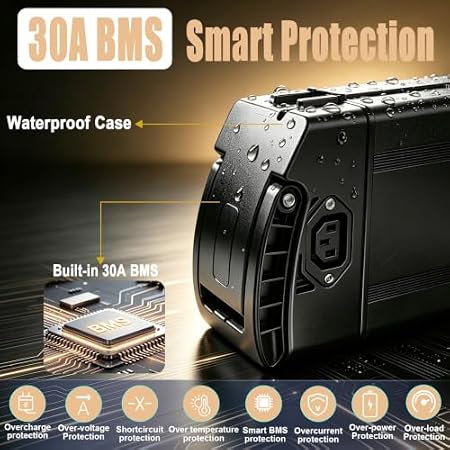
The header claims a 30A BMS but the text right below it and the spec table both list 20A, which creates total confusion about how much current the pack can actually push. This 20A limit on a 48V system caps your sustained output at about 960W, even though the listing says it works with motors up to 1500W. You're betting on the lower number because the protection board will cut power the moment you ask for too much.
If you try to climb a steep hill with a load that demands more than 960W of pull, the BMS will trip and shut down the motor to protect the cells. This means you can't use high-torque motors to their full potential since the internal electronics act as a hard wall that you simply cannot cross. You'll find the bike bailing right when you need the boost most, which is frustrating for any rider on heavy terrain.
The discrepancy between the 30A claim and the 20A reality suggests that the manufacturer might have been sloppy with the copy or used a cheaper board than they advertised. Since there is no user feedback yet to confirm which number is right, you should assume the spec table is the truth that will govern your ride. It's a strict limit that defines what the bike can do regardless of how powerful the motor claims to be. Compare it against the rest of the field in our battery comparison table.
What 960Wh gets you
The 960Wh capacity sounds generous, but the number on the box is just a ceiling that you won't hit under normal conditions. You're betting on a specific distance, yet many factors change how fast that energy disappears during your ride. This pack sits in the cheapest fifth of every battery we track on price per watt-hour, so you get a decent amount for your money.
If you rely on the throttle alone instead of pedaling, the cells will drain much faster because the motor does all the work to keep you moving. Cold weather saps the chemistry inside, which means you'll see the range drop when the temperature falls during the winter months. A heavy rider also puts more strain on the system, drawing more amps to climb even a small incline.
Hills are the real test for any battery because they pull high levels of current that deplete the charge quicker than flat ground ever could. If you don't plan for these climbs, you might find yourself stranded with a dead bike before you make it home. It's better to be honest about these limits so you can plan your trips without the fear of running out of juice.
The lock is the reason to pick this one
Because the lock is built right into the mount rather than being some flimsy add-on, you can secure the battery to the frame without worrying about extra parts that might rattle loose or break. This design helps riders who need to leave their bikes in public spots for short trips, since it lets them keep the power source attached quickly. You get two keys in the box, so you have a backup if one goes missing during your daily commute. It feels solid.
While this lock stops a casual thief from grabbing the pack, it isn't an anti-theft guarantee because a determined person can still take the whole bike or pry the lock off easily. You're betting that people won't want to target you specifically, but that is a risk if you park in high-crime areas. Keep the spare key somewhere other than the bike, because losing both means a locksmith or a drilled lock. You should be careful.
Charging is slow and you should plan for it
Because the charger only pulls 2 Amps into the 960Wh cell, you're forced to wait nine to ten hours to get a full charge when you start from completely empty. This slow pace means you can't just plug in during lunch and expect the bike to be ready for a long evening ride. You have to plan your whole day around the wall outlet, which rules out anyone who needs a quick turnaround for multiple trips. It is a long wait.
If you come home to a dead pack, you won't have enough time to top it off before you need to head back out again in the morning. This delay creates a tether to the house, which limits how much you can actually use the bike in a busy week. You'll find yourself checking the light constantly because the progress moves so slowly. This setup makes the battery feel less useful for riders who value flexibility.
Who it fits, and what to check before you order
Before you buy this pack, you must measure your tray against the stated dimensions to confirm it fits, then confirm the connector matches and check the controller's continuous draw against the BMS limit. The listing has no ratings yet. If the tray is even a bit too small, the pack won't seat, and you'll be stuck with a part that you cannot use.
This battery is for the rider who needs a lot of range for a low cost, since it sits near the top of our value charts on price per watt-hour. It sits in the top fifth on price per watt-hour across every pack we track, and you can check that position on our battery comparison table. It's a good deal for those on a budget.
The rider who has a big motor that pulls 1500W constantly should buy something else because the 20A BMS will cap your output at about 960W. If you push the bike too hard, the safety board will cut power, which might leave you stranded on a steep hill. You should look for a pack with a higher amp rating if you need that speed. Don't ignore the BMS limits.
The pack weighs 10.52 pounds, which is a lot to add to a frame if you plan to carry the bike up stairs every day. That weight makes the bike hard to handle when you're moving it in a fast-paced environment. If you want a light setup for city riding, look for a smaller cell instead. Check the weight before you commit.
Frequently Asked Questions
How good is the value compared to other batteries?
On price per watt-hour this one sits in the cheapest fifth of every battery we track, and the exact position is in the specs box above.
How long does it take to charge the battery?
Using the included 54.6V 2A charger means you'll wait between nine and ten hours to get a full charge from an empty cell. Riders should plan for this long wait time before leaving for a long scenic mountain ride.
Is the battery secure from theft?
A built-in lock fastens the battery to the frame, and the package comes with two keys to help you manage this security feature. This prevents the battery from being removed while you're parked in busy public traffic areas.
What motors can I use with this battery?
While the listing claims compatibility with up to 1500W motors, the 20A protection board likely caps sustained output near 960W for safety. High demand might trigger the internal breaker when you're climbing very steep hills.
What do people say about this battery?
There's currently no ratings or customer reviews available for this listing, so there's no owner feedback to read yet. You must rely on the technical specs for performance data instead of reading online customer reviews. If it isn't the right fit, the battery comparison table sorts every option we track.