Replacing a dead 36V pack is usually a decision made half blind. You measure the old battery, squint at connector photos, and take a chance on a listing that may not exist next month. The LNKJDFGW 36V 12Ah battery sits near the bottom of that price ladder at 99.99, and its record is small but it grew in the right direction.
When we first covered this pack in August, Amazon showed a single rating. It now shows three, every one of them five stars, and the one detailed owner account is a genuinely useful story about leaving lead-acid behind.
The short verdict: this is a 432 watt-hour pack with an XT60 connector, a 2A smart charger in the box, and a spec sheet that stops exactly where your questions start.
Nobody should buy it for its paperwork. You buy it because the price per watt-hour is honest, the dimensions fit a bag or a rack, and one owner has already used it to replace three lead-acid batteries on a dirt bike without drama. Everything else is unproven, and this review tells you which unproven parts matter.
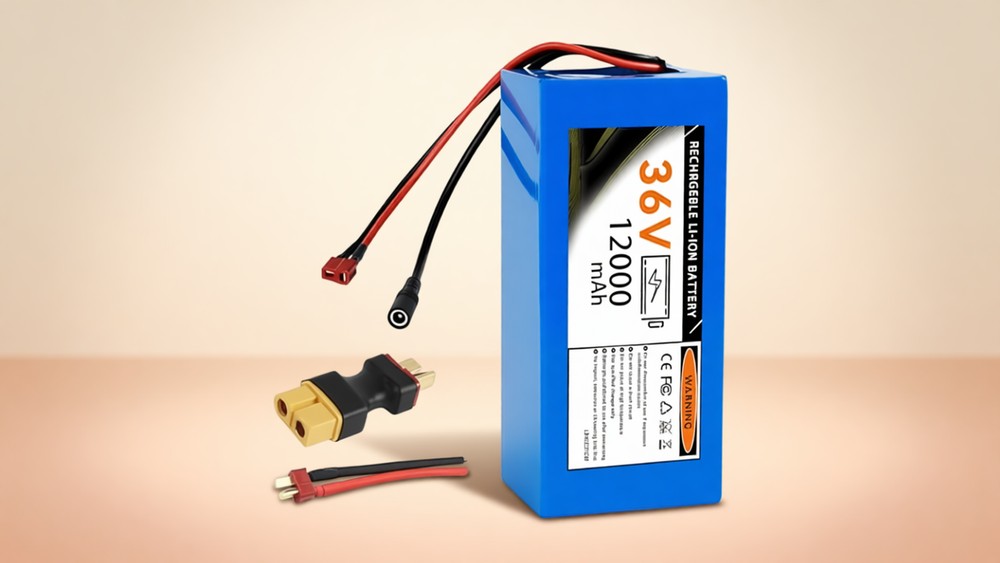
The record grew while we watched
When the first version of this review went up in August 2026, the listing carried a single five-star rating and we said as much.
Ten weeks later the same listing shows 3 global ratings and 2 written texts, still at a perfect score. One rating has no words behind it at all. Neither written text has collected a single helpful vote, so nobody is vouching for these accounts except the people who wrote them.
The two texts could hardly be more different in effort. The first, from early September, carries a purchase badge and walks through a full conversion. The second, from May, is two lines of general praise with no badge: the rider says it holds up well in rough going and lasts long.
That's the entire second account. There's no capacity test, no range figure, no report of rain, no long-term durability note anywhere in the record, and the deepest text is only weeks old. Read this record as one good sign, not a track record.
The detailed owner account is a lead-acid swap
The September account is the reason this review exists. One owner has used this pack to replace the three lead-acid batteries that came stock on a Razor MX650 dirt bike, following swap videos online, and reports the install went easy.
The pack arrived well packaged, and the owner wedged it into one of the three original battery slots using foam from the shipping box. The verdict from the saddle: the bike is lighter, the owner feels the battery lasts stronger because the bike carries less weight, and the 18 pounds saved make basement storage easier each winter. No quality or fit complaints.
The arithmetic behind that account checks out. Lead-acid chemistry stores roughly 35 to 40 watt-hours per kilogram, which means 432 watt-hours of lead-acid is about 11 or 12 kilograms before you count the cases (Wikipedia, Lead-acid battery).
A lithium pack with the same energy needs a fraction of that mass, so an 18-pound saving is exactly the kind of number the swap should produce. This is the oldest trick in the ebike world and it works: three 12V lead-acid bricks in series make 36V, and one 36V lithium pack slots into the same electrical slot.
Note what the listing itself never claims. The page names electric bicycles, scooters and wheelchairs. It never mentions a dirt bike.
The MX650 fit is off-list ingenuity by the owner, helped by the fact that Razor built the bike around 36V in the first place. If you're eyeing this pack for a similar swap, the recipe from that account is voltage first, connector second, mounting space third.
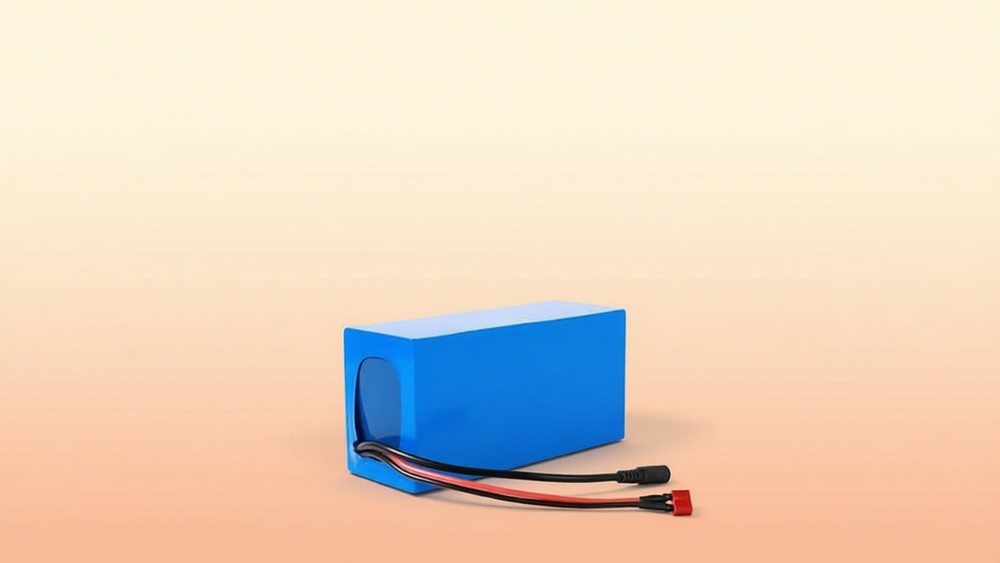
What the listing will not tell you
The spec sheet stops early, and each gap is worth knowing before you order. Start with weight.
The page prints dimensions of 7.87 by 3.54 by 2.71 inches, a slim brick about 200 by 90 by 69 millimeters, but no weight at all. A 432 watt-hour lithium pack with its case should land somewhere between 2.5 and 4 kilograms. You'll find out the real number when the box arrives.
Then there's the BMS. The bullets promise protection against overcharge, over-discharge, short circuits and heat, which is the right list, but no amperage appears anywhere. That matters because the title sells compatibility with motors up to 750W, and a 750W motor on 36V pulls about 21 amps continuously.
If the BMS or the wiring can't deliver 21 amps, the top of that range is marketing. Ask the seller for the discharge rating before you plan a high-power build around this pack. The motor range itself drifts inside the listing: the title says 250-750W while a bullet says 0-750W.
The chemistry is unnamed beyond the word lithium, and the cycle claim of 1000-plus charges sits at the very top of the 400 to 1,200 cycle band that covers standard lithium-ion cells (Wikipedia, Lithium-ion battery).
Treat it as a ceiling, not a promise. The case is called waterproof, shockproof and wear-resistant, but no IP rating is given, and waterproof without a code is a claim you should test cautiously with the connectors.
One more warning comes from our own archive. The older version of this review described a 30A BMS and a T-Plug connector, figures that appeared in listing copy at the time. The current page says XT60 and prints no amperage at all.
Listings like this get edited, so verify every number against the live page rather than a remembered spec sheet, including ours.
The 2A charger sets the pace
A charger in the box is real value at this price. Plenty of budget packs arrive with no charger or a dumb wall wart, and this one ships a 2A smart charger that repeats the same protection list as the BMS.
The listing claims a full charge takes 4 to 6 hours, and the honest version of that claim is narrower: 12 amp-hours at 2 amps is a six-hour floor from empty before the taper, so 4 to 6 hours holds only when you plug in with something left in the pack. Practically, you'll charge overnight, and the slow rate is easy on the cells anyway.
The connector is a standard XT60, common on conversion kits and budget bikes. The bullet mentions optional adapters for other setups but never names them, so confirm what your bike takes before ordering. If your machine uses anything other than XT60, treat the adapter question as unanswered until the seller answers it.
What the price buys per watt-hour
At 99.99 for 432 watt-hours, this pack costs about 23 cents per watt-hour, which puts it in the cheaper third of the 301 packs we track. The live figure renders in the specs box on our ebike battery comparison table, where you can put it next to every other 36V option on price per watt-hour. That table is the one claim no seller page can make about itself.
The paperwork is modest beyond the price. The listing promises a one-year warranty with 24-hour customer service, and the rank sits around #436 in Powersports Batteries, which tells you this is a slow-moving niche product rather than a volume seller.
For a pack whose record is three ratings, that modest footprint is worth remembering. Nothing here has been stress-tested by a crowd.
If you want a second opinion on the category before committing, our blog carries breakdowns of the other budget packs we have rebuilt, including several that print their BMS amperage openly.
Frequently asked questions
How far will this pack take me?
Category-wide, ebike packs deliver roughly 25 to 75 miles per charge depending on how you ride (Wikipedia, Electric bicycle).
A 432 watt-hour pack sits in the bottom slice of that band. Expect low tens of miles with heavy throttle use, and more if you pedal with light assist. The owner reports so far cover installs, not range meters, so nobody has published a real figure for this exact pack.
Will it fit my bike?
Check three things in order: your system must be 36V, your connector must be XT60 or adapter-friendly, and your mounting space must clear 7.87 by 3.54 by 2.71 inches. The weight isn't printed, so if your rack or bag has a strict load limit, ask the seller before ordering.
Is the 1000-cycle claim believable?
Standard lithium-ion cells last 400 to 1,200 cycles, so the claim sits at the top of the possible range. Half of it would still be years of weekend riding. Treat anything above about 800 cycles as marketing until somebody has counted.
What warranty comes with it?
One year, backed by a claim of 24-hour customer service. That's ordinary coverage for this price class, and with a record this small it's the only safety net behind the purchase.
The LNKJDFGW 36V 12Ah is a cheap, slim way to bring a tired 36V machine back to life, and the lead-acid swap account proves it can carry a real conversion.
Just go in knowing that the listing hides its weight, its BMS limit and its chemistry, and that the record is three ratings deep. Check the current listing for yourself, and put it against the field on our comparison table before you buy.