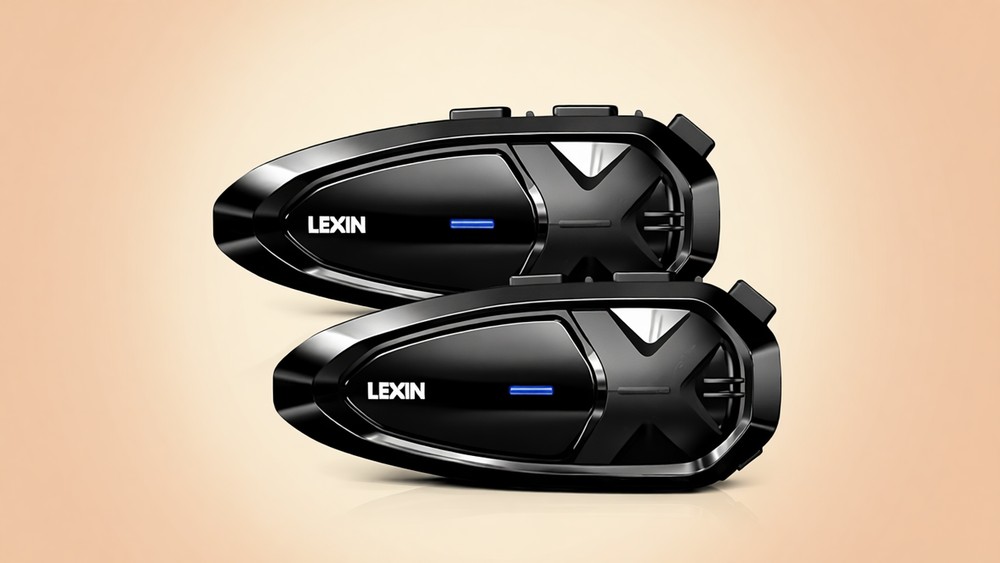
Two riders, one budget. That is the situation most intercom buyers are actually in, and it is why dual packs sell so well. The Lexin GTX sells that way at 169.99, which works out to about 85 per rider before you compare it against anything else on the shelf.
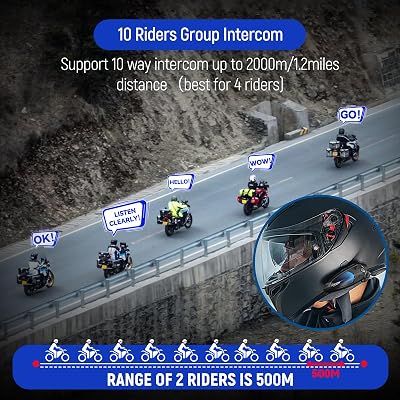
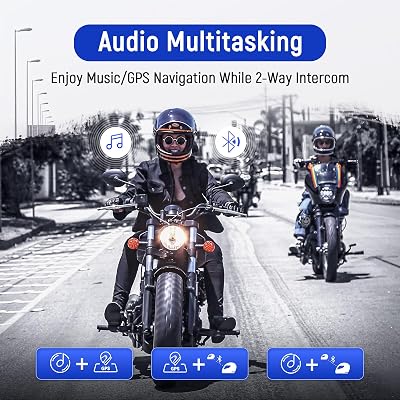
The GTX makes big claims for that money. Ten riders connected at once, a maximum range of 1.2 miles in open terrain, dual chips for talking and streaming music at the same time. With 567 ratings averaging 4.2 stars, plenty of buyers are happy.
But a claim and a ride are different things, and the written record here is quieter than the rating count suggests.
This review walks through where the record is strong, which is mostly pairs, and where it goes silent, which is everything past two riders. It also covers the warranty story behind the most-endorsed review, and the spec table entries that got filed under the wrong units.
The dual pack sold for 169.99 when I checked, about 85 per rider, which puts it close to the middle of the 192 intercoms we track. The average rating is 4.2 stars, and 65 percent of the ratings are five stars.
Every one of those numbers looks safe on a product page. The written record says the strength stops at two riders. See the current Lexin GTX price on Amazon.
Built for two, sold for ten
The rating breakdown reads 65 percent five-star, 12 percent four, 12 percent three, 4 percent two, and 7 percent one. That is a healthy spread for a budget dual pack, and most of the written record backs it up for pairs.
The title promises ten riders. The written record cannot produce a single working group larger than two. That gap between the box and the texts is the spine of this review, and it matters more here than usual because the price only makes sense if the group claim survives contact with a real ride.
One more record fact shapes how much weight the texts can carry. The newest written review is from July 2025, which means the freshest accounts are about 15 months old even though the rating count has kept moving since.
The recent ratings exist. The recent words do not.
Where the two-rider record holds up
The verified positives cluster around pairs, and they are specific. One couple bought the set for their two helmets, paired the units to each other and to their phones without trouble, and logged at least 10 hours of use with the battery meter still at 80 percent. They wear earplugs on the interstate and still need full volume there, so the headroom exists, but you will use all of it.
A parent uses the pair to teach a son to ride on the main road, talking helmet to helmet while one of them learns. Another owner took the set on a long weekend trip, called them easier than previous units, and said the charge lasts for days. Calls run clean too: one owner reports that under 50 mph, the people they call cannot tell they are riding.
Installation comes up easy in several texts, and the dual microphones cover helmet types: a boom mic for open-face and modular helmets, a button mic for full-face. For a couple splitting the cost, the record is exactly what you would want it to be.
The ten-rider claim has no witnesses
Past two riders, the record turns. One owner calls group riding extremely bad, reports the connection quality degrading, says connecting more than 2 people is frustrating, and adds that Siri stopped working after the second ride. Another sums their account up as: for two good, for more a problem.
Nobody in the ten captured texts describes a working group of three, let alone ten. Nobody has measured a distance against the claim either. The listing promises a maximum of 1.2 miles in open terrain, and the physics behind that number deserves a look.
Standard Bluetooth transmits at low power, typically reaching up to 10 meters and about 100 meters in the best case (Wikipedia), and Bluetooth 5's long-range modes reach 40 to 400 meters at reduced speed. A 2000-meter figure therefore depends on the vendor's own range modes and on helmet-to-helmet chaining across the group, with open terrain assumed. No owner in this record has put that chain on the road.
Cross-brand pairing splits the same way. One owner connects to other brands that cost twice as much. Another bought the GTX specifically to pair with a friend's older Lexin unit and could not get them to talk.
Same brand, no connection, so plan a pairing test early rather than assuming the universal claim.
A 5-star rating carried by a warranty swap
The most-endorsed text in the record, at 5 helpful votes, awards its 5 stars for an unusual reason.
An attachment point on one unit broke. Support asked for a picture and a receipt, then shipped a brand new unit. The owner says the rating reflects how the company handled the breakage, not a fault-free experience.
That same text carries the most useful hardware notes in the record. The Bluetooth drops out after the units sit in intercom mode for a while.
A power cycle fixes it, and then music will not auto-play afterward, so the fix costs a step every time. Quieter voices get harder to hear at speed until someone speaks up.
Read together, this is the text a buyer should weight most, and it is not a clean endorsement. It is a customer-service success story wrapped around hardware that needed the warranty. The 1-year manufacturer coverage is doing real work in this record, which is worth knowing before relying on the hardware itself.
Specs filed under the wrong units
Numbers that cannot be right
The spec table has entries that cannot be right. Impedance reads 0.5 ohm, and helmet speakers in this class run in the tens of ohms.
Sensitivity reads 79.99 ohm, a sensitivity figure filed in ohms when sensitivity is measured in decibels. Somebody put the wrong unit label on the wrong row, twice.
Other rows argue with the rest of the listing. The title sells 5 replaceable faceplates, and the box contents line says 4.
One table row claims Active Noise Cancellation while another says Wind Noise Reduction, which are different features. Carrying case rows appear on a product that ships no case. Bluetooth reads only as 5, with no minor version.
The charging instruction is the one spec caveat printed on the listing itself: use the included cable with a standard 5V/1-2A charger, because high-power fast chargers are not supported.
What the hardware actually is
The real hardware list is easier to trust: 36mm speakers, dual microphones, USB-C, a 2.5-hour charge, and claimed battery life of 13 hours intercom and 18 hours music.
Common questions
Is the GTX dual pack worth 169.99 for two riders? The record supports exactly that use. Pairs work well for several owners, battery life comes up strong, and about 85 per rider lands near the middle of the 192 intercoms we track. Buyers wanting proven group audio should look at mesh units instead, because the ten-rider mode has no working example anywhere in this record.
Will it really reach 10 riders at 1.2 miles? No owner confirms any group past two, and nobody has measured a distance. The claim rides on vendor range modes and helmet-to-helmet chaining, since standard Bluetooth manages about 100 meters in the best case. Treat the 1.2 miles as a marketing figure until a ride proves otherwise.
Does it pair with other brands? One owner reports connecting to brands that cost twice as much. Another could not pair with a friend's older Lexin, the same brand as the GTX. Buy with time to test pairing before a group ride, and do not assume an older Lexin unit will join.
What breaks? An attachment point broke for one owner and was replaced free after a picture and receipt. One-way audio troubled another, where one rider heard the second but not back, fixed by unplugging and replugging the mic. Siri support died after two rides for one owner.
What should a buyer check on arrival? Pair both units to each other and to a phone before the return window closes. Charge only on the included cable with a standard 5V/1-2A charger, since fast chargers are not supported. Count the faceplates in the box against the title, because the listing itself disagrees on whether 4 or 5 ship.