A dead battery listing has a way of turning into a scavenger hunt. The KORNORGE 48V 15.6Ah water bottle pack showed up in mid-2026 at a price that sat in the middle of our table, and then the page vanished before anyone could say whether the packs lasted.
That leaves a strange gap. There's no buyer record to lean on, no owner reports, no star rating to argue with. Everything below comes from what the listing recorded while it lived, plus the arithmetic any pack this size has to obey.
What survives is useful anyway. The 5-pin base, the 30A BMS and the 748.8Wh of capacity tell you most of what a replacement hunter needs to check, from connector pins to charge time, and the gaps are stated as gaps rather than filled with guesses.
The original listing is gone, so this is a replacement-matching guide rather than a verdict on a pack you can still buy. The 5-pin water bottle format, the BMS ceiling and the honest range math are what carry over, and anyone hunting the same format can check live alternatives in our comparison table. That's the short version.
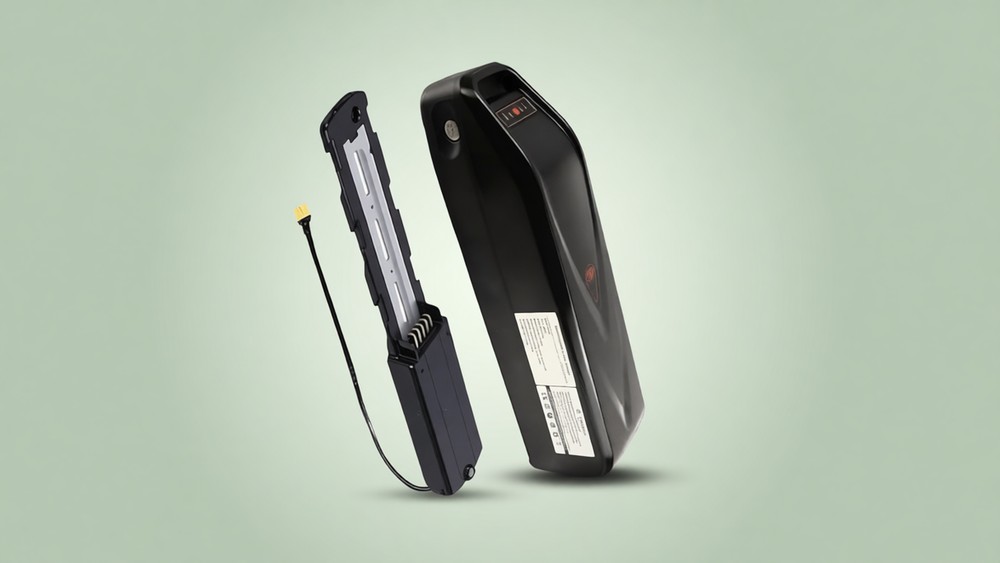
A listing that died before anyone could grade it
The Amazon page for this battery is gone. On November 2, 2026 the dp address returns Page Not Found and the Creators API rejects the ASIN as invalid, so the death is confirmed two ways. One buyer left a five-star review back in June 2026, and that is the entire review record the pack ever collected.
Our data row holds a null rating, because fourteen ratings never arrived and the listing closed before a record could form.
That makes this article unusual. There are no owner reports to weigh, no long-term complaints to read, and no reliability signal at all, and this page doesn't pretend otherwise. Everything here comes from the recorded spec sheet and the arithmetic a pack this size has to obey.
What that leaves you is a matching problem rather than a judging one. The alloy shell, the key lock and the charge gauge are recorded facts.
Whether the cells survived a daily commute is a question nobody got to answer. Compare live alternatives in our battery comparison table.

What the recorded spec sheet holds
The pack pairs a 48V nominal rating with 15.6Ah, which multiplies out to 748.8Wh. When the listing was last captured it sold for one hundred eighty-nine dollars, which works out to 0.25 per watt-hour. On our own comparison data that sits close to the middle of the 324 batteries we track by price per watt-hour, and the exact position renders live in the specs box on our comparison table.
The recorded hardware list is short but specific. A 30A smart BMS handles the protection, a key lock holds the pack in its slide-in base, and a four-level LED gauge shows the remaining charge without needing a display. The alloy case mounts on the bottle cage bosses, which keeps the pack inside the frame triangle and off the rack.
The gaps matter as much as the list. Weight, dimensions, the cell model and any cycle rating were never recorded, and the listing never claimed an IP rating for the case. The old write-up says the alloy shell is sealed against road spray but shouldn't be submerged, and that is the whole of what anyone can say about weather sealing.
State the gaps plainly, and don't let a spec sheet's silence get filled with assumptions.

The 5-pin base is the whole fitment test
The listing's own fitment note is the most useful thing it recorded: this pack uses a 5-pin discharge base, not the 3-pin or 4-pin layouts common on Hailong-format packs. That single detail decides whether a replacement drops in, and it matters more than capacity or brand. A pack with the wrong pin count doesn't communicate with the bike's controller, and no adapter changes the mount.
The named direct fits were the Hikeep K6-G, ME-L and K6-L, and nothing else. That list doesn't transfer, because a different bike needs its own connector and mounting arrangement checked before ordering.
Before you order any replacement in this format, verify three things on the old pack. Count the pins on the discharge base.
Check that the new case matches the slide-in base and the cage bosses it bolts to. Confirm the bike runs a 48V controller, because a 48V pack pairs with 48V electronics. Those three checks take minutes, and they prevent the most common dead ends.

The 1500W claim runs into its own BMS
The title advertises support for 250W to 1500W motors, but the recorded 30A BMS sets the real ceiling. Thirty amps at 48V is about 1440W continuous, so the top of the claimed band exceeds what the BMS allows.
The lower end of the band is where the pack makes sense. A 750W motor draws about 15.6A at 48V, and a 1000W motor draws about 21A, both inside the 30A limit with room to spare. A 1500W motor needs about 31A, which is over the line.
Read the band that way if you're matching a replacement: this format suits 250W to 1000W builds, and the 1500W figure on the title is the part the hardware can't back. A buyer who pairs it with a motor near the BMS ceiling should expect the pack to cut output under hard acceleration or on long climbs, because that is what a BMS is designed to do.
Range on 748.8Wh, honestly computed
Nobody measured this pack's range, so the honest method is division. Range guides put light pedal assist near 12 watt-hours per mile, medium assist near 22, and full throttle near 35, with heavier riders and hills pushing the numbers up, per Rider Guide's range calculator.
Divide 748.8Wh by each: roughly 62 miles on light assist, about 34 on medium assist, and about 21 miles on full throttle. Those are estimates, not test data, and the estimates are the only range figure that ever existed for this pack.
The old write-up's range table was more generous than that, promising 25 to 45 miles across motor sizes, and its figures leaned on pedal-assist consumption applied to throttle riding. The category math says throttle-only riding can cut range by a third or more compared with pedaling.
Charging arithmetic is simpler because the charger wasn't supplied. At 2A, filling 15.6Ah takes about eight hours. At 4A it takes about four, and buying the faster charger is the difference between an overnight charge and a lunch break.
Frequently asked questions
Can you still buy this exact pack?
No. The listing is dead, the dp page returns Page Not Found, and the Creators API rejects the ASIN. Links in this article go to a tagged Amazon search for the same format, which is where any surviving stock or equivalent packs would appear.
Will it fit a Rad Power bike?
The records name only the Hikeep K6-G, ME-L and K6-L as direct fits. Rad Power bikes use their own connectors, so a match depends on the pin count of your base and the mounting arrangement, not on the brand name. Count the pins before ordering anything.
What charger does a 48V pack like this need?
A standard 48V lithium-ion charger with a matching connector. The pack was sold without one, so budget for it separately. A 2A charger needs about eight hours for 15.6Ah, and a 4A charger about four.
Is it safe with a 52V controller?
No. This is a 48V nominal pack that charges to about 54.6V, and it belongs on a 48V controller. Pairing it with 52V electronics risks voltage mismatches, and the recorded listing said the same. If the format isn't the right fit, the battery comparison table sorts every option we track.