The JESIMAIK R16 Pro offers a 10-way intercom with 40mm speakers at a price in the cheapest fifth of our table, and the hardware under the claims is real: dual Qualcomm chips, IP67 sealing, both mic types in the box. But the claims need trimming first. The 2km range is a lab figure, the 99% noise number has no test behind it, and ten riders is protocol capacity rather than a comfortable group. Tight-formation budget groups win here, and highway-speed talkers should look upmarket.
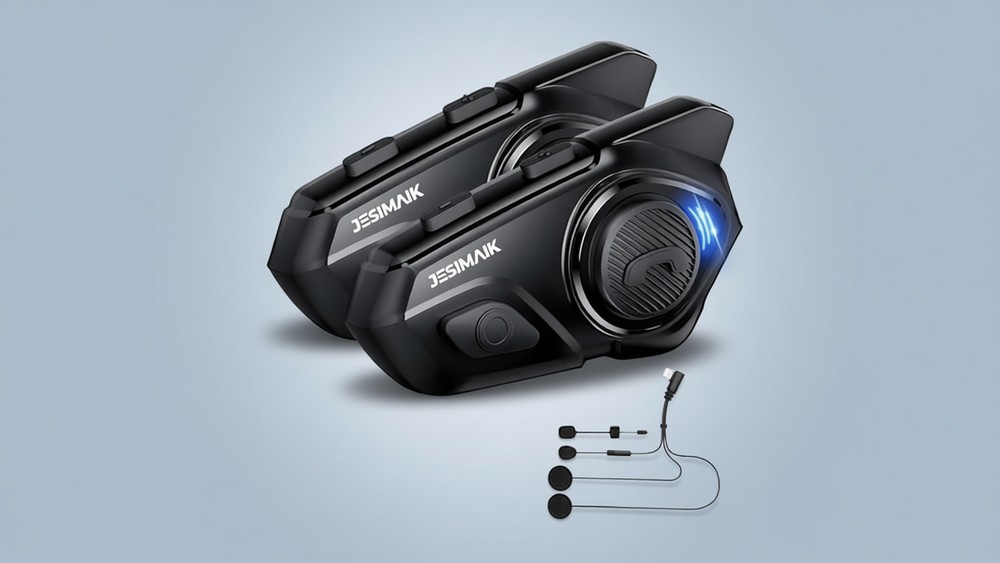
The 2km claim, and what customers actually get
Category norms put real intercom range at 30 to 50 percent of the claim, so a 2km figure means planning around 600 meters to a kilometer in open terrain, and customer reports confirm distance runs shorter with hills, buildings, or traffic between riders. That is not a defect unique to this brand, it is the physics and marketing pattern of the whole class, but the planning number matters: a group spread over a kilometer will not hold a conversation.
The ten-way count has the same shape. The protocol handles ten riders, but clear full-duplex audio holds for three or four before latency grows, and a stretched line means stutter or dropout. Treat ten as a ceiling and four as the practical group size.
Pairing deserves a pre-ride check. Some customers report fussy initial pairing and re-pairing after the units have been apart, which is annoying in a driveway and worse at a fuel stop. Test the link before leaving.
One planning habit covers most of the range problem: assign the sweep rider. In a ten-rider group the rear rider watches the chain, and when the line stretches past what the link holds, the sweep calls a bunch-up at the next stop rather than mid-corner. Groups that ride this way report far fewer silent stretches than groups who assume the hardware will stretch with them. The radio is only half the system, and the riding habit is the other half.
Dual chips, 40mm speakers, and the EQ gimmick
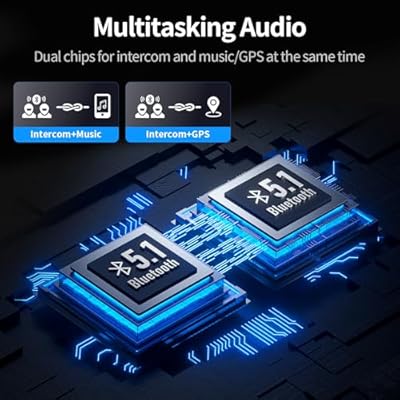
The dual Qualcomm chips are the genuine hardware story: music, GPS, and intercom run together without stutter, and music ducks automatically when someone talks. That multitasking promise is one cheaper units often fumble, and this one delivers it.
The listing publishes no battery figure, and no customer report pins one down, so endurance is the spec you will have to measure yourself in week one.
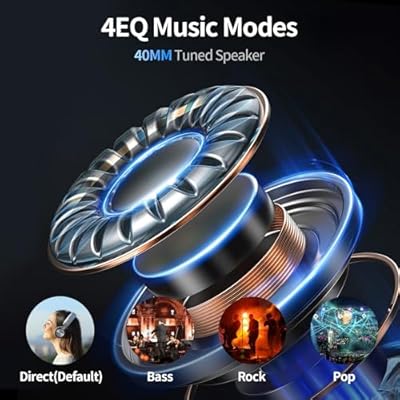
The 40mm speakers are loud enough over wind when mounted close to the ear, and that size is where budget audio peaks. The four sound profiles (Direct, Bass, Rock, Pop) are a week-one toy, and and most riders settle on the flat one.
The 99% noise-cancellation figure is marketing with no test standard behind it, and claims in this category tend to describe the chip's theoretical capability rather than what a helmet-mounted mic achieves in turbulent air. The DSP does help, and voices stay intelligible in normal riding, but customer reports call highway mic quality spotty at worst. Physics decides at speed, not percentages. Riders who regularly talk above 70mph should budget for a boom mic positioned close to the mouth, or for a pricier unit whose mic processing has more consistent highway reports.
Cross-brand claims, IP67, and the small print
The listing's cross-brand compatibility claim needs decoding: one-to-one Bluetooth fallback with other brands is realistic, and full cross-brand groups are not. Groups need matching units, which is the practical rule for every Bluetooth intercom in this class and worth knowing before buying a mixed-brand group's gear.
IP67 sealing is the same dust-and-water spec pricier rivals carry, and both button and boom mics ship in the box. Those are genuine features at this price. The no-mesh trade is the flip side: the link does not self-heal, a rider who drops back breaks the chain behind them, and the group reforms when everyone closes up. Ride as a cluster or accept stops.
That shape decides which groups this suits. A pair or a trio riding the same road stays inside the link all day and never meets the limitation. A club run that spreads across junctions and traffic meets it on every ride, and no amount of advertised range fixes a chain that has to rebuild each time somebody falls behind. The useful question is not how far the radio reaches but how often your group splits apart.
Who should buy it, and who should spend differently
Buy it if you want maximum rider count and dual-chip multitasking at the cheap end of the table, your group rides in tight formation, and you read the claims as ceilings rather than promises. The price per seat is the argument, and for groups of four or fewer riding close together it is a strong one. A four-rider group buying four units still spends less than two seats on some premium single units.
The features that matter for that use case are all present: dual-chip multitasking, IP67 sealing, both mic types. The claims trim down to something honest, a four-rider intercom with a kilometer of reach in open country, at a price that leaves budget for better helmet speakers if audio is the priority.
Spend differently if you need mesh self-healing, because rivals at similar money buy it. Spend differently if proven highway mic quality leads your list, because customer reports on this one are mixed and pricier units have more consistent records. And spend differently if brand support matters to you, because big names stand behind warranty claims in ways small brands vary on. The brand's track record is shorter than the established names', and a two-year-old failure is a different experience with a company that has been in the market for a decade. The intercom table shows the live comparison across all three axes.
Frequently Asked Questions
How far does the intercom actually reach?
Plan for 600 meters to a kilometer in open terrain rather than the advertised 2km, and less with obstructions between riders.
Can I really connect 10 riders at once?
The protocol supports ten, but clear full-duplex audio holds for three or four before latency grows.
Will it pair with other brand intercoms?
One-to-one fallback, yes. Cross-brand groups, no. Groups need matching units.
Is the 99% noise cancellation real?
There is no test standard behind the figure. The DSP helps, but highway mic quality is spotty for some riders.
Does music keep playing while I use the intercom?
Yes. The dual Qualcomm chips run music and GPS alongside the intercom, and music ducks when someone speaks.