Most replacement batteries fail their own spec sheet before you even get to the reviews: a weight that cannot hold the capacity, a BMS smaller than the motor it claims to serve, a charge time the arithmetic forbids. The H Hailong 36V 12Ah passes all of those checks, which makes it a rare page in this class. Its problem lives somewhere else, in a record that's two texts written on the same day.
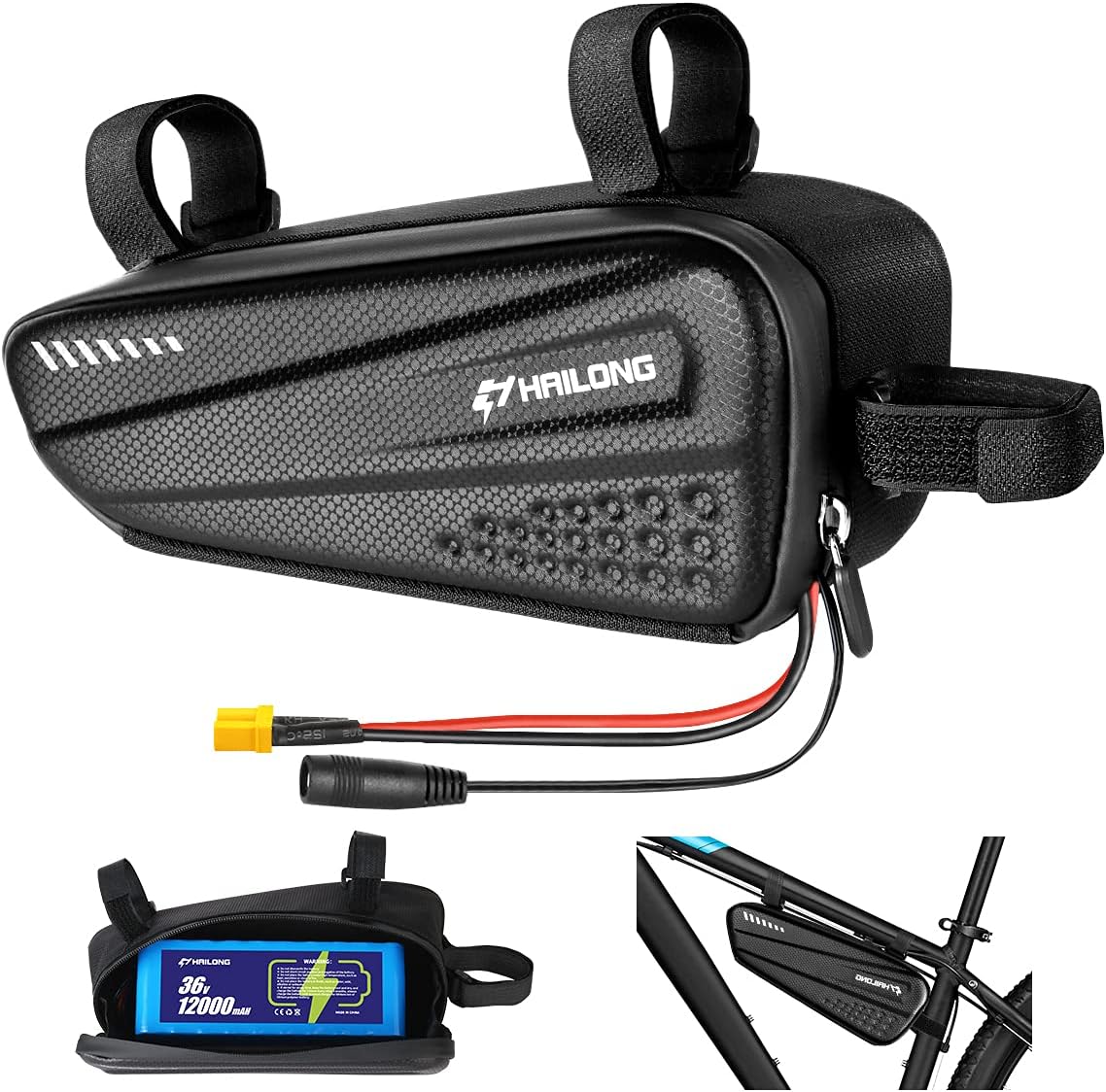
The H Hailong 36V 12Ah battery carries 432 watt-hours at 139.99, which puts it below the middle of the packs in our comparison table on price per watt-hour. It's a soft bag with a hard shell, strapped to the frame with velcro, and it shares a ladder with the 20Ah pack we have already covered. This article walks the page, checks every printed number, and explains why the charger line is the one to press a seller about before you order.
Two texts, one date, no badges
The whole record is two ratings and two written accounts, both five stars, both dated October 17 2026, and neither one carries a verified-purchase badge. I cover a lot of thin records on this tier, and that combination is the weakest shape they come in. Two same-day texts tell you nothing about how a pack behaves in year two.
The texts themselves are pleasant and specific. The first describes a swap after an old battery died, reports a motor around 500W handled with no weak starts, and says the 42V charger fills the pack in about four or five hours. It also states the pack has a "1054P cell configuration", which matches nothing on the listing. The bullets and the parameter card both print 10S4P, so the reviewer has garbled the cell figure while restating it, and that tells you the text is quoting the page rather than reporting an independent measurement.
The second text describes a 36V 250W folding e-bike commuter, a 15 km daily round trip, velcro straps that hold over speed bumps, and a ride through light rain that caused no trouble. Nothing in either text is implausible. The problem is that nothing in either text is load-bearing either, because two unbadged same-day accounts cannot separate a real owner from a favor written for the seller. Treat them as color, not evidence, and let the spec sheet carry the decision.
A charger the page cannot name
Here is the line that should slow you down: the charging bullet promises a 42V charger with "2-5A input". A charger has one current. A range of 2 to 5 amps describes two different chargers, or a spec copied from a family of them, and the page never says which one lands in your box.
The arithmetic moves with it. Twelve amp-hours over 2 amps is a 6-hour refill. Over 5 amps it's 2.4 hours. That's not a rounding difference, it's a factor of two and a half, and it's the difference between charging overnight and charging over lunch. The one owner account sits in the middle, with a refill in about four or five hours, which would imply a charger near 2.5 or 3 amps. That account is unverified, so I would not bet the purchase on it.
The parameter card repeats the same range, 2-5A, so the drift isn't a bullet typo, it's the listing's official position. If you order this pack, the useful question to the seller is a screenshot request: which charger, exactly. The cut-off voltage closes regardless, because 42 volts is 10 series groups at 4.2 volts each, the standard 36V-class figure.
The spec sheet closes
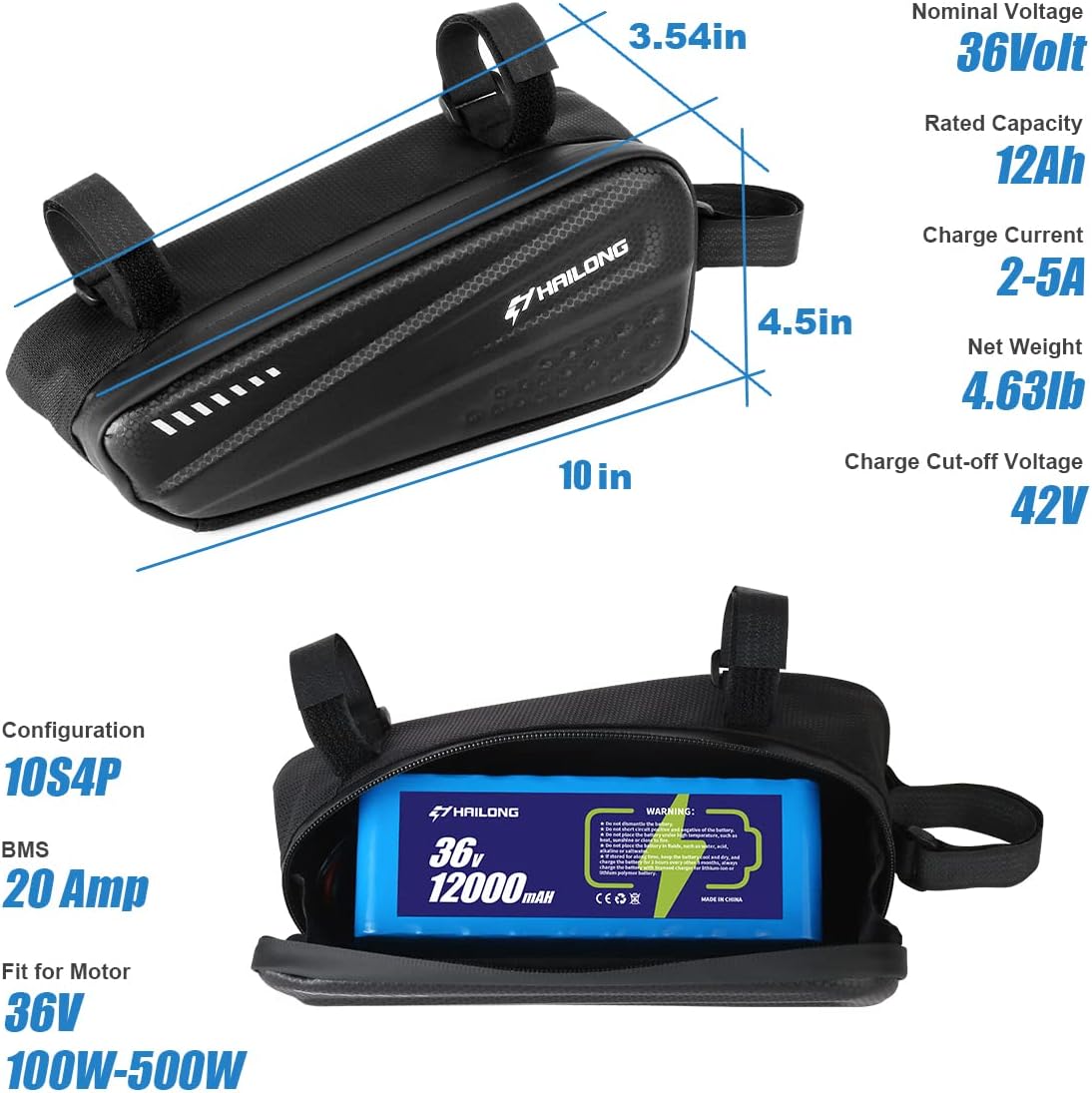
The rest of the page is unusually honest for this tier. The parameter card and the bullets agree on every line: 36 volts, 12 amp-hours, a 10S4P configuration, a 20A BMS, a 42V cut-off, a net weight of 4.63 pounds. On listings like the CXZCXZ 10Ah we covered, the card was the only part telling the truth. Here there's no split personality, the whole sheet reconciles.
The BMS checks against both motor claims. Twenty amps continuous at 36 volts sustains 720 watts, and the highest motor figure printed anywhere on this page is 600 watts, on the variant selector. The bullets and the card say 100W-500W. The board clears both windows with margin, so the electronics are not the constraint on this pack.
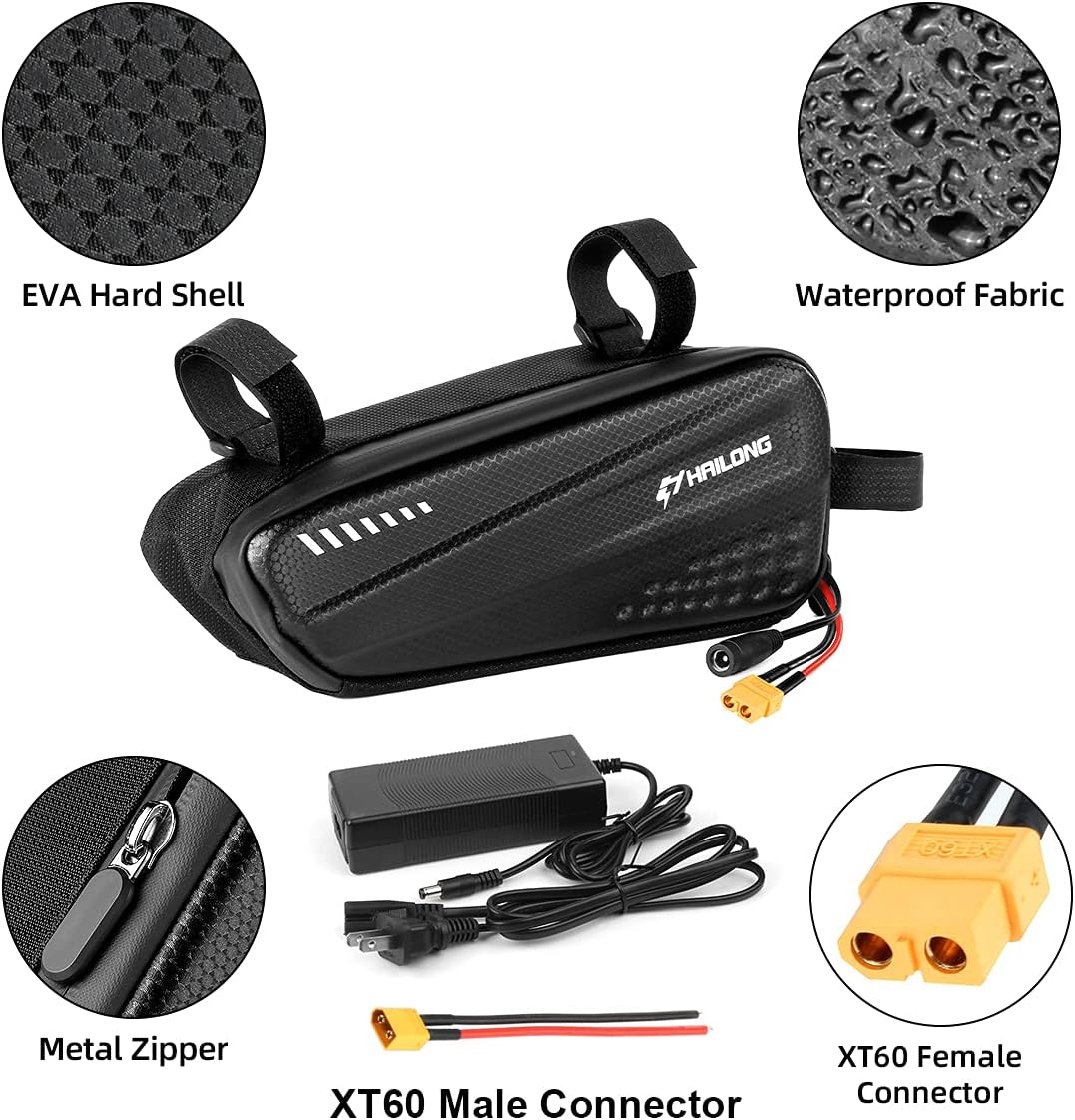
The weight closes too. 4.63 pounds is about 2.1 kilograms, and 432 watt-hours at that mass works out to roughly 0.21 kilowatt-hours per kilogram, inside the band where mass-produced lithium-ion cells live once the case, board and wiring take their share (Wikipedia, Lithium-ion battery). For a pack wearing an EVA hard shell, waterproof fabric and a metal zipper, that's a plausible number, not a suspicious one.
Inside the H Hailong ladder
This listing sits in a three-rung ladder of 36V packs: 7.8Ah, this 12Ah, and the 20Ah we covered in the H Hailong 36V 20Ah review. The rungs are different capacities in similar soft-bag packaging, and the covered 20Ah is the triangle frame-bag style where this 12Ah is the straight frame bag. Both strap on with velcro, neither locks into a cradle.
The motor windows drift between the rungs in a way worth noticing. This 12Ah rung's variant label prints 200W-600W, while the bullets and the card on its own page print 100W-500W. The same brand cannot keep its own band straight across two places on the same page. Because the BMS clears both, the practical reading is simple: any 36V motor up to 500W is comfortably served, and a 600W figure at the edge is still inside the board's 720W ceiling.
If you're choosing between the rungs, the honest comparison is capacity against charger, because the charger question above applies to the whole family. The 20Ah listing carries 720 watt-hours for about sixty dollars more, roughly two-thirds more range per charge, and its own review covers the same velcro mounting scheme in the triangle shape.
Range, computed
The listing never prints a range claim, which saves it from the inflated numbers this tier usually carries. Four hundred thirty-two watt-hours on a typical pedal-assist draw of 20 to 25 watt-hours per mile delivers roughly 17 to 22 miles per full charge. Full-throttle riding raises the consumption figure and shortens that, and hills shorten it further.
The commuter account's 15 km round trip, about 9 miles, sits well inside that envelope, which is why the text reads true even if its badge is missing. If your daily riding lives inside 20 miles, this pack does the job. If you were expecting the 30-plus-mile figures some listings throw around, this is the wrong capacity, and the 20Ah rung is where that conversation starts.
Frequently asked questions
Which charger does it ship with?
The listing won't say. The bullet and the card both print a 2-5A charge current, which no single charger matches, and the owner account's four-to-five-hour refill implies something near 2.5 or 3 amps. Ask the seller for a photo of the charger label before you order, and budget a 6-hour refill if it turns out to be a 2-amp unit.
What does 10S4P mean?
Ten groups of cells in series, four in parallel, forty cells total. The series count sets the voltage: 10 groups at 4.2 volts maximum gives the 42V charge cut-off the card prints. The parallel count sets the capacity: 12 amp-hours over four groups means roughly 3 amp-hours per cell, a normal figure for this cell class.
Will it fit my frame?
It's a 10 by 4.5 by 3.5 inch bag held by velcro straps, not a cradle-mounted pack. Check that your frame triangle or down tube can take those straps and that the bag clears your cables. The discharge side is an XT60 connector, so your controller needs to accept XT60 or you need an adapter.
Is the five-star record trustworthy?
No, not on its own. Two ratings, two texts, both from the same day, neither verified. The texts are specific enough to read as genuine owners, but the shape is the one seller-favor campaigns produce. The spec sheet is the reason to consider this pack, and it holds up, while the record is a reason to keep your return window in mind.